

- 400MW battery project receives planning approval in East Yorkshire, marking continued growth of the UK storage pipeline.
- Energy storage is increasingly central to grid stability and renewables integration.
- This reinforces the UK’s position as a leading European battery market.
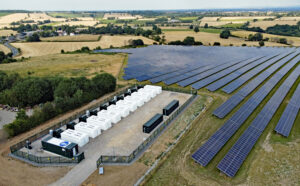
A major new battery energy storage project has been approved in East Yorkshire, underlining the accelerating role of storage in the UK’s power system.
Developer Greenfield has secured consent for a 400MW facility at Thornton, according to Renewables Now. The project ranks among the larger standalone battery developments in the country.
Battery storage is rapidly moving from a niche technology to a core component of the UK’s energy infrastructure. As renewable penetration increases, the need for flexible assets that can balance supply and demand in real time is becoming more acute.
The East Yorkshire project is expected to provide grid stabilisation services, store excess renewable generation, and help manage peak demand periods. In doing so, it reduces reliance on gas-fired peaking plants and supports overall system efficiency.
The approval comes at a critical moment for the UK’s clean power ambitions. While generation capacity continues to expand, particularly in offshore wind and solar, the system’s ability to integrate that capacity remains constrained by limited flexibility and grid infrastructure.
Battery projects offer a relatively fast-to-deploy solution compared to large-scale grid upgrades. However, they are not a panacea. Duration limitations and revenue uncertainty remain key challenges for developers.
From a market perspective, the continued build-out of storage reflects improving economics. Revenue stacking – combining income from multiple services such as frequency response, arbitrage and capacity markets – is making projects increasingly viable.
The UK has emerged as one of Europe’s most active battery markets, supported by a relatively mature regulatory framework and strong investor interest. The latest approval reinforces that position, even as competition intensifies across the continent.
Looking ahead, the key question is scale. Individual projects are growing larger, but the system will require significantly more capacity to support a fully decarbonised power sector. Policy clarity on long-duration storage and market design will be critical in determining whether that scale can be achieved.