

The last 24 hours were dominated by geopolitical risk and policy interventions that could push oil and gas prices to new highs. Yet there were also significant UK‑specific developments: expansion of the Green Heat Network Fund to Wales and regulatory updates for offshore emissions, major corporate moves in hydrogen and CCS, record EV sales and a growing debate on fuel duty and exploration bans.
These stories collectively underscore the need for UK businesses to diversify supply chains, accelerate flexible storage and electric mobility, and engage proactively with emerging policy and regulatory frameworks.
On a global level, the last day brought a confluence of geopolitical tensions and market signals that will impact energy transition strategies. Rising gas and oil prices, threats to critical transit routes and infrastructure, and bold policy interventions highlight the vulnerability of fossil fuel dependent systems. Meanwhile, rapid progress in battery deployment, electric mobility and market uptake illustrates that technological solutions are scaling quickly.
UK decision‑makers should anticipate continued volatility, accelerate diversification into renewables and storage, and monitor geopolitical developments that could reshape global energy flows.
Middle‑East crisis still dominates global oil and gas markets (Markets & Policy)
Tensions around the Strait of Hormuz continued to dominate markets. US President Donald Trump set a deadline (8 pm Washington time on 6 April 2026) for Iran to reopen the Strait or face targeted attacks on power plants and bridges. Iran refused a temporary ceasefire and threatened that the Gulf states’ water desalination plants would be fair game if its energy infrastructure is hit.
Brent crude held above $109 per barrel while Dutch TTF gas futures jumped 3% as traders priced in a possible strike. Europe’s gas storage is already tight after a harsh winter, so further disruptions could force competition for LNG cargoes.
Around 20% of global oil and a substantial portion of LNG flow through the Strait, with the UK exposed via global commodity prices. Sustained disruption would amplify the cost‑of‑living crisis, threaten industrial supply chains and complicate decarbonisation plans that rely on imported LNG to back up renewables. British North Sea fields cannot fully insulate the country from this shock.
The episode underscores the strategic value of accelerating domestic renewables, storage and demand‑side flexibility.
Global governments roll out emergency measures to cap energy prices (Policy & Regulation)
Following the spike in energy prices, governments worldwide unveiled stop‑gap interventions. India invoked emergency powers to maximise LPG and petrol output; South Korea lifted coal‑plant limits and raised nuclear utilisation to 80 %; China banned refined‑fuel exports; Australia and Japan released fuel stocks; the EU is considering tax breaks and grid‑fee reductions; Southeast Asian countries and several European states announced subsidies or excise‑tax cuts. Meanwhile, Bangladesh, Serbia and Greece introduced financing schemes or extended bans on fuel exports.
These actions signal how quickly markets can re‑fragment during crises. UK authorities may face pressure to emulate such interventions if domestic fuel prices surge further. The measures also highlight opportunities: as other countries clamp down on exports, UK traders may see a tighter global market. Conversely, if European partners impose windfall taxes or support measures, it could change the competitiveness of UK‑produced power and fuels.
UK decarbonisation policy updates (Policy & Infrastructure)
Heat network expansion to Wales – The UK government announced that the Green Heat Network Fund – previously limited to England – will expand to Wales, bringing £195 million per year of investment to low‑carbon heat networks. Ministers claim this could create hundreds of jobs and shield households from gas‑price volatility. Officials emphasised that heat networks will help the UK meet its 2035 carbon budgets and deliver cost‑of‑living relief.
Offshore emissions regulations – The Department for Energy Security and Net Zero (DESNZ) updated guidance on offshore environmental regulations. The SNS Activity Tracker was refreshed on 7 April 2026, and the list of UN port codes for offshore installations was updated as part of extending the UK Emissions Trading Scheme to shipping.
Why they matter – Heat networks and tighter offshore emissions rules directly impact UK project developers. The Welsh expansion signals a market for consultants, heat network developers and investors, while the regulatory changes alert operators to new compliance requirements for carbon pricing in offshore shipping.
UK‑specific deals and investment announcements (Deals & Corporate)
- Green hydrogen plant at Port of Tilbury – Forth Ports and GeoPura signed a ten‑year agreement to build a 1 MW green hydrogen facility at Tilbury, funded by £2 million from Thames Freeport. The plant, powered by on‑site solar, will supply port operations and the Lower Thames Crossing, aiming to replace over 12 million litres of diesel and start producing later this year. This makes Tilbury one of the first UK ports with commercial‑scale hydrogen production and supports Forth Ports’ goal to become net‑zero by 2042.
- Synergia Energy’s CCS financing – UK‑listed Synergia Energy secured a $700 000 loan from Republic Investment Management to fund its 50 % stake in the Medway Hub Camelot carbon‑capture project. The project aims to use National Grid’s LNG infrastructure to liquefy and transport CO₂, storing 70–100 million tonnes in depleted Southern North Sea gas fields. The financing allows Synergia to progress engineering studies ahead of a final investment decision.
- Modutec acquires majority stake in Aberdeen’s EOS Europe – Portable building manufacturer Modutec bought a majority stake in EOS Europe, which provides hazardous‑area electrical services and project management for energy and marine clients across the UK, USA and Norway. The deal retains EOS co‑founder George McLeod and 40 employees and expands Modutec’s service offering in offshore renewables, carbon capture and maritime sectors.
These deals show UK ports and service firms positioning for the hydrogen and carbon‑capture markets. Tilbury’s project could unlock hydrogen-as-a-service models and attract further investment along the Thames. The Synergia loan underscores investor confidence in CCS projects despite political uncertainty, while Modutec’s acquisition signals consolidation in the supply chain and broadens capacity for complex offshore projects.
UK EV market trends amid fuel‑price surge (Markets & Transport)
Britain registered 380 627 new cars in March 2026, the highest March since 2019, with electrified vehicles recording their best ever month at 196,059 units. Battery‑electric car sales jumped 24% to a record 86,120 units, even though they still only account for 22.6% of the market – below the government’s 33% target for 2026. Chinese manufacturer BYD’s UK registrations surged 134% to 15,162 units, overtaking Tesla’s growth. Media reports also highlight that high petrol and diesel prices have pushed drivers towards electric models and that Chinese brand Jaecoo 7 topped UK sales.
The jump in EV sales signals shifting consumer behaviour as fuel-price volatility makes electric mobility attractive. For policymakers, the shortfall against mandated market share targets underscores the need to expand charging networks and maintain purchase incentives. For energy firms, rising EV adoption increases demand for grid flexibility and opens opportunities for vehicle‑to‑grid services and smart tariffs.
Pressure mounts to scrap fuel‑duty rises and unlock domestic gas (Policy & Markets)
Drivers’ and hauliers’ push – Industry groups and drivers in the UK are campaigning for the Labour government to cancel scheduled fuel‑duty increases. The Road Haulage Association warns that rolling back the 5p per litre duty cut could create a national transport crisis and demands targeted rebates and contingency planning.
Calls to lift exploration ban – A commentary article argues that many identified oil and gas fields in UK waters remain undeveloped due to the current ban on new exploration licences and high taxes. Offshore Energies UK estimates that 3.25 billion barrels of resources and 250 billion cubic metres of gas could be lost if the ban persists. The piece warns that domestic production might fall from 140 million barrels of oil equivalent per year to 40 million by 2035, increasing reliance on imports.
The fuel‑duty debate affects consumer costs and could shape political narratives around energy fairness. Meanwhile, calls to lift the exploration ban highlight the tension between climate goals and energy security. These pressures will influence the government’s forthcoming energy strategy and the investment climate for North Sea operators.
Industry leaders call for integrated hydrogen supply chains and circularity (Opinion & Technology)
Fragmented hydrogen supply chain – In a commentary for Energy Voice, Siemens hydrogen chief Andy Lane warns that the UK’s hydrogen projects often split procurement between multiple engineering packages, creating interface risks and slowing delivery. He advocates integrated delivery models and closer collaboration to unlock digitalisation and AI benefits and cites companies like GeoPura that offer hydrogen‑as‑a‑service.
Renewable tech waste concerns – Professor Fiona Charnley notes that solar‑PV waste could exceed 200 million tonnes globally by 2050 and that the UK lacks dedicated recycling infrastructure. She calls for circular design, extended producer responsibility and recovery of valuable materials like silver and silicon.
These opinion pieces highlight systemic challenges that could constrain the UK’s energy transition. Integrated supply chains and circular manufacturing will be critical if the UK is to scale up hydrogen and renewables without repeating the mistakes of offshore wind’s fragmented contracting. Professionals should watch for policy signals (e.g., extended producer responsibility) that could reshape supply‑chain strategies.
Russia’s Yamal LNG reroutes cargoes as EU ban looms (Supply Chains)
Russia’s Yamal LNG plant sent its first cargo to China in five months, just ahead of a European import ban that takes full effect in 2027. Analysts note that Novatek is redirecting cargoes to Asia because European buyers will soon be barred from taking Russian LNG. Russia’s Arctic LNG 2 project remains under US sanctions and cannot ship to either Europe or Japan.
The EU currently takes most Yamal cargoes, with some transhipped via UK terminals. The impending ban and redirection of cargoes reduce supply diversity for the UK and Europe and could add price volatility. UK policymakers must plan for increased competition with Asian buyers and invest in infrastructure (storage, flexible regasification) to manage supply shocks.
California’s batteries are reshaping power markets (Technology & Flexibility)
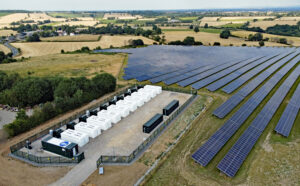
California set a fresh record for grid‑scale battery output: on 29 March batteries supplied 12.3 GW, covering 43% of evening peak demand. The state’s battery capacity has exploded from 1.3 GW in 2020 to 17 GW in 2026, with deployments also accelerating in Texas and China. The article argues that batteries are starting to replace gas peaking plants and enabling renewables to dominate.
Britain is investing heavily in storage (e.g. ScottishPower’s 1 GWh battery at Turbary Moor and Highview Power’s cryogenic plant). California’s experience shows how large batteries can dramatically reduce dependence on fossil fuel peakers and improve grid stability. This makes a strong case for Ofgem and National Grid ESO to speed up market reforms and procurement of flexibility services.