

- The Energy Institute’s Statistical Review of World Energy reveals that China produced 73% more total energy and 222% more electricity than the US in 2025; China’s energy supply has surged from roughly 100 exajoules in 2010 to about 165 exajoules.
- Data centre power consumption is exploding: North America’s data centres consumed nearly 320 TWh in 2025, up from about 185 TWh in 2020. Asia and Europe are also seeing steep growth as AI and cloud computing expand.
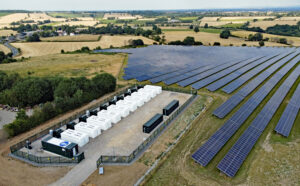
- Battery storage is scaling rapidly, with global capacity approaching 300 GW, mostly concentrated in Asia.
The global energy system is undergoing a profound transformation, but not in a uniform way. The latest Statistical Review of World Energy, the 75th edition produced by the Energy Institute with contributions from KPMG and Kearney, paints a picture of stark regional contrasts.
At the macro level, China now generates 73% more energy and more than twice as much electricity as the US. Since 2010 China’s total energy supply has climbed from around 100 exajoules to about 165 EJ, while US supply has stayed near 90 EJ.
China’s electricity generation – fuelled by coal, hydro, nuclear and renewables – exceeded 10,500 TWh in 2025, compared with roughly 4,800 TWh in the US.
“This year’s Review shows an energy system at a tipping point: record demand, a historic breakthrough in low-carbon electricity, and sharply diverging regional pathways,” said Energy Institute chief executive Dr Nick Wayth.
“We see encouraging substitution of fossil fuels in power, yet global emissions continue to rise and energy security pressures intensify. These findings underline the urgency of accelerating efficiency, electrification and investment in clean technologies worldwide.”
The digital revolution is a major driver of energy demand. North American data centres consumed nearly 320 TWh of electricity in 2025, up from around 185 TWh five years earlier. Data centre power use in Asia and Europe is also rising fast as artificial intelligence and cloud computing proliferate.
The report notes that battery storage capacity – critical for balancing intermittent renewables – has grown to roughly 300 GW, largely concentrated in Asia. That expansion is helping grids integrate record levels of solar and wind, especially in China and Australia.
Indeed, renewables were the largest source of total energy supply growth for the first time outside of a recession, with solar power accounting for 71% of the increase in renewables.
Yet the review highlights extreme divergence in clean power adoption. France leads the world with a grid that is 95% clean, thanks to its nuclear fleet. Norway, Sweden and Uruguay also generate nearly all of their power from low‑carbon sources. By contrast, countries like Saudi Arabia, Indonesia and South Africa remain heavily reliant on coal and oil.
The US has made significant progress, cutting energy‑related emissions more than any other country since 2010, largely through retiring coal plants and deploying renewables. However, China and India’s emissions have risen, reflecting their economic growth and continued reliance on coal.
The data illustrates the fragmented nature of the energy transition. While rich nations debate phase‑out dates for fossil fuels and invest billions in hydrogen and carbon capture, much of the world is still expanding coal‑fired capacity to meet basic electricity demand.
Battery storage is booming in Asia but remains relatively nascent in Europe and North America. The surge in data centre consumption adds another layer of complexity, as digital infrastructure becomes both a driver of renewable investment and a source of local grid stress.
Policymakers will look to build resilience through region‑specific strategies: China may need to accelerate its coal‑to‑renewable transition, while Europe must balance grid upgrades with industrial competitiveness. For investors, the review underscores the need to analyse energy and climate policies country by country and to diversify portfolios across technologies and geographies.