
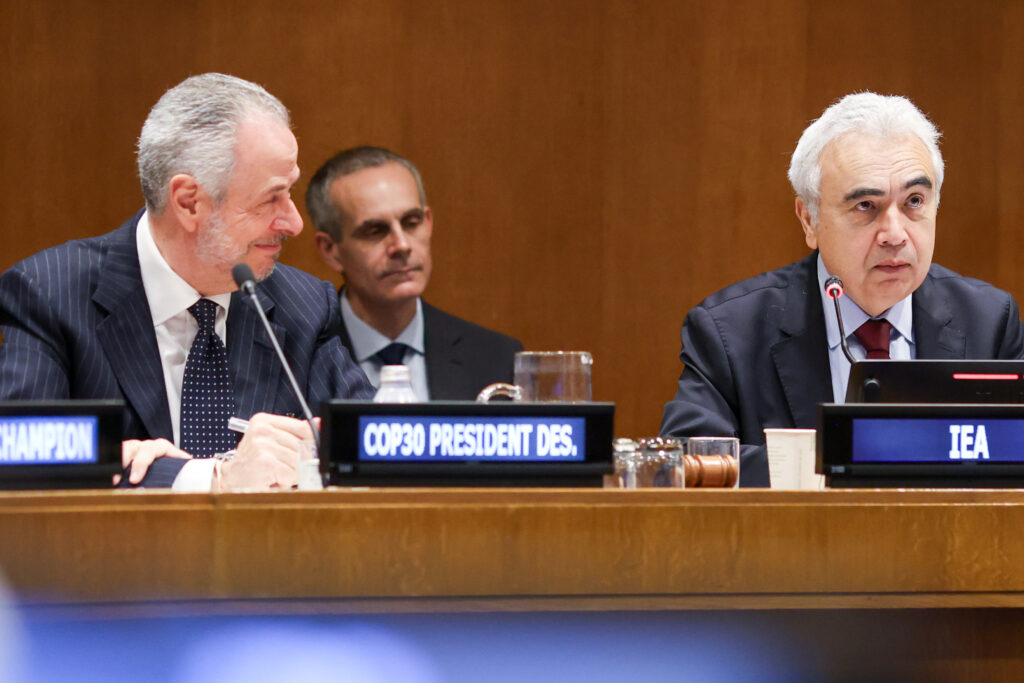
- IEA chief Fatih Birol told Zurich’s Neue Zuercher Zeitung that restoring Middle East oil and gas production to pre‑war levels would take roughly two years overall, with some countries needing longer than others.
- Birol warned that the market is underestimating the impact of a prolonged closure of the Strait of Hormuz and said no tankers were loaded in March.
- Oil and gas loaded before the Iran war have already arrived, but no new deliveries were made in March, meaning supply gaps will soon become apparent if the strait remains closed.
The head of the International Energy Agency has issued a stark warning that the disruption caused by the Iran war is likely to linger for years.
In an interview with Switzerland’s Neue Zuercher Zeitung, Fatih Birol said the IEA estimates it will take about two years to restore Middle East oil and gas production to pre‑war levels. While output recovery will vary – Iraq may take longer than Saudi Arabia – Birol’s estimate underscores the depth of the shock.
Birol argued that the market has so far underestimated the consequences of a protracted closure of the Strait of Hormuz. Although shipments dispatched before the conflict have now reached their destinations, no tankers were loaded in March, and there have been no new deliveries of oil, gas or fuels to Asian markets.
“This gap is now becoming apparent,” he said, warning that if the strait is not reopened, global energy prices will face renewed upward pressure.
The IEA’s assessment matters because the strait, which handles around 20% of global oil flows, remains effectively closed due to Iranian mines and U.S. naval cordons. Birol noted that Asia will feel the pinch first, given its heavy reliance on Middle‑Eastern supplies, but European refiners will also face tightness once existing shipments are processed.
Critically, Birol stressed that the IEA is ready to act. Following a release of emergency reserves in March, the agency stands prepared to deploy additional barrels if the situation worsens. He did not specify the volume or timing of any future releases, but said the agency would act decisively if needed.
The comments serve as a reminder that, even if diplomatic talks resume, the physical task of rebuilding damaged pipelines and restarting mothballed fields will take time. They also highlight the risk that markets misprice future supply, leading to policy complacency.
For the UK, a prolonged recovery means sustained volatility in energy prices, which could translate into higher power bills and inflation. Policymakers may need to consider strategic stockpiling or hedging strategies, while accelerating investment in domestic renewables and grid flexibility to lessen dependence on imported hydrocarbons.