

- Steel River will combine 2.5 GWdc of solar with 2.9 GWh of batteries when fully completed in Arkansas in 2029.
- Google is an anchor investor and offtaker for the first two phases, backed by $3.5 billion of project financing.
- The development demonstrates hyperscalers’ ability to sustain renewables – but a virtual PPA is not the same as powering individual data centres around the clock.
Google and Cypress Creek Energy have started construction of a 2.5 GW solar-and-storage development in Arkansas, using surging data centre electricity demand to underpin one of the largest renewable energy investments in the US.
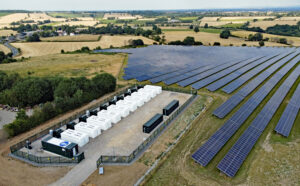
The first two phases of the Steel River Energy Center will provide 1.6 GWdc of solar generation and 1.9 GWh of battery storage to the regional grid. A third phase will take the completed development to 2.5 GWdc and 2.9 GWh by 2029 – enough annual generation, according to the developers, to match the consumption of more than 315,000 Arkansas homes.
Google is both an anchor investor and an offtaker for the initial phases. Cypress Creek has said the power is contracted through a long-term purchase agreement, while financing disclosures describe the arrangement as a virtual PPA.
Cypress Creek secured $3.5 billion in June to fund construction and long-term operation of the first two phases. Barclays, BNP Paribas, Santander and Wells Fargo underwrote the financing, alongside tax-equity capital from an unidentified investor.
The project’s industrial supply chain is a central part of its political pitch. Cypress Creek says it will use US-made First Solar modules and structural steel, with more than 142,000 tonnes of steel coil produced at US Steel’s Big River facility. Battery systems supplied by LG Energy Solution Vertech will be assembled in the US using predominantly US-manufactured cells.
The development is expected to support approximately 700 construction jobs per phase and generate an estimated $300 million in local tax revenue over its lifetime. Google has committed $5 million to energy affordability, school efficiency and weatherisation initiatives, while Cypress Creek is providing a further $3 million in community funding.
Domestic sourcing should help the project navigate federal restrictions on Chinese-linked components and preserve access to available tax incentives. It also allows solar development to be presented as heavy industrial policy rather than solely environmental policy – an increasingly important distinction in the US political market.
Unlocking scale
The immediate driver, however, is electricity demand. Data centre developers require generation and grid capacity more quickly than conventional utilities can always provide them. Google’s data centre power consumption reportedly rose by 37% during 2025 as the company expanded AI infrastructure.
Adding batteries makes Steel River more valuable to the system than an equivalent volume of solar alone. Storage can shift some daytime generation into higher-demand periods, reduce curtailment and provide grid services. The project will feed the regional network used by households, steelmakers, data centres and other industrial consumers.
A virtual PPA is principally a financial contract: the buyer supports renewable generation and receives the associated economic and environmental attributes, while its facilities continue consuming the local grid mix. It does not mean a particular Google data centre will run directly on Steel River electricity every hour.
That distinction is key, as corporate buyers move from annual renewable energy matching towards 24/7 carbon-free electricity. Steel River’s batteries narrow the gap between generation and consumption profiles, but they do not by themselves establish round-the-clock clean supply across Google’s entire data centre fleet.
For UK developers, the project demonstrates the scale that can be unlocked when a creditworthy corporate buyer combines investment, offtake and a large identifiable demand pipeline. The UK’s growing data centre sector could similarly support new renewable and storage capacity.
The policy challenge is ensuring those contracts add genuinely new generation and flexibility in the regions where load is appearing. If corporate procurement merely reallocates the output of existing assets, it can improve a buyer’s emissions accounting without solving the underlying capacity problem.
Steel River is significant because it is additional, large and storage backed. Its ultimate importance will depend on whether it becomes the model for matching new digital demand with new clean supply – or an exceptional project in a power system increasingly tempted by quicker gas-fired solutions.