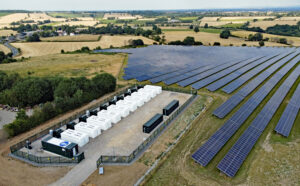

- Fidra Energy has secured a £231 million loan package for its 500 MW / 1.1 GWh West Burton C battery project.
- A ten-year Drax tolling contract and a 15-year capacity market award provide contracted revenue alongside merchant market exposure.
- The financing demonstrates growing lender appetite for batteries, although the approximately two-hour asset cannot address multi-day renewable shortfalls.
Fidra Energy has reached financial close on its 500 MW West Burton C battery project in Nottinghamshire, combining institutional equity, £231 million of debt and long-term contracted revenues to move one of Britain’s largest storage developments towards construction.
The 1.1 GWh project is located at the former West Burton coal power complex, where it can reuse established energy infrastructure and connect at 400 kV. Construction is scheduled to begin later in 2026, with full operation expected in 2028, according to the financial close announcement.
The debt comprises a term loan and ancillary facilities from a group of international lenders. Fidra is backed by infrastructure investor EIG and the UK’s National Wealth Fund, whose earlier commitment to the platform also supports the company’s much larger Thorpe Marsh battery and subsequent pipeline.
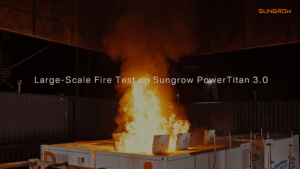
Sungrow will supply the battery systems, while H&MV Engineering will design and build the grid connection, electrical scheme and battery installation. The use of a former coal site illustrates a major advantage available to the storage sector: valuable transmission connections and power sector land can be repurposed without waiting for entirely new network corridors.
The most instructive part of the financing is its revenue stack. West Burton C secured a 15-year capacity market contract beginning in October 2028, giving Fidra an inflation-linked stream in return for making capacity available during system stress.
Drax has separately contracted half of the project (250 MW / 500 MWh) under a ten-year tolling agreement. Drax will make annual, UK CPI-indexed payments and receive full operational control and dispatch rights over that portion of the battery. It will retain the associated trading and balancing revenues, excluding capacity market income.
Fidra remains responsible for construction, maintenance and availability, meaning the toll does not transfer delivery risk to Drax. For Drax, it is a capital-light way to add fast-response flexibility. For Fidra and its lenders, the fixed fee reduces reliance on inherently volatile merchant revenues. The contract requires no upfront Drax capital.
Predictability
That allocation of risk helps explain why the project has secured debt at scale. Battery revenues can come from wholesale arbitrage, balancing services and network markets, but each is exposed to changing spreads, competition and regulation. A tolling contract exchanges some upside for predictability and gives a specialist optimiser the incentive to extract value across multiple markets.
The remaining half of the asset appears to preserve more merchant exposure, giving Fidra a balance between contracted cash flow and potential upside. The company has not disclosed the project’s total capital cost, so the £231 million facility should not be treated as a full valuation.
West Burton C also has a defined limitation. At 1.1 GWh, it is an approximately two-hour battery. It can move midday renewable output into the evening peak, respond quickly to faults and reduce some curtailment, but it cannot cover several days of low wind. Britain will require longer-duration storage, interconnection and dispatchable generation alongside batteries of this type.
The government’s Clean Power 2030 plan envisages 22 GW to 27 GW of short-duration storage by the end of the decade. Fidra’s West Burton and Thorpe Marsh projects would represent a significant contribution, but the wider importance of Friday’s announcement lies in bankability rather than headline capacity.