- Malaysia has tendered for 2.5 GW of solar paired with 1.25 GW of battery capacity, plus a separate 150 MW solar allocation for Bumiputera developers.
- It is the first Malaysian large-scale solar round to make battery pairing mandatory.
- The programme could attract RM13 billion to RM15 billion of investment, with projects required to operate by the end of 2029.
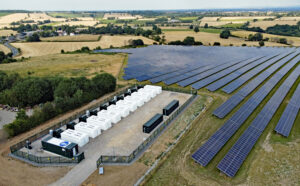
Malaysia has launched its largest utility-scale solar tender to date, coupling 2.5 GW of photovoltaic capacity with 1.25 GW of batteries in a significant shift from procuring intermittent generation as a standalone asset.
The sixth Large Scale Solar round, known as LSS6, comprises three packages. The largest offers 2.2 GW of solar and 1.1 GW of battery capacity through an open tender, while a second reserves 300 MW of solar and 150 MW of batteries for Bumiputera-owned developers. A further 150 MW of solar without storage is being set aside for smaller Bumiputera companies.
Request for proposal (RFP) documents for the two solar-plus-storage packages will be available between 27 July and 7 August. The smaller solar-only round will run from 17 to 28 August.
Projects in the first two packages can range from 60 MW to 500 MW, while the solar-only schemes will be between 10 MW and 30 MW. All successful projects must enter commercial operation by 31 December 2029.
Malaysia’s Ministry of Energy Transition and Water Transformation expects LSS6 to attract between RM13 billion and RM15 billion, equivalent to approximately $3.2 billion to $3.7 billion. It has forecast 15,000 to 20,000 jobs during development and construction, alongside annual carbon savings of 2.6 million tonnes.
The ministry will prioritise developments in areas of fast-rising demand, particularly southern Peninsular Malaysia. That region includes Johor, where electricity requirements are increasing rapidly as data centre investment expands.
Developers using domestically manufactured renewable energy products, including solar modules, will also receive priority. Bidders must have previous solar development experience, although battery project experience is not compulsory.
Competing with coal
The mandatory storage requirement is the round’s defining change. Malaysia’s earlier LSS auctions focused on reducing solar costs through competitive long-term power-purchase agreements; by contrast, LSS6 recognises that another large tranche of midday generation must be integrated with greater control over when power reaches the network.
One important technical detail remains absent from the headline announcement: the government has specified battery power in megawatts but not publicly stated the required energy duration in megawatt-hours. A 1.25 GW fleet capable of discharging for one hour provides a markedly different service compared to the same power capacity operating for four hours. The full tender documents will therefore determine how much reliability and evening-shifting capability the programme actually buys.
The round is still large relative to Malaysia’s existing market. Previous LSS auctions have approved more than 6 GW of projects, while installed solar capacity surpassed 5.7 GW in 2025. LSS6 could add almost half that operational base if completed in full.
Solar nevertheless remains a small part of generation. Coal supplied 58.6% of Peninsular Malaysia’s electricity in 2025 and gas 33.1%, while solar contributed about 2.4%. The government expects gas and renewables to replace coal progressively as demand grows.
LSS6 will not by itself overturn that mix, but its design is more consequential than its capacity alone. By procuring storage alongside generation from the outset, Malaysia is assigning developers responsibility for grid integration rather than adding batteries later as a remedial measure.
That model is increasingly relevant to other fast-growing power systems. The next test will be whether the tender’s contract structure rewards useful dispatch, preserves competition and avoids allowing local content requirements to inflate costs excessively.