
- Liverpool Bay CCS has secured the seabed rights needed to repurpose offshore gas infrastructure for the HyNet carbon transport and storage network.
- The first phase is designed to store 109 million tonnes of CO₂, initially handling 4.5 million tonnes a year before potentially expanding to 10 million.
- The lease completes another major part of the project’s regulatory framework, but HyNet’s economics will ultimately depend on capture plants supplying sufficient volumes.
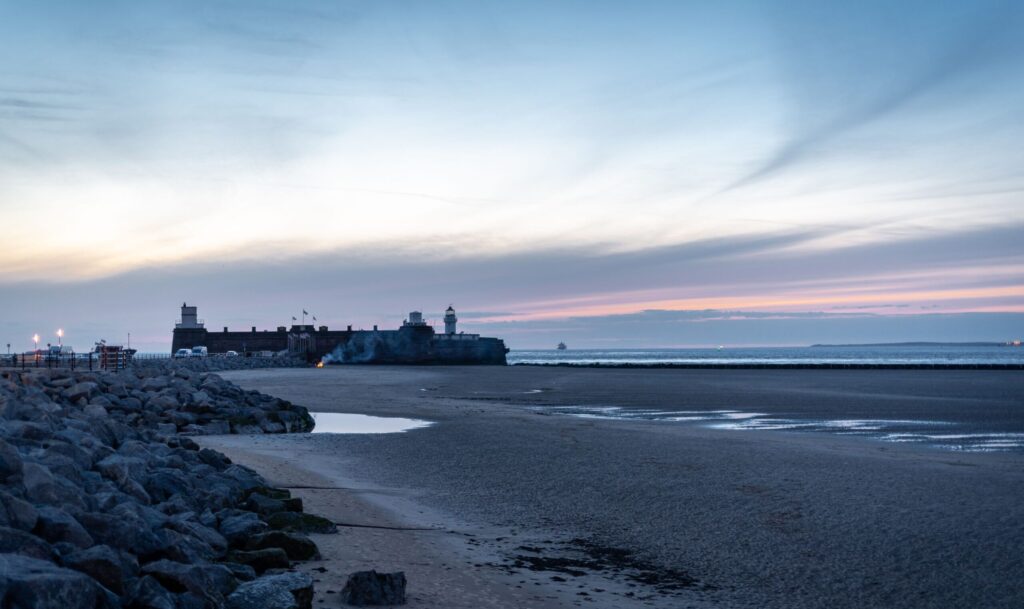
Liverpool Bay CCS has signed a full lease with The Crown Estate, clearing the way for Eni to reuse pipelines, platforms and depleted gas reservoirs beneath Liverpool Bay as the storage backbone of the HyNet industrial decarbonisation cluster.
The agreement gives the Eni-led company the seabed rights required to develop the offshore transport and storage system serving industrial sites across North West England and North Wales. It follows an Agreement for Lease awarded in August 2024, financial close with the UK government in April 2025 and the award of three carbon-storage permits.
Liverpool Bay CCS will repurpose more than 75 miles of pipelines, three offshore structures and an onshore gas-treatment plant. A further 21 miles of pipeline will be constructed to connect industrial capture facilities to the network, according to The Crown Estate.
Carbon dioxide captured from cement production, low-carbon hydrogen and energy-from-waste plants will be transported offshore and injected into depleted gas fields in the East Irish Sea, about 20 miles from Liverpool.
The first phase is designed to store 109 million tonnes over 25 years, with an initial capacity of 4.5 million tonnes a year. Capacity could rise to 10 million tonnes annually during the 2030s as more emitters join the network.
Liverpool Bay CCS managing director Stefano Rovelli said repurposing existing infrastructure would “speed up the process by which we can tackle CO₂ emissions from industry” while supporting regional growth.
The project is expected to create around 2,000 construction jobs and unlock approximately £2 billion of supply-chain investment. The UK government has committed up to £21.7 billion over 25 years to support its first carbon-capture clusters, including HyNet and the East Coast Cluster.
Maintaining momentum
The North Sea Transition Authority awarded Eni the three storage permits in April 2025, allowing it to prepare the reservoirs for injection. First injection remains targeted for 2028, although the capture projects feeding the system will reach operation at different times.
The most advanced industrial projects include Heidelberg Materials’ Padeswood cement works in North Wales and Encyclis’ Protos energy-from-waste facility in Cheshire. The two projects have reached financial close and are under construction. Together, they are expected to capture about 1.2 million tonnes of CO₂ a year, with operations currently anticipated from 2029.
That timing highlights the next challenge for HyNet. Transport and storage infrastructure must be constructed ahead of demand, but its commercial performance will depend on capture plants connecting quickly enough to use the available capacity. Six further HyNet projects have entered government negotiations under the Track-1 expansion process, providing a potential route to higher utilisation.
Reusing offshore assets should reduce construction requirements and preserve infrastructure that might otherwise be decommissioned. It could therefore give Liverpool Bay a cost and scheduling advantage over an entirely new network, although existing pipelines and reservoirs must still meet stringent integrity requirements for transporting and permanently storing CO₂.
Financial close, storage permits and property rights now provide much of the framework needed to deliver the network. The emphasis is shifting to construction, coordination between separate projects and the development of a sufficiently large customer base.
Carbon Capture and Storage Association chief executive Olivia Powis said maintaining momentum was now “critical to delivering the UK’s industrial ambitions at scale”. That is the central test: HyNet is moving into delivery, but its success will be judged by captured tonnes rather than infrastructure milestones.