- Polish state‑controlled utility Enea will at least double its capital spending on renewable energy next year from 543 million zlotys in 2026, driven by large‑scale battery projects.
- Enea plans to commission 866 MW of battery storage in 2027 and has a total pipeline of 1,386 MW, part of a strategy to stabilise its portfolio as coal plants decline.
- The company’s 2026 capex budget of 9.08 billion zlotys includes funding for a new gas‑fired plant and 819 million zlotys for its Bogdanka coal mine, highlighting a gradual, rather than abrupt, transition.
Polish utility Enea has unveiled ambitious investment plans that reflect the evolving dynamics of Europe’s energy transition: massive capital commitments to renewable generation and battery storage, coupled with continued spending on gas and coal.
The company announced it will more than double its spending on renewables in 2027 compared with the 543 million zlotys earmarked for 2026, signalling confidence in the profitability of wind and solar even amid volatile markets.
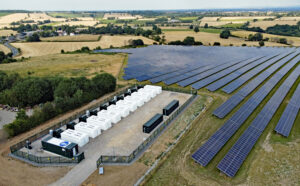
Central to Enea’s strategy is the deployment of large‑scale battery storage. The utility plans to commission 866 MW of batteries in 2027 and has a total storage pipeline of 1,386 MW. Such capacity would be among the largest in Europe and underscores the growing role of storage in balancing intermittency and securing grid stability.
Enea intends to use these batteries to smooth out fluctuations from renewable assets and reduce reliance on coal‑fired plants, which currently dominate Poland’s energy mix.
The company’s investment plan reveals the complexities of the transition, however. Total capital expenditure for 2026 is budgeted at 9.08 billion zlotys, up from 6.21 billion in 2025, with 4.17 billion allocated to generation projects, including a new gas‑fired plant.
Enea will also spend 819 million zlotys on its Bogdanka coal mine, aiming to stabilise output at about 8 million tonnes a year. The company plans to invest 108 billion zlotys through 2035 across its businesses, reflecting a gradual shift rather than an abrupt pivot away from fossil fuels.
The mixed approach highlights the challenges facing utilities in Eastern Europe. While EU climate policies and rising carbon prices are incentivising renewables, energy security concerns – exacerbated by the Iran war and Russia’s supply disruptions – make it difficult to abandon coal and gas entirely.
Battery storage offers a bridge, enabling higher shares of renewables without compromising reliability. For UK professionals, Enea’s strategy is instructive: it suggests that large‑scale storage is moving into the mainstream, but that utilities will continue to hedge with dispatchable thermal capacity until markets fully reward flexibility.
Enea’s moves also have regional implications. Poland is one of Europe’s last coal‑heavy power systems, and its trajectory will influence cross‑border electricity flows and carbon pricing. The planned storage projects could smooth volatility in the Central European grid and open opportunities for UK and European battery suppliers.
At the same time, continued investment in fossil assets may draw criticism from investors seeking alignment with net‑zero targets. Navigating this tension will require careful engagement with regulators, lenders and the public as Enea and its peers chart their transition paths.