- UK energy secretary Ed Miliband told industry that the UK must treat clean energy as a defence priority, arguing the Iran crisis proves “the era of fossil fuel security is over”.
- The government will push ahead with plans to delink electricity prices from volatile gas markets, alongside long-term contracts for legacy renewables.
- Measures include opening public land for renewables, speeding up grid connections and expanding EV infrastructure. The reforms promise lower bills and faster decarbonisation, but risk investor pushback and a more state-directed energy market.
The UK will “never again be at the mercy of fossil fuel dictatorships,” energy secretary Ed Miliband declared on Tuesday, as he used a major speech to recast the country’s net-zero agenda as a response to the global energy crisis triggered by the Iran conflict.
Speaking against the backdrop of surging oil and gas prices and disruption in the Strait of Hormuz, Miliband argued that the UK’s reliance on imported fossil fuels had been exposed as a strategic vulnerability.
“The era of fossil fuel security is over,” he said, insisting that domestically generated clean power offers the only durable protection against geopolitical shocks.
At the centre of the government’s response is a proposed overhaul of the electricity market designed to delink power prices from gas. Ministers plan to offer long-term, fixed-price contracts to older renewable generators, bringing them into a system similar to Contracts for Difference. The move would cover roughly a third of UK electricity supply and be backed by a higher windfall levy on those that refuse to participate.
The reform targets a long-standing feature of European energy markets, where gas-fired power stations set the marginal price of electricity. With gas prices spiking, that mechanism has driven up bills for consumers and businesses alike, even as renewable generation costs have remained low. By separating the pricing mechanism, the government aims to stabilise bills while providing predictable revenues for investors.
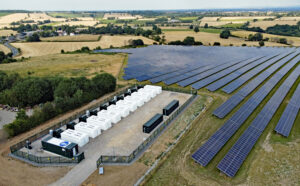
Miliband also outlined a broader package to accelerate the domestic clean-energy build-out. This includes opening public land for around 10 GW of new renewable capacity, reforming planning rules to cut grid-connection delays and expanding electric-vehicle charging networks. The message was clear: energy security will now be delivered through electrification, renewables and storage rather than fossil fuel supply.
Decisive shift
The speech marks a decisive shift in tone. While previous governments have framed net zero primarily as a climate imperative or economic opportunity, Miliband is positioning it as a response to immediate geopolitical risk. That shift could prove politically potent at a time when voters are grappling with rising fuel costs, but it also signals a more interventionist approach to energy markets.
The move to fixed-price contracts will reduce upside for legacy renewable assets while offering greater certainty for new projects. Developers may welcome faster planning and grid reforms, but the higher levy and increased state involvement could dampen confidence among some investors.
Market reform marks a pragmatic compromise between full market redesign and doing nothing. It provides long‑term revenue certainty for legacy renewables, which could unlock refinancing and support repowering projects. But it also leaves significant exposure to gas price volatility – particularly in winter when renewables output is lower. More radical reforms may follow if gas prices stay high. Ultimately, the success of this initiative will hinge on whether it reduces bills without deterring investment in new clean‑energy capacity.
The broader strategic direction, however, is unmistakable. The UK is doubling down on electrification and domestic generation as the cornerstone of its energy system. In doing so, it is aligning itself with a wider global trend, as governments from Europe to Asia respond to fossil-fuel volatility by accelerating clean-energy deployment.
The key question now is execution. Delivering lower bills, faster build-out and investor confidence simultaneously will require careful policy design and rapid implementation. But if successful, Miliband’s approach could mark a turning point – not just for the UK’s energy system, but for how the transition itself is framed: less as a climate obligation, and more as a matter of national resilience.