- Oil flows resume after months‑long halt: Ukraine repaired its section of the Druzhba pipeline, allowing shipments to Hungary and Slovakia to restart.
- This unblocks a €90 billion EU loan for Kyiv. Hungary had vetoed the loan until flows resumed; the restart prompted ambassadors to approve the funding.
- Druzhba can carry up to 1.4 million barrels per day but volumes have dwindled due to sanctions and attacks.
Russian oil once again flowed through Ukraine on Wednesday after a months‑long stoppage that had threatened to deepen Europe’s fuel crisis.
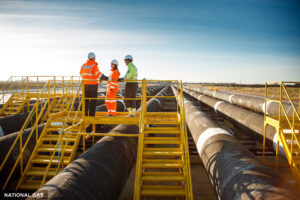
The Druzhba pipeline, whose name means “friendship” in Russian, is one of the world’s longest crude networks. It delivers oil from Russia through Ukraine to refineries in Hungary, Slovakia and the Czech Republic.
Flows stopped in January after a Ukrainian drone strike damaged infrastructure and amid wrangling between Budapest and Kyiv.
Officials said pumping resumed at 12:35 pm local time after repairs were completed. Hungarian energy company MOL confirmed it had been informed that shipments were moving again and expected crude to arrive within a day.
Within hours, EU ambassadors in Brussels approved a €90 billion loan for Ukraine that Hungary had been blocking until the pipeline restarted. The loan covers roughly two thirds of Ukraine’s financing needs for 2026‑27, providing vital support as Kyiv continues to fend off Russia’s invasion.
The restart underscores the geopolitical importance of the Druzhba line. Its capacity of 1.2-1.4 million barrels per day once made it a linchpin of Soviet‑era energy trade. Today, flows have dwindled to a fraction due to EU sanctions, Western buyers’ self‑sanctioning and repeated drone attacks.
The pipeline has become a bargaining chip in negotiations between the EU, Ukraine and Hungary. Outgoing Hungarian Prime Minister Viktor Orban accused Kyiv of delaying repairs – a charge Ukraine denies – but ultimately agreed to unblock funding once oil started to flow.
The relief may be short‑lived. Russia plans to stop shipping Kazakh crude via Druzhba from 1 May, which would deprive Germany’s PCK Schwedt refinery of feedstock. PCK, formerly reliant on Russian crude, has struggled to secure alternative supplies via rail and pipelines. Meanwhile, the pipeline’s vulnerability remains high; drone attacks could again sever flows, and sanctions may tighten if the war escalates.
For traders and refiners, the news offers a brief respite from supply tightness but also a warning. Europe’s dependence on a patchwork of ageing pipelines and tenuous political agreements leaves crude markets prone to sudden shocks.
The Druzhba restart may help stabilise Brent prices in the short term, but the underlying risks – war damage, sanctions and geopolitical brinkmanship – remain. Companies should watch for further disruptions and consider how to hedge against the loss of Russian and Kazakh barrels.
The episode also illustrates how energy infrastructure can hold hostage broader political agendas; in this case, Hungary leveraged its veto to secure oil flows and concessions, delaying EU financial aid in the process.