- City Hall says climate damage could reach 3% of London’s economy by the 2050s without additional adaptation.
- High temperatures already cost an estimated £577m a year in lost productivity.
- The upper figure covers multiple climate impacts and depends on future economic growth. It is not a forecast bill for heat alone.
Climate change could cause between £16bn and £36bn of annual damage to London’s economy by the 2050s without stronger adaptation, according to evidence published by the Mayor of London and London Councils.
The Heat Ready London technical report examines risks to buildings, health, transport, water, communications and business productivity. Its upper estimate represents approximately 3% of the capital’s projected economy.
The £36bn figure should not be interpreted as the cost of extreme heat alone: it is a broad estimate of climate-related economic damage, with the monetary range reflecting different assumptions about London’s future growth.
“The climate crisis is on our doorstep,” Mayor Sadiq Khan said. “It is already threatening Londoners’ lives, disrupting vital services and costing our economy.”
City Hall estimates that high temperatures currently reduce productivity by £577m a year. Productivity accounted for almost 90% of the estimated £1.5bn cost of London’s three heatwaves in 2022.
Adaptation investment
The 2022 events demonstrated how apparently local failures can spread through essential services. Buckled rails caused restrictions and cancellations, water consumption rose by 50% and the failure of two data centres at Guy’s and St Thomas’ hospitals disrupted care and required £1.4m of unplanned spending.
London may face a water shortfall exceeding one billion litres a day by 2050. City Hall estimates that a severe shortage could cost the economy £500m for every day that demand could not be met.
Around one million London homes may already face high overheating risk. More than 1,300 schools, 60 hospitals and 351 care homes are located in high-risk areas. About 80% of homes standing today are expected still to be occupied in 2050, making retrofit at least as important as standards for new construction.
Heat Ready London identifies 37 priorities across buildings, business, emergency response, green space, health and infrastructure. Proposed actions include retrofitting vulnerable homes, expanding shade and drinking water access, strengthening transport and utility assets and improving coordination during heat alerts.
London’s parks and green spaces are estimated to deliver more than £90bn of benefits over 30 years, or roughly £27 for every £1 spent. Those benefits include cooling, flood management, air quality and wellbeing.
Retrofitting homes for heat resilience could cost up to £45bn over 25 years, or approximately £2bn annually, according to AtkinsRéalis, which helped develop the plan. That is substantial, but materially below even the report’s lower annual damage estimate.
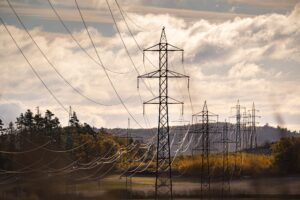
The energy sector implications extend beyond additional air conditioning demand. Electricity networks will need to accommodate sharper summer peaks, data centres require more resilient cooling and backup systems and heat pump programmes must consider year-round temperature control rather than winter heating alone. Water and transport investments will similarly need climate assumptions embedded at design stage.
The report succeeds in reframing adaptation as an economic and infrastructure issue. Its weakness is that many of the 37 priorities lack committed budgets, delivery bodies and enforceable milestones.
The £36bn headline establishes the case for action – the next test is converting that risk estimate into funded projects before repeated heatwaves make emergency expenditure the default form of adaptation.