

- A typical small industrial or commercial site now faces about £638,500 for a 12-month electricity contract and £1.15 million for gas.
- Both benchmarks have risen approximately 25% since February, leaving companies renewing in October particularly exposed.
- The shock is magnifying a structural competitiveness problem: almost 90% of business energy consumption receives no relief from electricity policy costs.
British businesses negotiating new energy contracts face a sharp increase in costs after six months of wholesale market disruption pushed benchmark electricity and gas bills up by approximately a quarter.
A typical 12-month electricity contract for a small industrial or commercial site would now cost £638,500, while its gas contract would cost £1.15 million, according to Cornwall Insight’s Business Energy Cost Forecast. Both figures are around 25% higher than in February.
The modelled site is larger than a conventional small business, consuming 2,334MWh of electricity and 15,275MWh of gas annually. It is intended to represent a large retail or leisure site or a small manufacturer. Nevertheless, the direction of travel applies more broadly to companies buying energy on shorter-term contracts.
Cornwall Insight attributed the increase principally to the conflict between the US and Iran, which has pushed European wholesale prices to their highest level in almost four years. Lower-than-usual European gas stocks, extended Norwegian production outages, Asian demand for liquefied natural gas and summer heatwaves have added to the pressure.
Many British companies renew their contracts in October, meaning the wholesale shock is moving from trading screens into operating budgets. Larger businesses that hedged months or years ahead may remain partly insulated, but the protection diminishes if elevated prices persist.
“High bills will continue to weigh on investment decisions,” said Jacob Briggs, Cornwall Insight’s energy users lead.
Competitiveness and electrification collide
The immediate increase is geopolitical, but the vulnerability is structural. Britain’s industrial electricity prices averaged 45% above the G7 median during 2023 and 2024, according to a CBI and Energy UK report. Earlier CBI research found nearly 90% of companies had experienced higher energy bills over three years and four in ten expected to cut investment as a result.
Network charges, system balancing costs and electricity policy costs are also rising. These charges finance infrastructure needed for electrification and the energy transition, but they can make electrification less attractive to the businesses being encouraged to replace fossil fuel equipment.
Government relief remains narrowly targeted. About 500 energy-intensive companies receive support through the British Industry Supercharger, while the British Industrial Competitiveness Scheme is expected to extend policy cost exemptions to around 10,000 companies from April 2027. Cornwall Insight estimates, however, that businesses accounting for nearly 90% of commercial energy consumption currently receive no policy cost support.
That gap is significant because the affected businesses include retailers, leisure operators, food producers and medium-sized manufacturers. They may not meet the definition of an energy-intensive industry, but energy is still significant enough to determine whether investment in new equipment, premises or low-carbon technology proceeds.
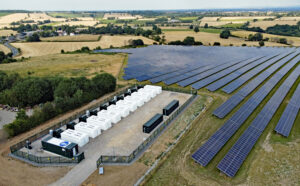
The practical response will differ by business. Fixed-price contracts and hedging can smooth volatility, while corporate power purchase agreements, on-site solar, storage and flexible consumption can reduce exposure. These options require credit, expertise and capital, potentially dividing companies able to manage the shock from those forced to absorb it.
The wider policy lesson is that abundant renewable generation alone will not deliver competitive industrial energy. The UK also needs lower system costs, faster grid construction and a fairer allocation of transition charges. Otherwise, each new fossil fuel shock will continue to weaken the investment needed to reduce exposure to the next.