- Dajin Heavy Industry and Haventus will examine using the port of Ardersier for foundation storage, assembly, marshalling and transport.
- The memorandum covers fixed-bottom and floating wind, but includes no firm investment, order, factory or employment commitment.
- Coming after the UK blocked Ming Yang’s turbine proposal at the same port, the agreement suggests Chinese involvement may be assessed component by component.
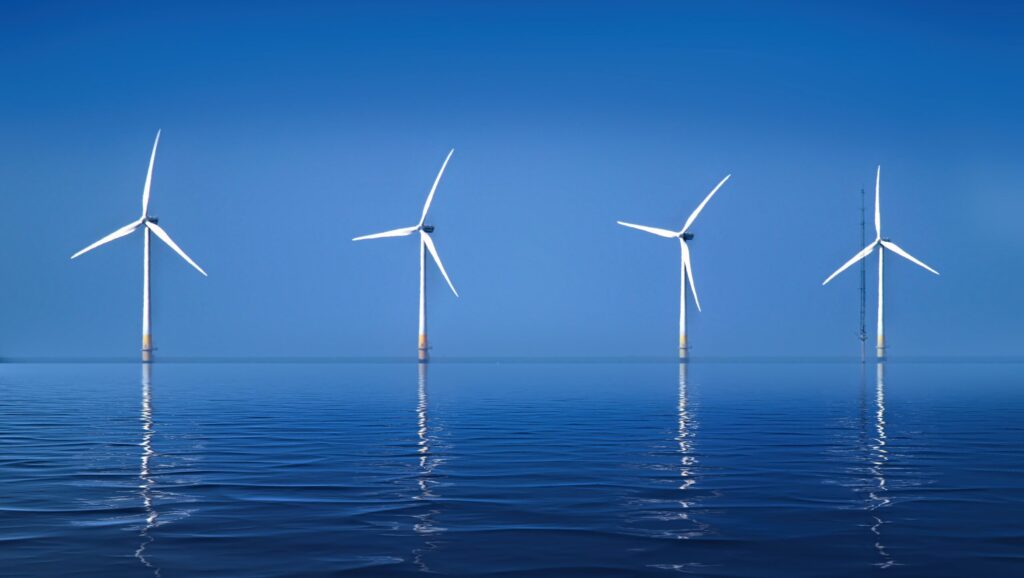
Chinese offshore wind foundation manufacturer Dajin Heavy Industry has signed a memorandum of understanding with Ardersier Port owner Haventus to explore a logistics and supply chain hub serving British and European projects.
The companies will examine how Dajin’s foundation manufacturing and specialist transport fleet could be combined with Ardersier’s deep-water access, quayside land and assembly infrastructure. The prospective work covers fixed-bottom and floating offshore wind.
Potential activities include component storage, marshalling, assembly and onward transportation. No specific offshore wind project, capital commitment, local manufacturing facility or timetable has been disclosed.
“This MoU is another important step in strengthening Ardersier Port’s role in the offshore wind supply chain,” said Haventus chief commercial officer Mark Gillespie, adding that it reinforced the company’s ambition “to make Ardersier Port the leading facility for offshore wind in the UK and Northern Europe”.
Dajin has already supplied foundations to the UK market, including for Hornsea 3, Moray West and Inch Cape. It is also expanding its fleet of heavy transport vessels and has entered comparable cooperation frameworks with the Port of Cuxhaven and AD Ports Group.
Ardersier, a former oil and gas fabrication yard near Inverness, is being redeveloped as a 450-acre ‘energy transition facility’. Haventus announced an initial £300 million investment commitment in 2023 and subsequently secured a £100 million credit facility from the Scottish National Investment Bank and UK Infrastructure Bank.
The port says its scale and high-voltage connection make it suitable for manufacturing, fabrication and assembly as well as marshalling. These characteristics are particularly important for floating wind, whose structures are too large for many conventional ports.
Security line through the supply chain
The agreement is politically significant because Ardersier was previously the proposed location for Chinese manufacturer Ming Yang’s £1.5 billion turbine factory.
The UK government said in March that it could not support the use of Ming Yang turbines in British offshore wind projects, citing national security and supply chain concerns. The decision effectively halted a proposal that could have created up to 1,500 jobs. Ming Yang subsequently began considering alternative European locations, including Spain.
Dajin’s involvement raises a different risk profile. Turbines contain control systems, software and remote communications connected to critical energy infrastructure. Foundations and logistics are less digitally sensitive, although they still create dependencies involving strategically important manufacturing capacity and vessels.
The MoU therefore suggests the UK may draw distinctions between different sections of the Chinese wind supply chain rather than apply a blanket exclusion. That could help address shortages in foundations, vessels and suitable ports while retaining tighter controls over digitally active equipment.
Whether the arrangement contributes to UK industrial value will depend on its final form. Using Ardersier to marshal foundations manufactured in China would support port and logistics employment but capture less value than fabrication in Scotland. A local production or finishing operation would offer a much larger economic prize.
That distinction should remain central as the agreement develops. Dajin says it wants to create local employment and value-adding activity in Europe, but the MoU does not yet require either. For now, it is a strategically notable option rather than a committed investment.