
- Almost three quarters of England remains in drought or prolonged dry weather following an exceptionally dry spring and summer.
- The Environment Agency estimates that 120% of normal rainfall is needed over the next seven months for every area to leave drought by April.
- Water availability is becoming a material development risk for hydrogen, carbon capture, power generation and data centre projects.
England needs approximately 20% more rainfall than normal over the next seven months to end drought in every region before spring 2027, according to Environment Agency modelling.
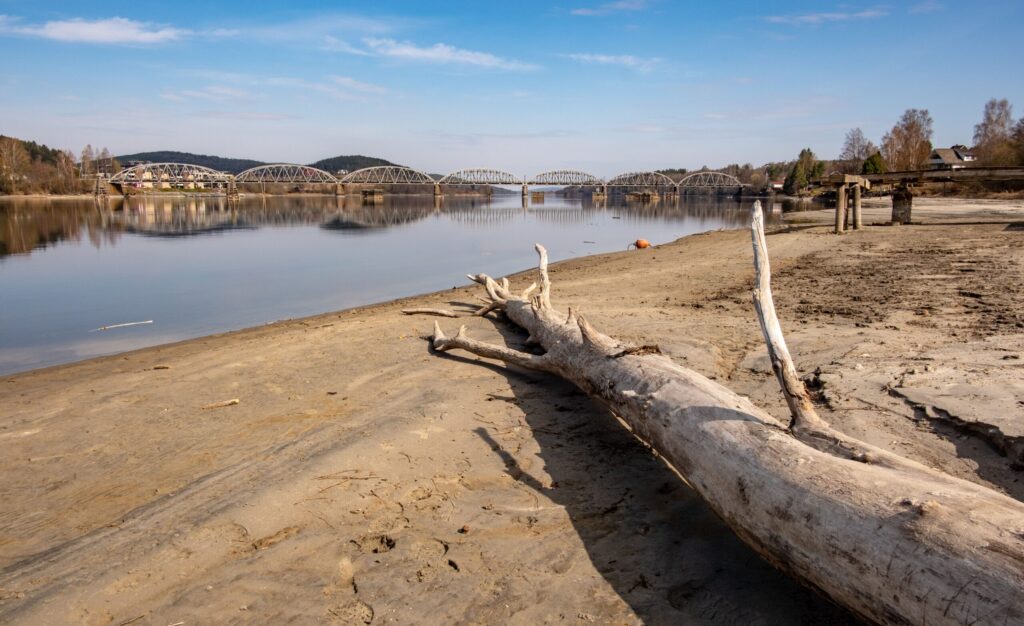
Recent rainfall has increased some river flows but has not replenished groundwater or reservoirs depleted during the dry spring and record-breaking summer. Almost three quarters of England remains in drought, while the National Drought Group has moved to weekly meetings.
Under the most likely weather scenario, most regions would return to normal or enter recovery during the winter. East Anglia and Devon and Cornwall, however, are expected to remain in drought at the beginning of April – entering the traditionally drier part of the year with an existing deficit.
There is also roughly a one-in-four chance that around half the country will still be in drought next spring. Officials currently estimate a 1% probability of severe drought conditions developing in the coming months. England has not experienced a severe drought since 1976.
“The recent rainfall is not yet enough to replenish all the water we’ve used over the last six months,” water minister Emma Hardy said, urging utilities to accelerate leak repairs, follow their drought plans and maintain demand-reduction measures. The government’s latest assessment was published following a meeting with water company chief executives.
Tightening resource constraint
England received only 56% of normal spring rainfall and 64% during the summer. The country then experienced its driest July and joint-hottest August on record, including five heatwaves. Water demand rose by as much as 30% on the hottest days.
National reservoir storage fell to 56.9% in the week ending 8 September – almost 20% below the seasonal norm. 12 reservoirs or reservoir groups were less than half full, while temporary-use bans affected approximately 30 million people. The Environment Agency’s weekly drought report recorded ten operational areas in drought and the remainder in prolonged dry weather.
The immediate response remains focused on household supply, agricultural abstraction, leakage and drought permits. Government measures include support for affected farmers, water transfers, possible desalination and plans for nine new reservoirs by 2050.
For the energy transition, however, the regional pattern is as important as the national totals. East Anglia is simultaneously expected to remain one of the most water-stressed areas and to host substantial growth in offshore wind infrastructure, grid connections, hydrogen, carbon capture, housing and data centres.
Many low-carbon technologies require reliable water supplies. Hydrogen electrolysis consumes high-purity water; carbon capture processes can increase cooling requirements; thermal power stations and some nuclear designs depend on cooling; and bioenergy projects may add pressures through both processing and feedstock cultivation.
The government’s national water framework estimates that carbon capture and hydrogen could require up to 767 million litres a day by 2050. It puts consumptive water use for green hydrogen at approximately 30 litres per kilogram, while warning that some emerging industrial and energy demands are not yet fully reflected in regional plans. The Environment Agency’s energy assessment calls for better coordination between water and energy planning.
The practical consequence is that water availability can no longer be treated as a secondary environmental permitting issue. Developers may need to demonstrate alternative cooling systems, water reuse, on-site storage or access to non-potable supplies much earlier in project design.
A wet winter would ease the immediate crisis. It would not resolve the structural mismatch between rising demand, ageing infrastructure and a climate expected to produce more frequent hot, dry summers. For investors, the drought is therefore both an operational warning and a signal that water resilience will increasingly influence where energy transition assets can be built.