
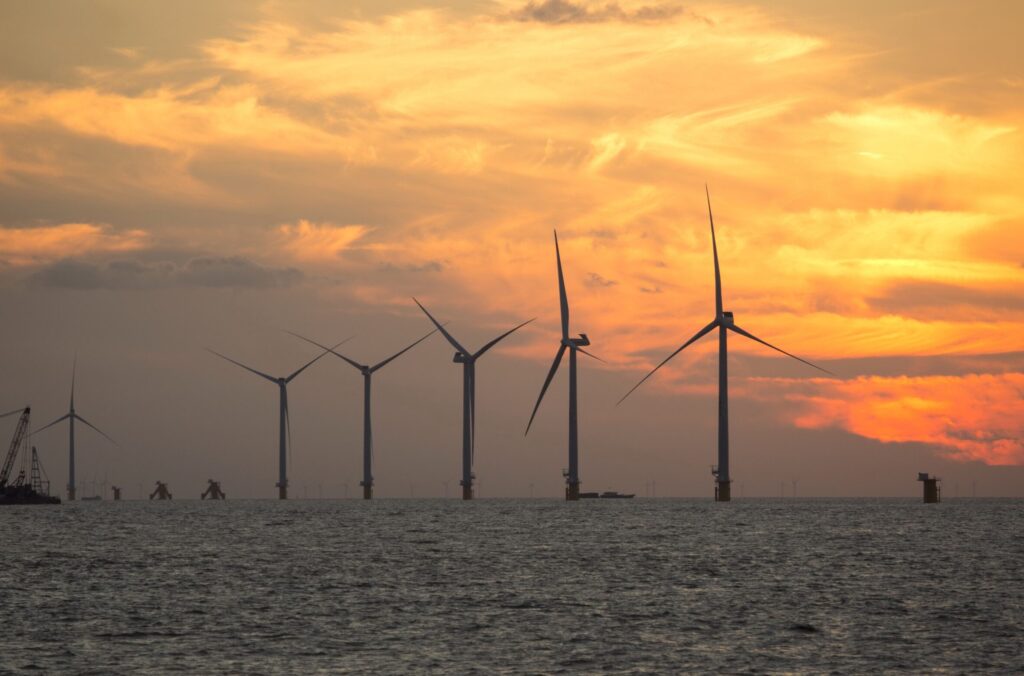
- Enova has awarded NOK3.94bn to two projects planning four floating turbines with a combined capacity of 74 MW.
- The demonstrations will test foundations, moorings and construction methods at a scale relevant to future commercial projects.
- For UK developers, their value will lie in evidence on cost and reliability, with funding still conditional on implementation.
Norway has awarded NOK3.94bn to two floating offshore wind demonstration projects, backing full-scale tests intended to reduce costs and improve confidence in technology relevant to future developments around Britain.
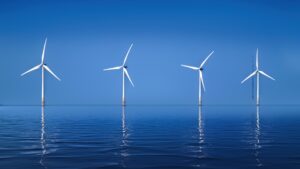
State enterprise Enova selected Fortius Offshore Wind and Fram Wind Solutions for support announced on 30 October. Each project plans two turbines rated at 18.5 MW at the METCentre test site off Karmøy in Rogaland.
The four turbines would provide 74 MW of combined capacity and are expected to generate approximately 300GWh annually. Enova’s programme envisages installation over the next five years, with support paid if the projects proceed. Fortius was allocated NOK2bn and Fram NOK1.94bn.
The projects will test floating foundations, anchoring arrangements and methods of construction and operation. Enova selected them using criteria that included output relative to public support, the potential for wider adoption, environmental effects and prospects for lower future costs.
BW Offshore confirmed that Fram Wind Solutions would use BW Ideol’s Damping Pool foundations. The venture is owned by BW Offshore, Grieg Kapital and Fram Green Technology.
Its grant requires the project to reach a final investment decision, secure financing and enter key supplier agreements within 24 months.
“It will enable us to deploy BW Ideol’s technology on the next generation of turbines,” BW Offshore chief executive Marco Beenen said.
Independent industry reporting confirmed the awards and their focus on testing large turbines, foundations and installation methods. The research partnership FME NorthWind also identified the programme’s central purpose as reducing the cost of floating wind.
Operational evidence
The programme’s significance exceeds its nameplate capacity. Floating wind projects need evidence that foundations, moorings and electrical systems can work reliably together under the loads imposed by increasingly large turbines.
That evidence influences several commercial decisions. Lenders need confidence in availability and repair costs, insurers need to assess failure exposure and developers need installation programmes and maintenance strategies that can be repeated across many units.
A successful demonstration can reduce uncertainty in those judgements, although operating one design at a test site does not establish that every future project will achieve the same performance. Water depth, seabed conditions, weather and access to ports all affect costs.
For the UK, the relevance is particularly strong where floating foundations are being considered for deeper waters. The Norwegian projects could provide useful evidence for engineering, procurement and financing assessments, while also offering experience to suppliers working across North Sea markets.
However, the subsidy should not be read as a benchmark for the cost of a mature commercial wind farm. Public funding supports technology development and risk reduction, and the announced award does not establish the full project cost or the eventual price of electricity.
The conditions attached to Fram’s grant also identify the work still ahead. Financing and supplier agreements must be secured before the project can demonstrate its technical promise offshore.
The most useful milestones will therefore be final investment decisions, named equipment suppliers, installation progress and published performance results. For the wider industry, success will mean turning experience from these demonstrations into designs and construction methods that can be delivered repeatedly, with credible costs and manageable operating risks.