

- Developing countries could require $305 billion annually for adaptation by 2035.
- International public finance reached $28.2-31.7 billion in 2024.
- For energy investors, the findings strengthen the case for assessing physical resilience alongside emissions.
International funding to help developing countries withstand climate change remains far below projected needs, according to UNEP’s latest Adaptation Gap Report, increasing pressure for stronger commitments ahead of COP31.
Launched on 4 November, the report entitled Ready? Not. estimates annual adaptation requirements of $305 billion by 2035. International public adaptation finance from developed to developing countries reached $28.2 billion-$31.7 billion in 2024, an increase of about $1 billion.
Even achieving the COP30 aspiration to triple international public adaptation finance by 2035 would meet only 20-29% of estimated needs, according to UNEP.
“The world is not ready to adapt to current climactic conditions, never mind what overshoot of 1.5°C will bring,” said UNEP executive director Inger Andersen.
UNEP also warns that institutional barriers can prevent funding from becoming effective action. Its assessment identifies coordination, implementation capacity and access to support as important alongside the amount of money available.
Energy investment resilience
The finance figures compare current international public flows with future estimated requirements. They are not a measure of every source of adaptation spending, nor should they be read as a precise funding shortfall for energy infrastructure.
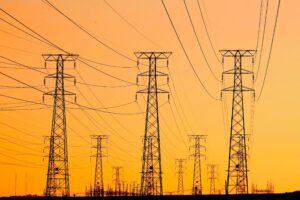
Their relevance to the sector is nevertheless substantial. Electricity networks, generation facilities and fuel supply chains are exposed to physical conditions over operating lives that can extend for decades; investment decisions need to consider how those conditions may change.
For a developer, assessing resilience means examining both the asset and the infrastructure supporting it. A generating station may be protected against flooding while remaining dependent on vulnerable access roads, substations or communications.
For lenders, the resulting questions concern the reliability of future cash flows and the cost of maintaining operations. Adaptation expenditure may reduce expected losses, but the benefits can be difficult to separate from routine maintenance or assign to a single organisation.
That creates a financing challenge where the value of protection is shared. A strengthened electricity network may benefit households, industry and public services, while the network operator bears the immediate expenditure.
A UK government-commissioned study published earlier this year identifies adaptation opportunities for financial and professional services, particularly in export markets. It notes that financing can involve several institutions and legal jurisdictions, making project development and financial structuring important parts of delivery.
For UK engineering companies and advisers, growing demand for resilience work could create business opportunities – but that does not guarantee clients able to pay, workable procurement arrangements or a clear allocation of responsibilities.
The report also reinforces the distinction between reducing emissions and adapting to physical risks. Renewable generation contributes to decarbonisation, but its low-carbon status does not guarantee that a particular installation is resilient to future weather conditions.
Conversely, adaptation measures should be assessed for the protection they deliver rather than assumed to be effective because they carry a climate label. Evidence about local hazards, design standards and maintenance remains essential.
For energy investors, the practical implication is to bring resilience into project appraisal early enough to influence location, design and contracts. Treating it as a later compliance exercise risks missing opportunities to reduce exposure before capital is committed.
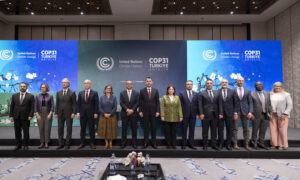
COP31 will provide another forum for financing commitments. The more demanding measure of progress will be whether those commitments support projects that protect essential services and can be implemented where the risks are greatest.