
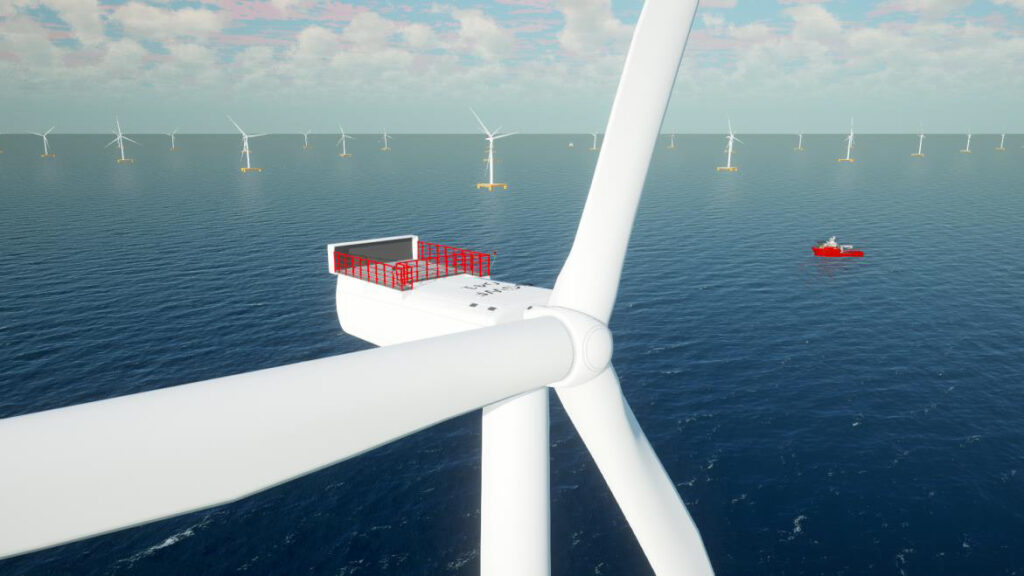
- Cadeler has agreed exclusivity with an unnamed client for foundation and turbine installation at a large UK offshore wind farm.
- The campaign is expected to start around 2030, with three vessel classes identified for the work.
- The agreement shows how early developers are making arrangements for specialist vessels. Cadeler’s announcement leaves the project identity and contract value undisclosed.
Offshore wind contractor Cadeler has signed an exclusivity agreement to install both foundations and turbines at a large UK offshore wind farm, with work expected to start around 2030.
The company plans to use an A-class and an O-class vessel for the foundation campaign and a P-class vessel to install turbines. It did not disclose the identities of the developer or wind farm.
Cadeler has outlined a vessel plan several years ahead of offshore work. The announcement gives no contract value or details of the commitments each party has made under the agreement. This follows the group’s move of its parent company from Denmark to the UK, with shares in the new parent beginning trading in Oslo and New York on 5 November.
In a separate agreement announced last week, Cadeler secured a firm contract to provide a second turbine installation vessel for Dogger Bank C, the 1.2 GW third phase of the North Sea project. Its newbuild Wind Apex is expected to join that campaign in the third quarter of 2027, working alongside Seaway Ventus to support installation of the phase’s 87 turbines.
That contract gives a named vessel a defined role and timetable. The latest exclusivity agreement sets out the classes of vessel Cadeler expects to use for a later campaign.
Vessel availability
A government-commissioned supply chain study published this year found that operators anticipated a global vessel shortage over the following one to three years, “particularly for those suitable for the largest turbines and foundations”. It also found that the number of vessels capable of lifting heavier foundations had increased, although some of those vessels could also be in demand for offshore platform work.
What matters for an individual project is the availability of vessels with the required crane capacity and reach during the months in which the developer can use it.
Bringing foundations and turbines into a single procurement can give a developer more control over the handover between campaigns. It also puts more of the timetable with one contractor.
Foundations have to be ready when the turbine vessels arrive, and the port and component deliveries have to support both campaigns. The more closely those schedules are linked, the more a delay in one package can affect the cost and timing of the next.
Cadeler’s own investment illustrates the lead times involved. In July it arranged an export credit-backed facility of up to €247m to help finance Wind Apex, with delivery expected in the second quarter of 2027.
A vessel owner has to invest before it can earn revenue from the ship, while a wind farm developer needs confidence that the vessel will be available when it makes its own investment decision. An exclusivity agreement can give both sides more visibility while those commitments are being worked out.