
- Statkraft and Sunvest have signed ten-year power purchase agreements for four Dutch solar farms with a combined capacity of about 82 MW.
- Statkraft has also started optimising the 10 MW / 20 MWh battery at Zuidbroek under a separate tolling contract.
- The structure lets the developer negotiate solar offtake and storage dispatch separately, even where both assets occupy the same site.
Statkraft and Dutch developer Sunvest have agreed ten-year power purchase contracts covering four solar farms and a separate battery tolling deal at one of the sites.
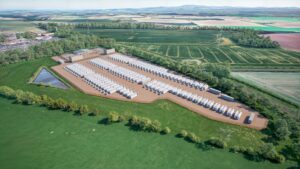
Under the latter agreement, Statkraft has begun optimising the 10 MW / 20 MWh battery at Zuidbroek, where it will also buy power from the adjacent solar farm under one of the new contracts.
The solar agreements cover two operating sites, 11.4 MW Lievelde and 49 MW Zuidbroek, and two projects still to be built, 7.6 MW Zwaagdijk and 14.3 MW Zomereiken. Sunvest announced financial close with ING Netherlands for the two new projects in September.
The solar contracts sit under a wider framework between Sunvest and Statkraft, with the announcement specifying the ten-year term for the solar PPAs and leaving the battery fee and contract length undisclosed.
Zuidbroek’s battery has been operating since 2023. Sunvest says its control system uses spot prices, balancing signals, grid congestion forecasts and expected solar output to inform dispatch. The new agreement changes who optimises the asset.
Statkraft Markets managing director Pieter Schipper said the company saw “strong demand for solutions that help integrate renewable energy into the Dutch electricity grid” (translated from Dutch).
Two contracts for assets that share a site
The Dutch enterprise agency RVO says solar generated nearly a fifth of the Netherlands’ electricity in 2025, with installed capacity reaching 29.4 GWp. It also identified uncertainty over revenues and an overloaded grid as reasons why installations had slowed.
In a market with substantial midday solar output, a battery can move some electricity sales into higher-priced periods where the connection and operating terms allow it. That flexibility has a different value and risk profile from the underlying solar output.
A toll can give a trader dispatch rights in return for a contracted payment to the battery owner. The scope of those rights matters when generation and storage share a connection.
The parties have to account for which asset can export when, how charging energy is treated and who bears the cost if one asset’s operation constrains the other. Separate contracts make it possible to negotiate those commercial terms independently, while the physical interaction still has to be managed at the site.
British developers already have examples of storage tolling at larger scale. Drax disclosed a ten-year, inflation-linked toll for 250 MW / 500 MWh at Fidra Energy’s West Burton project in January, including a fixed annual payment.
Zuidbroek illustrates how the same type of arrangement can sit alongside a solar PPA on a smaller co-located site. The commercial question for UK projects is how much value a trader can earn from the battery after allowing for the solar farm’s use of the connection, and how much of that value it will commit to pay the owner.