
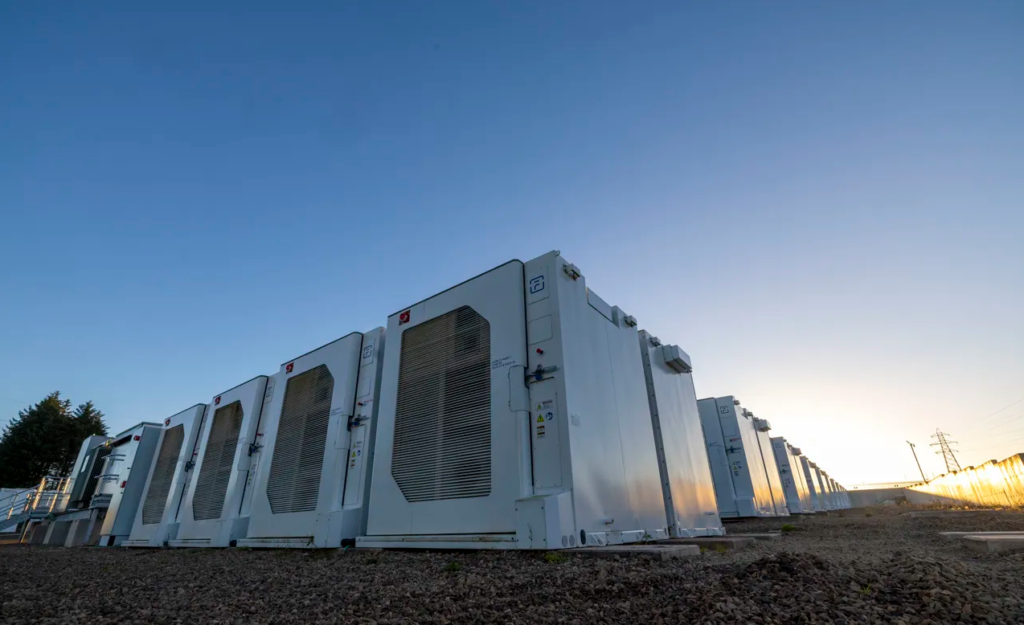
- The 50 MW Neilston battery is among the first grid-forming projects to enter commercial operation in Britain.
- Its inverters can support voltage and frequency during disturbances, giving the grid an alternative source of services historically supplied by large spinning generators.
- The wider site has consent for up to 750 MW, with an expansion timetable still to be disclosed.
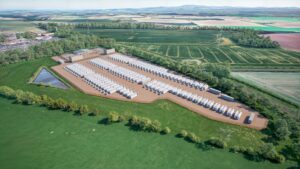
Statkraft has brought the first 50 MW phase of its Neilston Greener Grid Park into commercial operation near Paisley, giving the UK another battery that can help stabilise the electricity network during disturbances.
Announcing the commissioning on Thursday, followed by the group announcement on Friday, the Norwegian utility said it was the first grid-forming battery in its portfolio to enter service.
Construction began in August 2023, with the Scottish government approving an expansion to as much as 750 MW in August 2025. The capacity now in service is 50 MW. Statkraft gave no expansion schedule or storage duration for the operating phase in its announcement. The company says it has distributed more than £50,000 to community groups near the site.
“Grid-forming batteries can provide essential stability services while also giving the system more flexibility to integrate growing volumes of wind and solar power,” said Kevin O’Donovan, Statkraft’s UK and Ireland country manager.
The company is also building a second grid-forming battery at Coylton in East Ayrshire and synchronous compensators at Swansea and Necton. The compensators use rotating machinery to support the grid, giving Statkraft two ways to serve a growing need for stability.
Stability as a service
Large rotating generators naturally resist sudden changes in frequency because their spinning machinery stores kinetic energy. Most conventional inverters follow a voltage and frequency reference already present on the grid.
A grid-forming inverter can establish its own reference, respond quickly when frequency changes and help support voltage during a fault. In a power system with more inverter-connected wind and solar generation, having enough equipment that can provide that reference becomes increasingly important.
NESO has used competitive tenders since 2019 to procure stability, with early rounds helping to bring forward grid-forming batteries in Scotland. It is also examining whether the Grid Code should require grid-forming capability for new plant.
That creates a commercial distinction between fitting the capability to meet a connection requirement and earning revenue for a particular service in a part of the network where NESO needs it. The two can overlap, and their economics depend on how procurement and technical standards develop.
For battery developers, the question is how much of the extra cost the available revenues can support. A dedicated stability contract can improve revenue certainty, while obligations on how a battery operates may affect its freedom to earn money elsewhere.
The ability to combine those uses depends on the contract and the plant’s design. Statkraft’s release gives no breakdown of Neilston’s revenues, so its commissioning establishes a useful operating example while the commercial case for wider deployment remains project-specific.
The benefit to the system can extend beyond battery trading. If NESO can buy stability directly from assets such as Neilston, it has more options in periods when it might otherwise have to dispatch a conventional generator for its effect on the network. That matters most when electricity demand is low, renewable output is high and keeping another generator on the system can make it harder to accommodate cheap power.