
- Public equity will support two Matrix Renewables battery projects with a combined capacity of 1 GW / 2 GWh.
- Eccles is targeting commercial operation in October 2027, with Kilmarnock following in September 2028.
- The deal adds financing to existing developments, while the value of storage depends on how effectively it serves the network.
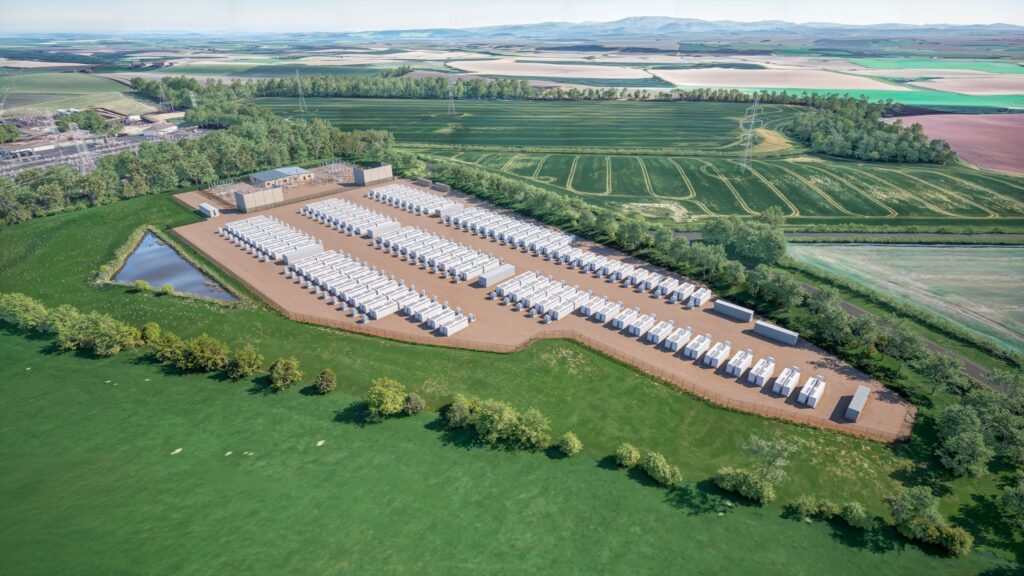
The National Wealth Fund has agreed an equity investment alongside Matrix Renewables in two Scottish battery projects, backing a combined 1 GW of power capacity as Britain seeks more flexibility to accommodate renewable generation.
The investment covers facilities at Eccles in the Scottish Borders and Kilmarnock in East Ayrshire, providing 2 GWh of storage between them. Matrix will retain majority ownership of both projects, while the value and detailed terms of the public investment have not been disclosed.
Construction is already underway at Eccles, with commercial operation expected in October 2027. Kilmarnock is scheduled to begin construction in December 2026 and enter service in September 2028. The partners expect the developments to create or support more than 200 jobs across construction and operations.
“Battery storage is critical to building a cleaner, more secure and more flexible energy system,” said National Wealth Fund chief executive Oliver Holbourn.
“By investing alongside Matrix Renewables, the National Wealth Fund is helping unlock two nationally significant projects that will store more renewable power, strengthen the grid between Scotland and England, and support hundreds of jobs.”
Each facility will provide 500 MW of power and 1 GWh of energy storage, equivalent to two hours of discharge at its rated output. Electrical Review’s reporting confirms that these are established developments receiving additional investment, with Matrix having announced its plans for the sites in 2025.
Public equity joins an established financing programme
Eccles had already secured substantial private financing before the latest announcement. Matrix closed a £245m non-recourse financing arrangement in April 2026, underwritten by CIBC, MUFG and NatWest, to support construction of the transmission-connected project.
Matrix said construction had begun in November 2025, with the latest announcement’s October 2027 operating target updating the earlier expectation of commercial operation during the third quarter of that year.
The announcement is commercially significant, with public investment entering a development programme that has already attracted bank financing and progressed into construction. However, it remains unclear how the new equity position changes project risk, ownership economics or the amount of further private capital required.
Both sites are positioned near important transmission routes between Scotland and England, where storing electricity could help manage periods of high renewable output and limited network capacity.
The operational benefit depends on when and where the batteries charge and discharge. Storage can absorb electricity that would otherwise be difficult to accommodate and release it when conditions change, but it does not help increase the amount of power that a constrained transmission circuit can carry.
That makes commercial arrangements and dispatch strategy central to the investment case. A battery’s ability to earn revenue through wholesale trading and grid services must be considered alongside its contribution to reducing network costs. Those objectives can align, although the outcome depends on market signals and the services procured by the system operator.
Overall, the deal shows that the National Wealth Fund is prepared to take an equity position in substantial storage infrastructure. The more immediate implication is that the UK’s storage market is increasingly concerned with the quality of delivery and operation; investors need credible construction schedules, appropriate equipment arrangements and an operating strategy suited to the site.
Eccles and Kilmarnock will provide a practical working example as they move towards commissioning. Their significance will ultimately rest on the electricity they can shift and the services they can deliver, alongside the scale of the capital committed.