
- The European Central Bank and Bank of England have decided to hold interest rates, despite bearish economic sentiment.
- Both banks signal concerns over rising energy-driven inflation, suggesting a prolonged period of elevated borrowing costs.
- In a vicious circle, this could impact the financing of new energy infrastructure.
Central banks across Europe are holding interest rates steady while signalling growing concern over inflation driven by rising energy prices.
Both the Bank of England and the European Central Bank have indicated that energy market developments are a key factor in their policy outlook, according to reporting by Reuters.
The decision to hold rates reflects a cautious approach, balancing the need to control inflation against the risk of slowing economic growth. However, policymakers have made clear that energy prices remain a significant source of uncertainty.
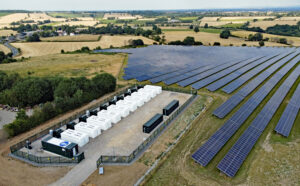
For the energy sector, the implications are significant. Higher borrowing costs increase the expense of financing large-scale projects, from renewable generation to grid infrastructure.
This is particularly challenging for capital-intensive investments, which rely on long-term financing and stable returns. Even small changes in interest rates can have a substantial impact on project economics.
The situation also highlights the interconnected nature of energy and financial systems. Volatility in energy markets feeds through into inflation, which in turn influences monetary policy and capital markets.
For investors, this creates a more complex environment. While the long-term outlook for clean energy remains positive, short-term conditions are becoming more challenging.
The response from central banks suggests that elevated rates may persist for longer than previously expected. This could slow the pace of investment in some areas of the energy transition.
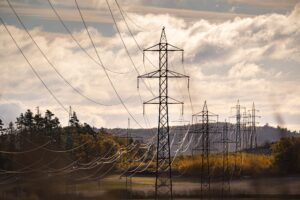
However, it may also reinforce the importance of stable, regulated assets such as grids, which offer more predictable returns in a volatile environment.
The broader implication is that the transition is entering a more financially constrained phase. Access to capital will remain critical, but its cost and availability will be shaped by factors beyond the energy sector itself.
In this context, policy clarity and market stability will be key to maintaining momentum.