
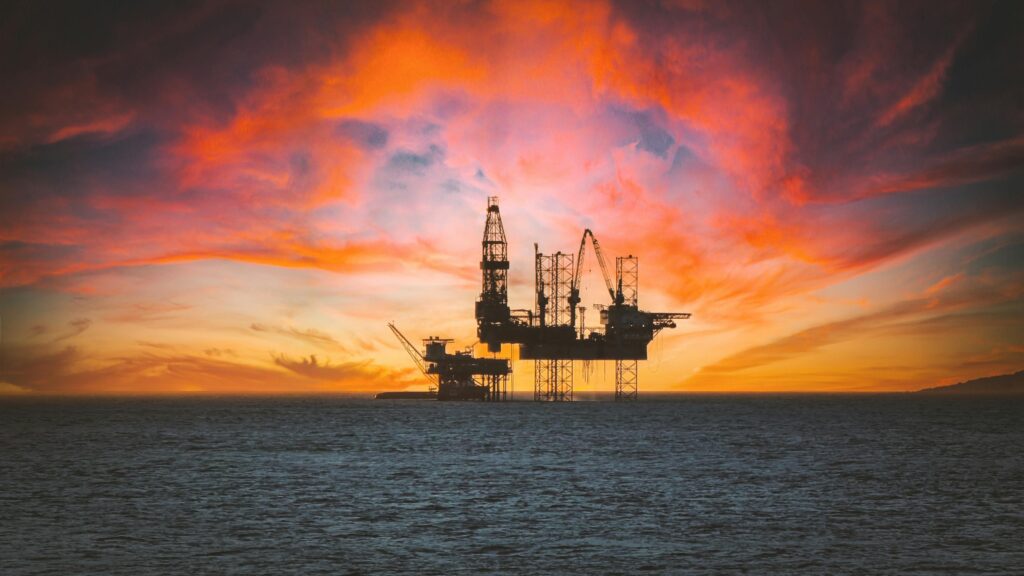
- Tony Blair’s think tank has called for government approval of the Rosebank oil field and Jackdaw gas project, arguing Britain needs new domestic supply to ease a “systemic energy crisis” brought on by the Iran war.
- The Tony Blair Institute for Global Change frames approval as a short‑term measure within a broader reset focused on electrification and affordable power.
- It warns the UK is in a “high‑cost, low‑electrification trap” and says cheap electricity is essential for heat pumps, electric vehicles and industry. Energy Secretary Ed Miliband faces a decision on the projects.
A new report from the Tony Blair Institute for Global Change (TBI) calls on the UK government to approve the Rosebank oil and gas project and Shell’s Jackdaw gas development, arguing that Britain needs a “pragmatic” reset of its energy strategy as the Iran war sends shockwaves through global energy markets.
The TBI report warns that the conflict in the Middle East has accelerated a “systemic energy crisis” by exposing Britain’s reliance on imported fossil fuels. It argues that the resulting surge in petrol, gas and food prices shows how quickly external shocks hit UK households.
Tone Langengen, an energy policy adviser at TBI and author of the paper, said the Iran war has become “a cost‑of‑living shock and a test of Britain’s economic resilience” and that the UK remains vulnerable without bolstering domestic supplies.
Rather than a wholesale shift back to hydrocarbons, the institute frames the approval of the Rosebank and Jackdaw fields as one part of a broader reset focused on electrification and affordability.
The report labels the UK’s energy strategy a “self‑reinforcing high‑cost, low‑electrification trap” where high electricity prices suppress demand for heat pumps, electric vehicles and industrial electrification, which in turn keeps the cost base high.
It calls for policymakers to concentrate on abundant, cheap electricity, market reforms and grid investments while also providing a stable investment framework for North Sea projects.
Arguments for drilling
TBI contends that domestic production from Rosebank and Jackdaw could help ease the energy crisis in the near term by replacing some imports, supporting jobs and delivering tax revenue. The Rosebank field, located around 130 km north‑west of Shetland and operated by Adura (a Shell–Equinor joint venture), is estimated to contain over 350 million barrels of oil equivalent.
It is slated for phased development beginning in 2026-27 and promises to invest roughly £8.5 billion, with 77% expected to go to UK suppliers. Jackdaw, discovered in 2005 and operated by Shell’s BG International subsidiary, holds roughly 56 million barrels of recoverable hydrocarbons and had a final investment decision in 2022.
TBI says approving these projects would send a message that the UK is serious about energy security, while still maintaining its commitment to net‑zero emissions by 2050. The institute emphasises that only about 20% of the UK’s energy demand currently comes from electricity and argues that electrification will succeed only if power is “abundant and affordable”.
Mixed reaction from government and investors
The proposals put pressure on Energy Secretary Ed Miliband, who reportedly is considering approving Jackdaw but faces opposition within the Labour Party. The government has denied that any decisions have been taken, but rising energy prices and political pressure have kept the issue alive.
James Alexander, chief executive of the UK Sustainable Investment and Finance Association (UKSIF), applauded the TBI’s focus on electrification but warned that pivoting back to oil and gas sends “the wrong signals” to investors. Stable, clean power markets are critical for attracting the billions of pounds needed to finance renewable infrastructure.
Strong pushback from climate campaigners
Environmental groups were quick to criticise the TBI. Uplift, a campaign group that successfully challenged the earlier environmental consents for Rosebank and Jackdaw, argued that approving the projects would reduce the UK’s dependency on gas by only around 2% and 1% respectively.
Uplift executive director Tessa Khan called the institute’s position “wrong now” and said the Iran conflict does not change the fact that the price of oil and gas is set internationally. She insisted that Rosebank and Jackdaw are about “increasing Shell and Equinor’s profits” and would mean higher bills for longer.
The Energy and Climate Intelligence Unit (ECIU) also criticised the focus on new drilling. Jess Ralston, head of energy at ECIU, said the North Sea did not shield households from price spikes after Russia invaded Ukraine and that with around 90% of accessible reserves already gone, the debate is a distraction from real solutions like heat pumps and renewable technologies.
Greenpeace UK’s policy director Doug Parr dismissed the idea that drilling more will reduce fossil‑fuel reliance, arguing that it is “transparent nonsense”. Campaigners called for investment in energy efficiency, rooftop solar, batteries and heat pumps to insulate the UK from future shocks.
Broader context: electrification trap and energy security
The TBI’s intervention echoes a February 2026 paper in which Langengen argued that the UK needs an energy‑strategy reset. That report warned that the government’s focus on Clean Power 2030 ignores affordability and fails to adapt to structural shifts such as AI‑driven electricity demand and the need to build an “investible North Sea basin”.
The TBI’s latest paper extends this argument by urging the government to break a loop in which high electricity costs suppress electrification. To manage strategic exposure, it recommends accelerating viable projects, providing stable investment conditions and, if necessary, using emergency legislation to unblock developments near delivery.
The institute maintains that approving Rosebank and Jackdaw is not a long‑term solution but a step toward pragmatic resilience while the UK reforms its energy markets. It argues that domestic supply decisions, when coupled with rapid electrification, could protect consumers against geopolitical shocks until abundant renewable electricity comes online.