
- High‑profile warning: Lord Nicholas Stern, Christiana Figueres and other climate leaders urged Britain to halt new oil and gas licensing, arguing projects like Rosebank and Jackdaw would displace only 1-2% of UK gas imports.
- Economic case questioned: Stern argued that betting on declining fossil‑fuel industries is bad for growth and that energy independence lies in scaling domestic clean energy.
- The debate affects billions of pounds in potential investment and the future of North Sea communities.
In a coordinated intervention, a group of prominent climate economists and diplomats has declared that approving new North Sea projects would undermine both global climate goals and the UK’s economic interests.
Signatories include Lord Nicholas Stern, author of the seminal 2006 review on the economics of climate change, and Christiana Figueres, former executive secretary of the UN Framework Convention on Climate Change.
Writing in an open letter, they argue that the proposed Rosebank and Jackdaw developments would reduce UK gas imports by only 1-2%. Because the UK participates in liberalised markets, new production would be sold at global prices, with little impact on domestic bills.
The experts warn that doubling down on hydrocarbons exposes Britain to future stranded‑asset risks and erodes its credibility on the world stage. Stern emphasised that economic growth and energy security hinge on scaling renewable generation, upgrading grids and deploying storage rather than extending “declining industries”.
Figueres added that genuine energy independence comes from clean, domestic sources such as offshore wind, green hydrogen and energy efficiency. The letter coincides with a Labour manifesto pledge to grant no new exploration licences – a policy that has enraged the oil industry and trade unions representing North Sea workers.
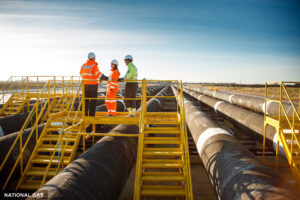
Proponents of new drilling argue that domestic production supports jobs, supplies tax revenue and can provide a bridge to a net‑zero future. They cite the potential development of Rosebank – a 500 million‑barrel field operated by Equinor – and the smaller Jackdaw project led by Shell.
Industry groups say cancelling licences would send investment overseas and increase reliance on higher‑emission imports shipped from the US and Qatar. The government, for its part, has granted several licences in recent months under the existing regime and introduced a “climate compatibility checkpoint” to assess future projects.
For UK professionals, the debate will shape long‑term investment strategies. Banks, insurers and pension funds are reassessing exposure to upstream assets amid tightening environmental, social and governance (ESG) criteria. Supply‑chain companies face uncertainty over future contract volumes. North Sea communities, already grappling with decommissioning, worry about job losses if exploration dries up.
Conversely, the letter could embolden renewable developers and accelerate policy support for offshore wind, tidal power and CCS. It may also influence the UK’s negotiating position at future UN climate summits, where leadership has been central to its soft power. Ultimately, the decision hinges on balancing near‑term energy security against the imperative to decarbonise and maintain international credibility.