

- Ford has launched a subsidiary, Ford Energy, aiming to produce 20 GWh of battery storage annually by repurposing its EV battery plant.
- The flagship DC Block product delivers 5.45 MWh per container and comes in two‑hour (FE‑250) and four‑hour (FE‑450) configurations.
- First customer deliveries are expected in late 2027; domestic manufacturing is designed to qualify for US tax credits and meet data centre demand.
Ford Motor Company has formally launched Ford Energy, a wholly owned subsidiary that will manufacture and sell containerised battery energy storage systems from its repurposed Kentucky battery plant.
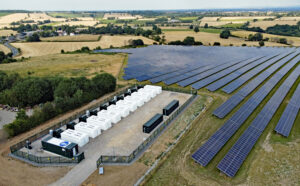
The new business aims to produce 20 GWh of grid‑scale storage annually and will offer two configurations – FE‑250 and FE‑450 – each delivering 5.45 MWh of capacity within a standard 20‑foot container. Initial customer deliveries are scheduled for late 2027.
The move marks a strategic pivot for Ford, which has struggled with overcapacity in its EV battery factories as demand for electric vehicles softens. By converting its Glendale, Kentucky plant into a battery‑energy‑storage manufacturing facility, Ford aims to tap the booming market for grid‑scale storage and leverage US tax incentives for domestic production.
Ford Energy president Lisa Drake said the subsidiary will supply utilities, data centres and large commercial customers, noting that the team has spent the past year securing supply chains and aligning technology with the “massive demand for domestic energy storage”.
The Ford Energy DC Block is built around 512‑Ah lithium‑iron‑phosphate (LFP) prismatic cells and is available in two variants: the FE‑250 (two‑hour duration) and FE‑450 (four‑hour duration). Both deliver 5.45 MWh of rated capacity and operate across a 1,040‑1,500 V DC range.
Designed for harsh environments, the units include liquid‑cooled thermal management, ingress‑protection ratings up to IP55 and corrosion protection for coastal deployment. Each container weighs around 43 tonnes and is designed for a 20‑year service life using LFP chemistry, which offers improved thermal stability and cycle life compared with nickel‑rich cathodes.
AI demand burden
Ford’s pivot reflects growing demand from AI and hyperscale data centres, which require resilient, dispatchable power to manage peaks and avoid grid congestion.
According to Electrek, the US is expected to add 24 GW of battery storage in 2026 – almost double the 15 GW installed in 2025 – and data centres could account for 83% of behind‑the‑meter commercial‑industrial storage deployments by 2030. Tesla currently dominates the sector, having deployed 46.7 GWh in 2025 and planning 50 GWh of annual Megapack production. Ford’s 20 GWh target therefore positions it as a serious competitor but still well behind the market leader.
The company emphasises domestic sourcing and assembly to qualify for US federal tax credits under the Inflation Reduction Act. This strategy could make its systems more attractive to customers seeking tax‑efficient solutions and reduce exposure to trade tensions. The FE‑250 and FE‑450 units will be assembled in the US, and Ford has secured supply agreements for LFP cells and other components. The company did not disclose pricing but said it aims to meet or beat the cost of rival systems.
Ford’s entry illustrates how the automotive supply chain is pivoting to energy storage in response to EV market volatility. It signals greater competition for battery cells, BMS software and inverter systems, which could impact procurement strategies for UK utilities and developers.
It also underscores the broader trend of data‑centre demand driving storage markets – a trend relevant to UK grid planners as hyperscale operators expand in places like London and Manchester. Finally, the use of LFP chemistry may encourage European manufacturers to consider similar chemistries for stationary storage, potentially reducing reliance on nickel and cobalt supply chains.