- Iberdrola’s H1 reported net profit rose 22% to €4.34 billion, although part of the increase came from the sale of Mexican thermal assets.
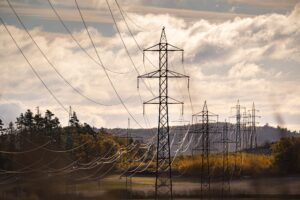
- Iberdrola invested €4.38 billion in networks, 42% more than a year earlier and almost two thirds of total capital spending.
- The acquisition of Finland’s Caruna reinforces a strategy favouring regulated infrastructure while renewable investment becomes more selective.
Iberdrola has reported a 22% increase in H1 net profit as investment in electricity networks across Britain, the US and Brazil strengthened underlying earnings and asset sales provided an additional boost.
Reported profit reached €4.34 billion during the six months to June, compared with €3.56 billion a year earlier. Adjusted net profit, which removes effects including the disposal of thermal generation assets in Mexico, rose 8% to €3.57 billion.
Adjusted earnings before interest, tax, depreciation and amortisation increased 7% to €8.05 billion. Iberdrola said it now expects full-year adjusted net profit growth to exceed 8% “comfortably”.
Capital expenditure rose 25% to €7.01 billion, with more than 70% deployed in Britain, the US and Brazil. Network investment increased 42% to €4.38 billion, accounting for 63% of group spending.
The company’s regulated asset base grew 11% to nearly €55 billion, 60% of which is now located in the UK and US. Transmission assets increased particularly quickly, rising 30% to account for more than one quarter of the total.
Adjusted EBITDA from networks increased 13%, supported by the larger asset base and tariff increases. The Power and Customers division produced growth of only 1%, illustrating the relative earnings strength of regulated infrastructure.
Iberdrola reinforced that strategy this week by agreeing to acquire 80% of Caruna, Finland’s largest electricity distributor, for an equity payment of about €2 billion. Including debt, the company is valued at approximately €5 billion.
Caruna operates around 89,000km of network and serves more than one fifth of Finland’s electricity connections. Nordic pension investors AMF and Elo will retain the remaining 20%. Completion is subject to regulatory approval.
The acquisition is being financed partly with proceeds from Iberdrola’s Mexican divestment. It replaces thermal generation exposed to commodity and political risk with a regulated electricity network in an AA+-rated country.
‘Selective’ deployment
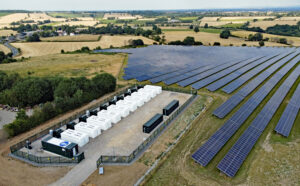
Renewables have not disappeared from the investment programme. Iberdrola spent €2.23 billion on renewable generation during the half, more than 70% of it on wind, and added almost 1.6GW of operating capacity.
Its generation pipeline includes the 1.4GW East Anglia Three offshore wind farm and the proposed £1.5 billion repowering of Whitelee in Scotland. The company says up to 15.5 GW could be added between 2025 and 2030 if market conditions and power-purchase prices support investment.
Nevertheless, its own results presentation describes renewable deployment as “selective”. That choice of word reflects a wider utility sector hierarchy. Networks offer returns determined through regulation and backed by unavoidable demand for electrification. Generation projects remain exposed to auction design, wholesale prices, construction inflation, supply chain performance and curtailment.
Britain is central to both sides of the strategy. Iberdrola owns ScottishPower’s generation business as well as SP Energy Networks, which faces major transmission and distribution investment requirements.
Chairman Ignacio Sánchez Galán said the priorities of new Prime Minister Andy Burnham were “absolutely aligned” with Iberdrola’s plans and supported the removal of VAT from domestic electricity.
“If we want to electrify the economy… we absolutely need to revise our taxation of electricity,” he said.
The results do not show capital abandoning renewable energy. They show utilities assigning a higher value to the infrastructure that connects and manages it. For UK policymakers, attracting Iberdrola’s investment appears less difficult than ensuring that enough of it reaches competitive generation and domestic supply chains, rather than the comparatively secure returns available from regulated networks.