

- A parliamentary meeting, sponsored by Labour MP Emma Hardy, gathered industry leaders, unions and politicians to campaign for £500 million of government funding to develop a coordinated hydrogen network in the Humber region.
- Proponents say the network would create Britain’s first hydrogen production and storage hub and support thousands of jobs.
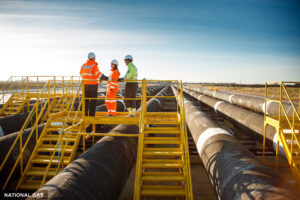
- Companies including National Gas, Centrica, Equinor and SSE Thermal are collaborating on the Humber Hydrogen project, which would link key sites such as Aldbrough Hydrogen Storage, H2H Saltend and Keadby Next Generation Power Station.
Leaders from industry, trade unions and politics have met in Parliament to press the UK government for £500 million to build the Humber Hydrogen network.
The campaign, led by Labour MP Emma Hardy, aims to turn the Humber – already Britain’s most carbon‑intensive industrial region – into the country’s first integrated hydrogen production and storage hub.
According to reports, the meeting discussed how to secure the funding needed to develop a coordinated network linking multiple projects across the region.
The proposed network brings together several major players. National Gas (formerly National Grid Gas Transmission), Centrica, Equinor and SSE Thermal are collaborating to develop a pipeline and storage system connecting Aldbrough Hydrogen Storage, H2H Saltend (Equinor’s flagship blue‑hydrogen project) and Keadby Next Generation Power Station.
The goal is to produce, transport and store hydrogen for use in power generation, industrial processes and potentially heating. Hardy told attendees that the Humber is the “best place for Britain’s first hydrogen network,” promising jobs, investment and a platform for expansion.
The network would serve multiple purposes, primarily enabling the decarbonisation of heavy industry. The Humber region hosts refineries, chemical plants and steelworks that currently rely on fossil fuels. Hydrogen could replace natural gas in high‑temperature processes, reducing emissions.
Second, the infrastructure would support new industries such as sustainable aviation fuel, with airports at Leeds Bradford and Humberside nearby. Thirdly, large‑scale hydrogen storage at Aldbrough could provide seasonal energy balancing for a renewable‑rich grid, producing hydrogen when wind output is high and using it to generate electricity when demand peaks.
The campaigners argue that £500 million of public funding would unlock private investment and ensure the region remains globally competitive, with the Local Democracy Reporting Service suggesting the project could deliver up to 3 GW of hydrogen production.
However, questions remain about technology choices (blue vs. green hydrogen), environmental impacts (fugitive methane from blue hydrogen) and market demand. Government backing is crucial for de‑risking infrastructure and setting clear regulatory frameworks.
For the UK, the Humber network represents a test case: if successful, similar regional hydrogen hubs could proliferate, driving supply‑chain opportunities in pipelines, compression and storage.