
- Abu Dhabi’s crown prince ordered state company ADNOC to accelerate construction of a West-East pipeline, doubling the UAE’s oil export capacity via Fujairah by 2027 and allowing crude to bypass the Strait of Hormuz.
- Tehran’s Revolutionary Guard has expanded its claimed control zone in the strait, publishing maps showing jurisdiction over much of the UAE’s Gulf of Oman coast and launching drone attacks against ADNOC tankers and Fujairah’s oil zone.
- The effective closure of the strait since late February has removed roughly a fifth of global oil supplies, sending energy prices soaring and prompting fuel rationing in some countries. The UAE already operates the 1.8 million‑bpd Habshan‑Fujairah pipeline, but the new project will significantly expand capacity.
The United Arab Emirates is moving quickly to reduce its vulnerability to the Strait of Hormuz.
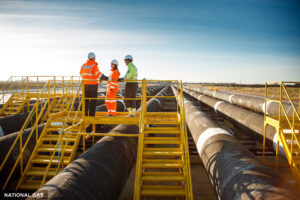
On 15 May the government announced that Abu Dhabi Crown Prince Sheikh Khaled bin Mohamed had directed ADNOC to fast‑track the West-East oil pipeline project, which will carry crude across the emirate to the port of Fujairah on the Gulf of Oman.
The decision comes amid escalating tensions with Iran: Tehran’s Revolutionary Guard recently declared a vast operational area spanning up to 300 miles wide and published maps claiming control over much of the UAE’s coastline. That expansion was accompanied by drone attacks on ADNOC vessels and on Fujairah’s oil zone.
Since US and Israeli forces attacked Iran on 28 February, the strait – a conduit for roughly 20% of the world’s oil – has been effectively closed. The disruption has forced ADNOC to shut in production and halved the UAE’s output to about 1.7 million bpd; global oil prices have jumped above $100 and countries as far as Europe and Asia have introduced fuel rationing.
The UAE and Saudi Arabia are currently the only Gulf states with pipelines circumventing Hormuz; the existing Habshan-Fujairah line carries 1.8 million bpd. The new pipeline, slated to be operational next year and to double export capacity by 2027, will therefore be a critical artery for both national revenues and world supply.
The announcement comes just weeks after Abu Dhabi quit OPEC, freeing itself from output quotas and signalling its desire to ramp up production to 6 million bpd. By expanding its bypass route, the UAE both enhances its bargaining position in future supply agreements and reduces exposure to the geopolitically fraught Hormuz chokepoint.
For the UK, which imports crude and refined products from the Middle East, a more reliable UAE supply route could help mitigate price spikes and supply disruptions.
At the same time, the episode underscores the fragility of maritime energy corridors and the urgency of diversifying fuel sources; the UK’s recently announced Energy Independence Bill shows that London is drawing similar conclusions about the link between national security and domestic energy infrastructure.