
- Finnish technology group Wärtsilä has successfully operated a large‑scale engine running on 100% hydrogen, supplying power to Spain’s national grid from its Bermeo, Spain test facility.
- The Wärtsilä 31H2 engine demonstrates that hydrogen can fuel high‑efficiency combustion engines capable of balancing renewable‑heavy grids.
- Hydrogen engines could replace natural gas peaking plants, complement long‑duration storage and support data centres and industrial loads. But the UK must develop hydrogen infrastructure and markets to benefit from this breakthrough.
Hydrogen has long been touted as the holy grail of energy storage – a way to convert surplus renewable power into a storable fuel that emits only water when burned. Yet turning hydrogen into reliable, grid‑scale electricity has remained elusive.
That may have changed this month, with Finnish energy technology company Wärtsilä announcing it had successfully operated a 100% hydrogen‑fuelled engine supplying power to Spain’s national grid. The test took place at Wärtsilä’s engine laboratory in Bermeo, northern Spain.
Wärtsilä says the 31H2 engine, part of its established 31‑series platform, is the world’s largest pure hydrogen engine. During the demonstration, the engine provided dispatchable electricity in real grid conditions, proving that flexible combustion engines can run entirely on hydrogen.
The trial builds on Wärtsilä’s 2023 launch of a hydrogen‑ready engine (capable of blending up to 25% hydrogen) and moves beyond “hydrogen‑ready” to “hydrogen‑powered”. Hydrogen for the test was supplied by a nearby Air Liquide electrolyser that uses renewable electricity to split water.
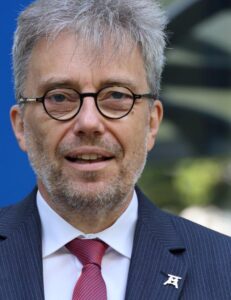
Company executives are keen to frame the breakthrough as more than a tech novelty. Wärtsilä director of technology strategy Rasmus Teir said the trial demonstrates that large‑scale hydrogen engines can provide the flexible, dispatchable power needed to back up wind and solar.
He emphasised that the technology is ready and called for regulatory frameworks, investment clarity and infrastructure to scale it. Anders Lindberg, president of Wärtsilä’s energy division, meanwhile told S&P Global that market structures should reward flexibility and capacity, not just energy produced, to incentivise hydrogen engines.
Dispatchable decarbonised power
The development could be very significant, but only if adopted at scale. For the UK, electricity generation currently relies on fast‑ramping natural gas peaker plants and diesel generators to maintain grid stability when renewable output falters. These assets produce about 8% of the UK’s power but are responsible for a disproportionate share of emissions.
Hydrogen engines like the 31H2 could offer a zero‑carbon alternative, providing spinning reserve and frequency response without fossil fuels. Because the 31‑series engine can switch fuels and ramp quickly, it could also serve off‑grid applications such as data centres or industrial sites.
However, realising this potential will require more than a single demonstration. The UK currently lacks large‑scale green hydrogen production and storage, and the economics of hydrogen remain challenging. The government’s hydrogen strategy aims to deploy 10 GW of hydrogen production capacity by 2030, but details on support mechanisms and allocation between power and industrial uses are still emerging.
Wärtsilä’s trial underscores the need to accelerate hydrogen infrastructure and create market mechanisms (such as capacity payments or flexibility markets) that value the dispatchable capability of hydrogen engines. Without such incentives, investors may favour cheaper battery storage, which cannot provide multi‑day backup.
The demonstration also highlights the need to coordinate hydrogen development with grid planning, as the engine requires a steady supply of pure hydrogen at scale.
Overall, Wärtsilä’s 100% hydrogen engine is a technological milestone that could open a new chapter in the energy transition. It shows that hydrogen can move beyond small‑scale fuel cells or turbines and into flexible, high‑capacity engines.