
- Global gas flaring increased for the third consecutive year in 2025, reaching 167 billion cubic metres (Bcm), according to the World Bank’s 2026 Global Gas Flaring Tracker Report. The wasted gas, valued at an estimated $54 billion at prevailing prices, could have powered sub‑Saharan Africa for a year.
- Nine countries – Russia, Iran, Iraq, Venezuela, Mexico, Libya, Algeria, Nigeria and the US – accounted for more than 80% of flaring while producing about half of global oil.
- The World Bank estimates that ending routine flaring would cost $70-100 billion, less than twice the value of gas burned off last year. Structural barriers such as weak enforcement, inadequate gas infrastructure and lack of markets impede progress.
Setting billions of dollars on fire may sound like a fool’s errand, yet that is exactly what the oil industry continues to do.
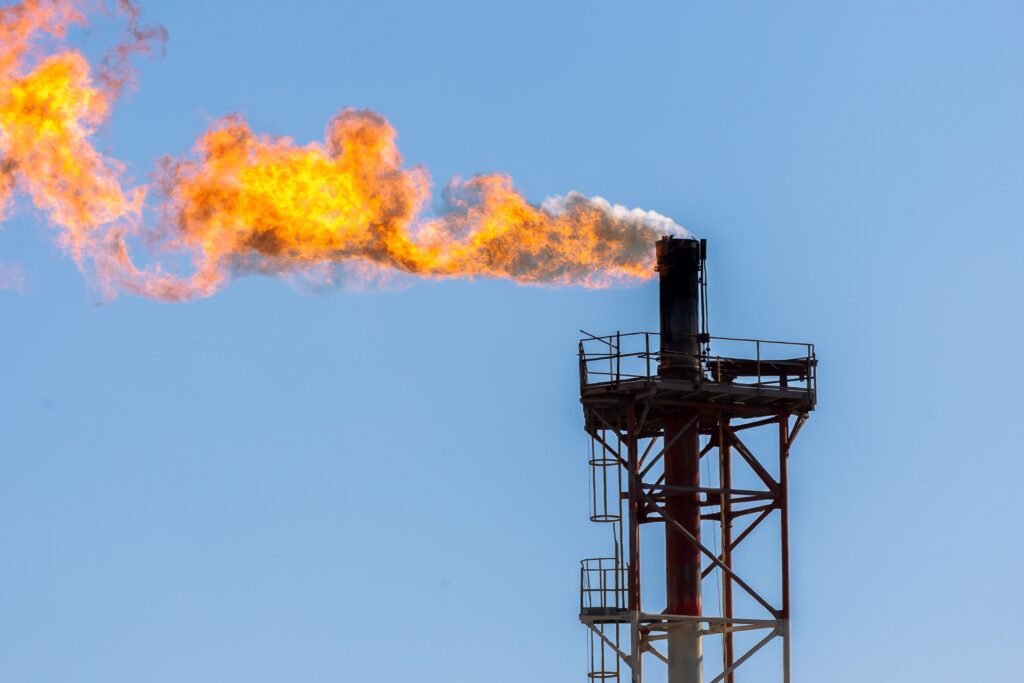
The World Bank’s latest Global Gas Flaring Tracker shows that companies burned off 167 Bcm of natural gas in 2025 – enough energy to meet the annual gas demand of Germany. The practice wastes a valuable resource and emits about 400 million tonnes of CO₂‑equivalent greenhouse gases, threatening both climate goals and energy security.
Gas flaring occurs when producers vent or burn off natural gas associated with oil production rather than capturing it for use. While flaring can be necessary for safety, routine flaring often reflects a lack of pipelines, storage or markets.
The World Bank report found that global flaring volumes rose 7% year‑on‑year in 2025 to 167 Bcm. Russia, Iran and Iraq were responsible for nearly half of the total, with Venezuela, Mexico, Libya, Algeria, Nigeria and the US rounding out the top nine flarers.
Despite international pledges to end routine flaring by 2030, volumes have ticked up each year since 2022.
The environmental and economic stakes are immense. Burning 167 Bcm of gas releases about 350 million tonnes of CO₂ and emits soot and other pollutants that harm local health. At $3 per million BTU, the gas wasted is worth around US$54 billion.
Capturing the gas could generate electricity, displace dirtier fuels and provide feedstock for industries. The World Bank notes that eliminating routine flaring would cost US$70-100 billion – significantly less than the value of gas wasted last year.
So why does flaring persist? The Bank cites several structural barriers. Many oil‑producing countries lack the pipelines and processing plants needed to transport associated gas to market while weak regulatory frameworks fail to penalise routine flaring or incentivise gas capture.
In conflict‑affected states such as Libya and Nigeria, instability and theft discourage investment. And some producers, particularly national oil companies, prioritise oil output over gas utilisation because oil commands higher prices.
Efforts to curb flaring are gaining traction. The World Bank’s ‘Zero Routine Flaring by 2030’ initiative has more than 80 signatories, including governments and oil companies, pledging to eliminate flaring within a decade. New technologies – such as modular gas‑to‑power units, reinjection for enhanced oil recovery and mini‑LNG plants – are increasingly cost competitive.
For example, Nigeria’s government has launched a programme to auction flared gas for use in power projects, while U.S. regulators have tightened methane rules on flares.
The persistence of flaring has implications for the UK. Although Britain flares relatively little domestically, its import dependency means that flaring in supplier countries affects global gas balances and prices. Moreover, investors and policymakers increasingly link flaring with corporate ESG performance.
UK pension funds, which collectively hold significant stakes in global oil majors, are pressuring companies to reduce flaring and methane leakage. The World Bank urges governments to implement robust measurement, reporting and verification systems, set clear flaring ceilings and create markets for associated gas.
Without such policies, energy waste will continue to undermine energy security and climate goals.