

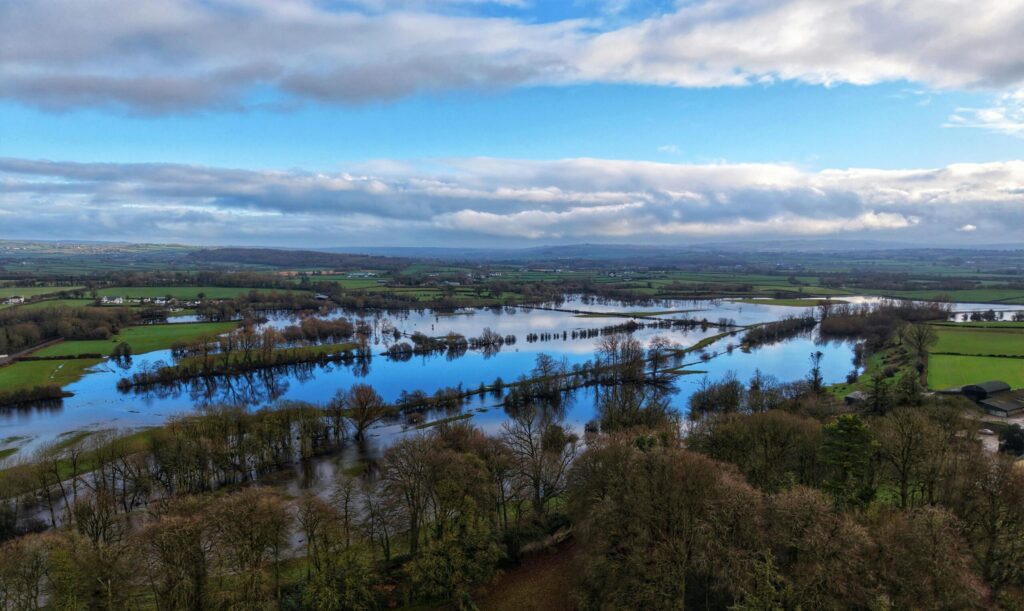
- The UK government has announced a £50 m package to bolster flood defences in Somerset after the county experienced its second‑wettest January on record, with more than double its average rainfall and storms causing widespread flooding.
- Existing defences protected about 2,860 properties, but around 80-90 properties and 30 sq. miles of agricultural land flooded; the new funding will enhance pumps, barriers and nature‑based solutions.
- The investment forms part of a £10.5 bn national flood‑resilience programme running to 2036 and accompanies the launch of a National Flood Forecasting and Warning Service.
After a winter of record‑breaking rainfall and swollen rivers, ministers have unveiled a £50 million plan to bolster flood defences in Somerset, one of England’s most flood‑prone counties.
The funding, announced by the Department for Environment, Food and Rural Affairs, will pay for upgrades to pumping stations, river barriers, nature‑based solutions such as wetland restoration and improved water‑level management.
Somerset endured its second‑wettest January on record in 2026, receiving more than twice its average rainfall. Storm Chandra brought a third of January’s rainfall in a single event. Existing flood defences and pumps protected around 2,860 homes and businesses, but 80-90 properties flooded and 30 sq. miles of farmland were inundated.
Farmers faced crop losses and livestock evacuation, while road and rail links were disrupted. Local authorities warned that repeated flooding threatens rural livelihoods and could drive up food prices.
The £50mn package will help Somerset Council deliver a long‑term plan by raising embankments, improving drainage channels and restoring wetlands to absorb floodwaters.
Nature‑based solutions such as re‑wetting peatlands and creating new marshes are highlighted because they store carbon while reducing flood risk. The investment will also finance the maintenance of critical pumps and barriers.
Critical asset risk
Flooding has become a politically charged issue in the UK as climate change intensifies storms and sea‑level rise. The government’s £10.5 billion flood‑resilience programme (2021–2036) aims to reduce national flood risk and protect 336,000 properties.
The Environment Agency says it has maintained around 93% of flood defences this year and plans to improve this to 93.5% in 2026/27. A new National Flood Forecasting and Warning Service will provide real‑time alerts to residents and businesses.
Somerset’s experience underscores the need to adapt assets and supply chains to climate risks. Grid infrastructure, substations, water‑treatment plants and fuel depots are often located in flood‑plains; enhanced defences may reduce immediate risks, but asset managers must plan for more intense rainfall events and consider relocating or elevating critical infrastructure.
Climate models project that the UK will see wetter winters and more frequent extreme rainfall as the atmosphere warms. The Somerset funding emphasises that adaptation is as important as mitigation in the energy transition.
While offshore wind turbines and hydrogen hubs capture headlines, physical climate impacts on land cannot be ignored. The government’s willingness to commit funds may set a precedent for other vulnerable regions, such as the Humber and Thames estuaries, where billions more may be required to protect low‑lying communities and infrastructure.