
- QatarEnergy will miss another three Edison cargoes, taking the disruption to 24 cargoes and about 3 billion cubic metres of gas.
- Edison has replaced 17 cargoes, limiting the immediate physical shortfall but increasing its exposure to costly spot-market purchases.
- European storage is only around 54% full, leaving the UK and continental buyers vulnerable to further disruption during the autumn refill season.
QatarEnergy has extended force majeure on LNG deliveries to Italy until the end of September, deepening concerns about Europe’s ability to rebuild gas stocks before winter following damage to Qatari production facilities and disruption to shipping through the Strait of Hormuz.
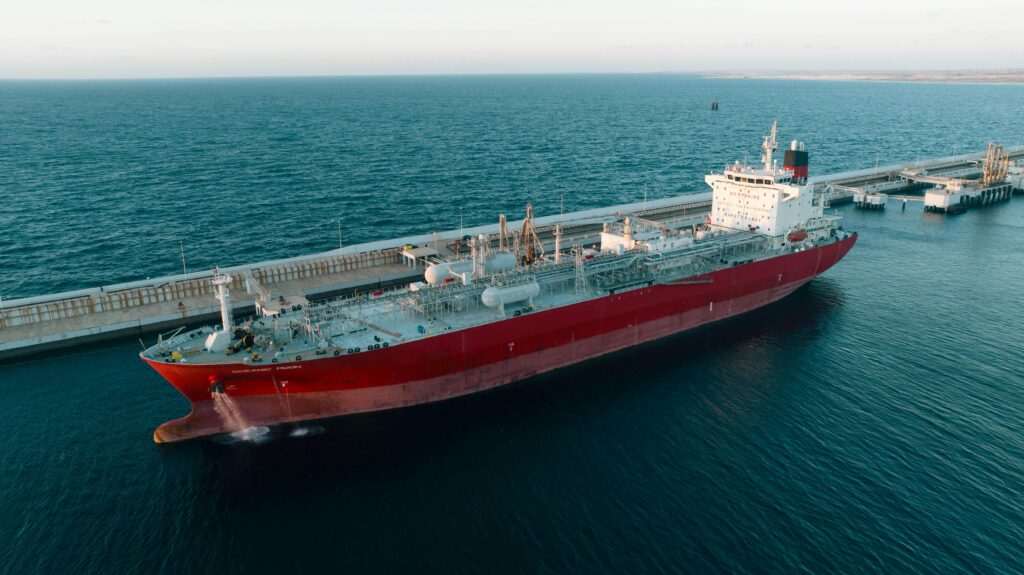
The company will miss three additional cargoes contracted to Edison for delivery to the Adriatic LNG terminal, according to an Edison statement. The total disruption under the contract has now reached 24 cargoes, equivalent to approximately 3 billion cubic metres (Bcm) of gas.
Edison said it had replaced 17 of the affected cargoes, representing around 1.6 Bcm, and expected to continue securing alternative supply for its customers. Replacement gas nevertheless exposes the Italian utility to spot-market prices that may be considerably higher than those under its long-term contract.
The contract has supplied Edison with approximately 6.4 Bcm a year since 2009. Its 25-year duration demonstrates the scale of the disruption: long-term agreements provide commercial certainty, but cannot guarantee delivery when production infrastructure or shipping routes become unavailable.
QatarEnergy declared force majeure after Iranian attacks damaged two of Qatar’s 14 LNG production trains. The facilities represent around 12.8 million tonnes of annual capacity, or 17% of Qatar’s existing output, and could remain out of service for between three and five years, chief executive Saad al-Kaabi said in March.
The effect extends beyond the damaged trains. QatarEnergy has sub-chartered several LNG carriers until October while traffic through Hormuz remains constrained. Qatar normally accounts for roughly one fifth of global LNG trade, making prolonged disruption difficult to replace without pushing buyers into competition for US, African and other Atlantic basin cargoes.
That competition is emerging when Europe’s storage position is already weak. Facilities were around 54% full in late July, the second-lowest level at this point in 15 years. Equinor chief executive Anders Opedal said Europe was unlikely to achieve an 80% storage level before the heating season.
Wood Mackenzie estimates that stocks may reach only 75% by 1 November, even if Qatar resumes exports from its undamaged trains at the end of September. That would compare with a five-year seasonal average of approximately 90%. A further two-month closure of Hormuz could leave inventories below 70%, according to the consultancy’s market assessment.
Europe is not yet facing the acute shortage experienced in 2022. Demand has declined, import infrastructure has expanded and buyers have more experience replacing lost pipeline supply. But the system has less capacity to absorb another large outage, particularly if cold weather coincides with stronger Asian LNG demand.
The principal risk is transmitted through price. The UK can import LNG directly and trade gas with continental Europe, but its wholesale market remains closely linked to European conditions. Its limited seasonal storage also reduces its ability to wait out a short-term international price spike.
The Edison disruption should therefore be viewed as more than a bilateral contract problem. Buyers have so far protected physical supply by paying for replacement cargoes, but the combination of damaged Qatari capacity, constrained shipping and low European inventories is transferring the risk into prices. Unless either Hormuz traffic normalises or demand weakens materially, that premium is likely to remain embedded in the market as winter approaches.