Arenko will operate and optimise Ørsted’s 300MW/600MWh Iceni battery using its Nimbus software platform.
The two-hour battery will share transmission infrastructure and an onshore connection with the 2.9 GW Hornsea Three wind farm.
The project could become a blueprint for using scarce grid capacity more efficiently, but adds complex trading, metering and operational decisions.
Ørsted has selected British technology company Arenko to operate and optimise a 300 MW battery sharing grid infrastructure with the Hornsea Three offshore wind farm, creating a test case for closer integration of renewable generation and storage.
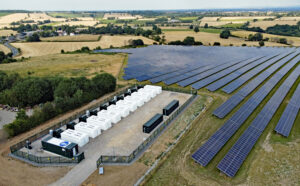
Arenko’s Nimbus platform will handle trading, operational optimisation and asset management for the 600MWh Iceni battery near Swardeston, Norfolk. The project is scheduled to start operating in the first quarter of 2027, slightly later than Ørsted’s original end-2026 target.
Iceni will use the same onshore connection and transmission infrastructure as the 2.9 GW Hornsea Three project rather than securing a separate connection. Arenko describes it as the world’s first utility-scale battery directly integrated with offshore transmission assets.
The project was developed through the UK’s Offshore Transmission Network Review Pathfinder process, involving Ørsted, National Energy System Operator and National Grid Electricity Transmission.
“What makes Iceni interesting for us isn’t just the scale of the battery, but how it works alongside Hornsea 3,” said Ørsted trading vice-president Katinka Hussman Palbo.
“We are aiming to optimise two very different assets, wind and storage, through a shared connection point, while ensuring that both deliver significant value to the grid.”
Grid connection scarcity
The commercial challenge is more complicated than operating a standalone battery. Arenko’s software must forecast wind production and market prices while deciding how much shared connection capacity to allocate to the wind farm or battery in real time.
The battery can charge during periods of low or negative prices and discharge when the system is tighter. It can also provide balancing and ancillary services, while making fuller use of infrastructure that would otherwise be underutilised when Hornsea Three is producing below its maximum output.
The two-hour system is being supplied by Tesla and is equivalent to the daily electricity consumption of about 80,000 UK households, according to Ørsted.
However, sharing a connection does not mean that all curtailed Hornsea electricity can automatically be stored. Charging rights, metering, market settlement, network constraints and the interaction with Hornsea Three’s Contracts for Difference will determine the practical value available.
That is why Arenko’s selection is more significant than a conventional software contract. Iceni tests whether operational coordination can convert a constrained grid connection into a flexible portfolio rather than two competing assets.
Arenko’s platform has been deployed across 14 large co-located projects. The company argues that automated trading can allow hybrid assets to match or exceed the revenue performance of standalone batteries, although Iceni’s scale and offshore-transmission interface are unprecedented.
For Britain, the model addresses one of the energy transition’s hardest bottlenecks. Thousands of megawatts of generation and storage are competing for delayed grid connections. Allowing multiple complementary assets to share existing infrastructure could accelerate deployment and reduce reinforcement requirements.
It also changes project valuation. Developers must assess not only the wind farm and battery separately, but the optimal economic use of the connection itself. Revenue-sharing rules, availability obligations and control-system performance become central investment risks.
Iceni will not eliminate the need for new networks. But if it demonstrates that storage and offshore wind can be operated successfully through a single connection, it could influence future offshore transmission design – and make co-location a standard part of project development.