
- Vattenfall has won contracts for the 1 GW North Sea I Mid and 800 MW Hesselø developments.
- Winning prices were DKK504/MWh and DKK542/MWh, equivalent to approximately €67 and €73/MWh.
- Denmark restored developer competition by replacing its failed subsidy-free model with two-sided contracts for difference and reserved grid connections.
Vattenfall has secured rights to develop two Danish offshore wind farms with combined capacity of at least 1.8 GW, marking a sharp turnaround from the country’s failed attempt to award projects without subsidies in 2024.
The Swedish state-owned utility submitted a winning price of DKK504/MWh (€67/MWh) for North Sea I Mid and DKK542/MWh (€73/MWh) for Hesselø. The former attracted two bids, while five developers competed for Hesselø.
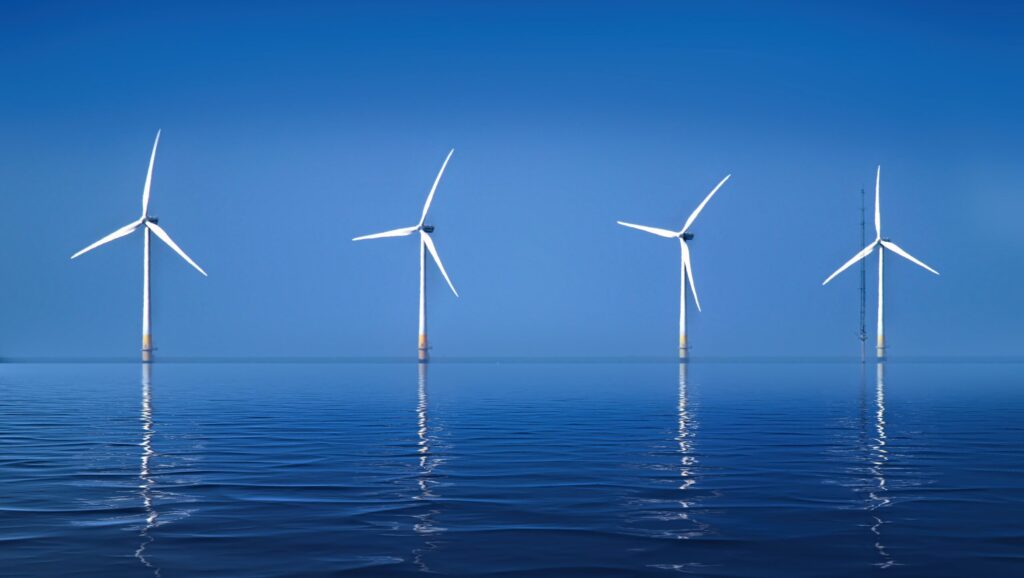
North Sea I Mid will have a minimum capacity of 1 GW and will be developed around 20 km from Denmark’s west coast near Hvide Sande. Hesselø will provide at least 800 MW in the Kattegat, approximately 30 km from shore.
Both developments must be completed by the end of 2032; grid capacity has been reserved and their connection points will be located about 50 km inland. Operating consent will cover 30 years, with a possible ten-year extension.
“Winning both projects reflects our continued ambition to grow our offshore wind portfolio and support the electrification of industry and society,” said David Flood, head of Vattenfall’s offshore wind business.
The result vindicates Denmark’s decision to redesign its auction framework. A previous round offering six areas without state support failed to attract bids in late 2024 as higher equipment costs, interest rates and supply chain constraints undermined project returns.
Developers in that competition were expected to make payments to the state, which would also take a 20% stake. Grid arrangements and other risks further weakened the economics compared with auctions in competing European markets.
Denmark halted the process and conducted further discussions with industry. The replacement model offers a capability-based, two-sided contract for difference, guaranteeing a fixed price while requiring generators to repay the state when the reference electricity price exceeds the strike price.
The government set net subsidy caps of DKK15.7 billion for North Sea I Mid and DKK21.9 billion for Hesselø. Actual payments will depend on wholesale electricity prices and could be materially lower.
The tender also allows developers greater design flexibility and possible overplanting. Requirements cover social responsibility, blade recyclability and cybersecurity, while Hesselø must incorporate nature-inclusive design.
Denmark has therefore restored competition by reallocating risks that developers could no longer finance at acceptable returns. It has not made offshore wind intrinsically cheaper. Consumers and the state now provide protection against low electricity prices, while grid certainty removes another major source of development risk.
The winning prices provide a useful European benchmark, though they are not directly comparable with British contracts for difference. Treatment of transmission costs, inflation, seabed payments, contract duration and development risk differs between markets.
The broader lesson for the UK is nevertheless clear: auctions can achieve low prices only when projects remain financeable. Denmark’s zero-subsidy competition produced no capacity, while a better balanced contract attracted multiple bidders and secured 1.8 GW.
The UK’s Allocation Round 7 also recognised higher industry costs, awarding fixed-bottom offshore wind contracts at £89.49/MWh in Scotland and £91.20/MWh in England and Wales in 2024 prices. Those results and the Danish awards suggest European governments have moved beyond the assumption that offshore wind can continue expanding under steadily falling support prices.