
- Essar Energy Transition has expanded a receivables financing facility from $150m to $350m, with NatWest joining ABN AMRO as an equal lender.
- Natixis has separately increased an existing $100m commitment by $50m, strengthening liquidity at the Stanlow refinery during volatile trading conditions.
- The facilities support working capital rather than directly financing construction of Essar’s hydrogen, carbon capture and sustainable fuels projects.
Essar Energy Transition has expanded its bank financing arrangements as the owner of the Stanlow refinery seeks to strengthen liquidity and advance a £4.3bn programme of low-carbon investments in north-west England.
The company has amended and restated a receivables purchase agreement, increasing total commitments from $150m to $350m. NatWest has joined the facility with a $175m financing line, while existing lender ABN AMRO has raised its own participation to the same amount.
Natixis Corporate and Investment Banking has separately increased its committed financing by $50m, adding to an existing $100m facility. The combined $400m financing headline does not represent entirely new capacity: the receivables facility has increased by $200m and the Natixis commitment by $50m, suggesting an incremental financing uplift of $250m.
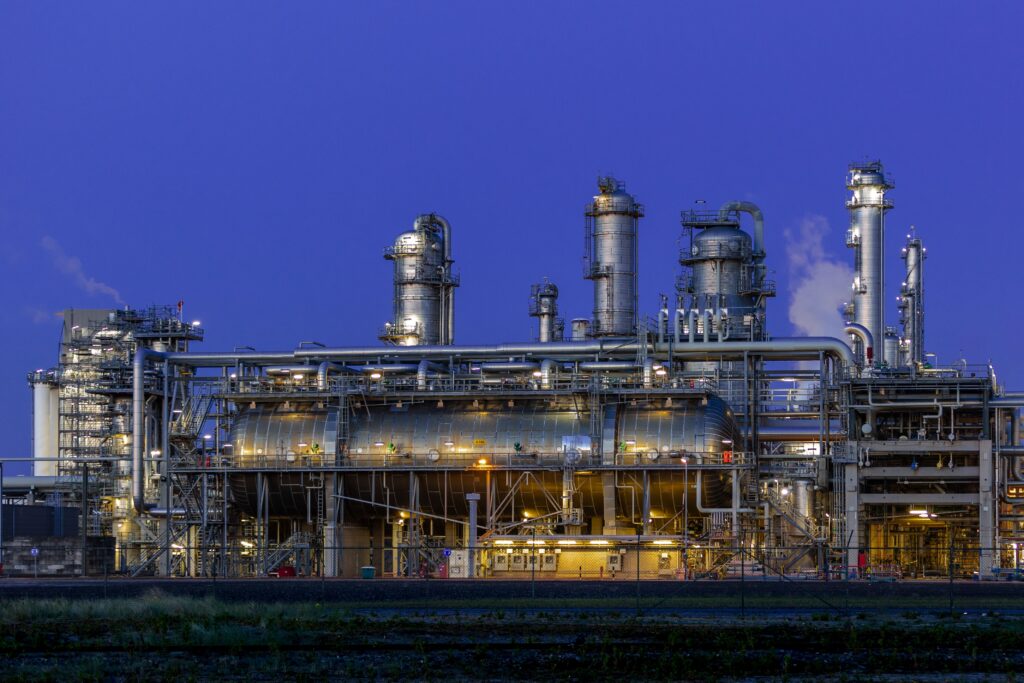
The arrangements will primarily support the working capital requirements of Essar Energy Transition Fuels, which operates the 200,000 barrel/day Stanlow refinery at Ellesmere Port.
Receivables financing allows a company to bring forward cash tied up in invoices owed by customers. This can be particularly valuable for refineries, whose liquidity requirements rise sharply when crude and refined product prices increase because greater sums must be committed to feedstock, inventories and customer credit.
Essar Energy Transition chief financial officer Satish Vasooja said the involvement of NatWest and the expanded commitments from ABN AMRO and Natixis reflected the performance of the fuels business.
“This provides us with enhanced liquidity during volatile market conditions and completes our receivable financing programme that will deliver an optimised and stable capital structure,” he said.
The financing follows a period of investment and operational improvement at Stanlow. Essar said refinery volumes rose by 8% during 2025 after a $130m turnaround programme increased capacity and reliability. The company has also installed a hydrogen-ready furnace, which replaced three older units and is expected to reduce annual emissions by around 16,600 tonnes while initially operating on refinery fuel gas.
Funding targets refinery
The new banking arrangements provide greater financial headroom but should not be confused with project finance for Essar’s proposed hydrogen, carbon capture and sustainable aviation fuel developments.
Essar this week outlined plans to invest £4.3bn in UK energy transition projects by 2035, with more than £1bn of proposed investment said to be approaching final investment decision (FID).
Its largest plans centre on turning Stanlow into a low-carbon industrial hub linked to the wider HyNet project. These include a 350MW hydrogen production plant designed principally to help decarbonise the refinery, a second larger hydrogen facility and carbon capture equipment for Stanlow’s catalytic cracking operations.
The first hydrogen project remains in negotiations with the government over commercial support, while the second has been retained as a reserve project for the HyNet cluster. Their delivery will therefore depend on separate financing packages, government-backed revenue arrangements and access to carbon transport and storage infrastructure.
Essar is also studying a methanol-to-jet sustainable aviation fuel plant capable of producing around 200,000 tonnes a year. The project has received £2.5m of government development funding but has not yet reached a construction decision.
Andrew Barraclough, NatWest’s head of asset-based lending origination, said the financing would give Essar greater flexibility as it invested in industrial decarbonisation and energy security.
“The addition of NatWest to this facility reflects both the strength of Essar Energy Transition’s business and the scale of its ambitions,” he said.
Stanlow’s wider financing network
The agreement forms part of a broader effort to diversify Stanlow’s funding and supply relationships.
In 2024, Essar secured $650m of receivables and trade credit facilities from ABN AMRO, Hamburg Commercial Bank, UMTB and an unnamed international oil company. The original $150m ABN AMRO line now forms the basis of the enlarged agreement with NatWest.
In June, the company signed a separate $500m crude sourcing and refined products arrangement with Abu Dhabi based International Resources Holding, intended to improve feedstock security during a period of disruption in international energy markets.
Together, the deals suggest Essar is rebuilding the network of banks and trading partners required to operate a large refinery and support its transition plans. They do not remove the underlying execution risk.
Stanlow’s future strategy relies on several capital-intensive technologies reaching commercial operation within a relatively short period. It also depends on government support for hydrogen and carbon capture, alongside policies that prevent UK refineries being undercut by imports from markets facing lower carbon costs.
The latest financing therefore provides Essar with a stronger working capital foundation rather than the full funding solution for its low-carbon ambitions. The more consequential milestone will come when its first major transition projects secure FIDs and move into construction.