
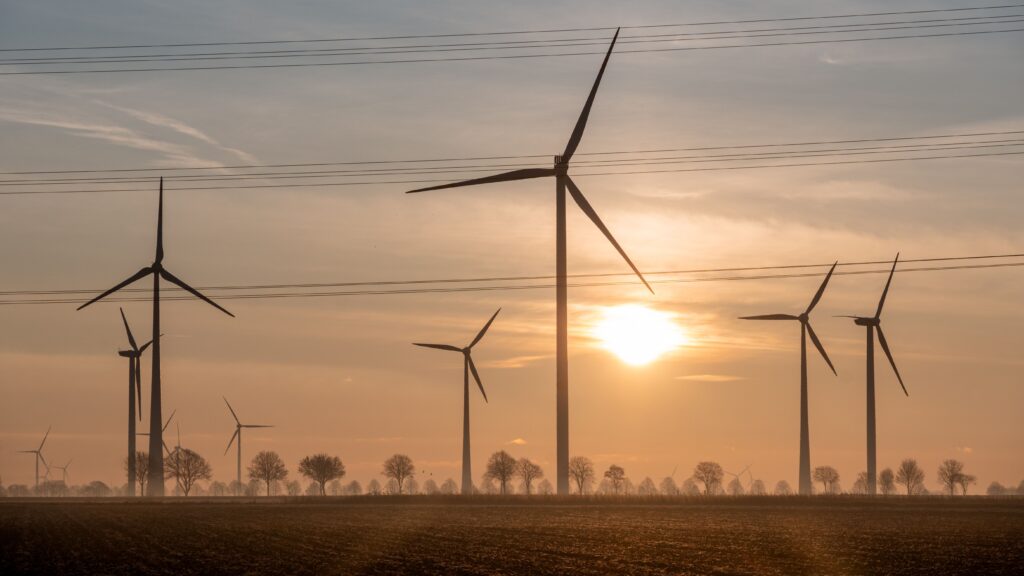
- Norway plans to halve electricity grid development times and simplify applications for new transmission and onshore wind projects.
- The government is proposing earlier payments to host municipalities based on the expected output of wind farms.
- Faster planning could support industrial electrification, but local opposition, grid congestion and Sámi rights remain substantial constraints.
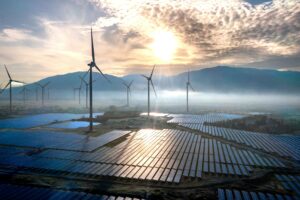
Norway has announced plans to accelerate the development of onshore wind and electricity networks as rising industrial and data-centre demand threatens to erode its power surplus.
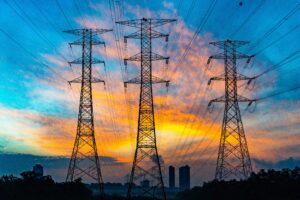
Prime Minister Jonas Gahr Støre said the Labour government would seek to halve the time required to develop grid infrastructure by simplifying applications and removing administrative obstacles.
“Faster development of more renewable power and electricity grids is crucial” for emissions reductions, employment and existing industries, Støre said.
Energy minister Terje Aasland described onshore wind as the quickest and lowest-cost way of materially increasing Norway’s electricity production.
The government is also proposing to bring forward payments from wind developers to host municipalities. Rather than waiting until a wind farm begins generating, local authorities could receive money based partly on planned future production.
The measure is intended to improve local support after opposition from residents and Sámi reindeer-herding communities contributed to a sharp slowdown in development. Norway added only around 1GW of generating capacity between 2021 and 2026, an increase of approximately 2.5%.
The slowdown is striking because Norway begins from an unusually favourable position. At the start of 2025 it had around 40.3GW of installed generating capacity, with hydropower accounting for approximately 88% of normal annual production and wind around 11%.
Norway produced a power surplus of about 18TWh in 2024, but official data warn that its future balance will depend on how quickly consumption increases and whether new generation is built.
Demand is rising as industries replace fossil fuels with electricity and data-centre operators seek access to Norway’s low-carbon power. Statnett has paused allocations for some new large industrial connections in the Arctic because of limited network capacity.
The transmission operator said in June that connection requests across the Nordic countries considerably exceeded capacity available over the short and medium term. Statnett is introducing stronger project-maturity requirements while giving priority to smaller and more conventional electricity users.
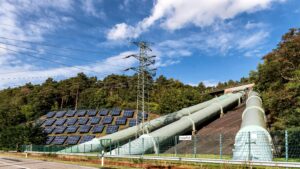
Investment is already increasing. Statnett spent NOK10.6 billion on the network during 2025, 40% more than the previous year, and had 248 active grid projects. It also increased capacity in the existing system by approximately 1GW through measures including line upgrades and improved operational technology.
The government’s reforms recognise that investment alone will not solve a problem if projects remain trapped in planning. Shorter processing times could allow generating capacity and transmission reinforcements to proceed in a more coordinated manner, reducing the risk of building one without the other.
However, Norway’s onshore-wind problem cannot be reduced to administrative delay. The Supreme Court ruled in 2021 that licences for the Storheia and Roan wind farms at Fosen were invalid because the projects violated the cultural rights of Sámi reindeer herders. The case demonstrated that renewable-energy development cannot override protected Indigenous practices merely because a project serves wider climate objectives.
Earlier municipal payments may improve the distribution of financial benefits, but they cannot substitute for proper consultation, environmental assessment and protection of Sámi rights.
The government must therefore reconcile two different forms of urgency. Industry needs additional power and network capacity before connection shortages deter investment, while local communities require confidence that faster decisions will not produce weaker scrutiny.
Norway’s experience is relevant well beyond its borders. Even a country with abundant renewable resources, flexible hydropower and an established transmission operator can encounter an electricity shortage if demand, generation and networks expand at different speeds.
The success of the new policy will be measured not simply by shorter official timetables, but by whether it produces projects that are both deliverable and locally legitimate.