
- The Global Grids Accelerator will bring governments, development banks and UN agencies together to convert network priorities into financeable projects.
- Its initial focus is Africa and South-East Asia, where electricity demand and renewable deployment are outpacing grid investment.
- No dedicated financing pot or initial project portfolio accompanied the launch, so delivery will depend on its ability to mobilise existing institutions and capital.
UN Secretary-General António Guterres has launched the Global Grids Accelerator to speed investment in electricity networks across Africa and South-East Asia, where inadequate infrastructure is holding back industrial development and renewable generation.
The initiative will combine policy support, project preparation, financing and implementation expertise around priorities identified by national governments and regional organisations.
“Renewables are booming, but the grids that carry clean power are not keeping pace,” Guterres said. “Grids are the arteries of the energy transition.”
“The Global Grids Accelerator will help bring the expertise, finance and support needed to build them – expanding access, strengthening energy security and powering growth in developing countries.”
The accelerator will be convened by the UN Development Programme, UN Office for Project Services and Sustainable Energy for All. Other participants include UN regional commissions, UN Trade and Development, the UN Industrial Development Organization and development banks including the World Bank, African Development Bank, Asian Development Bank and European Investment Bank.
In Africa, the programme will support existing initiatives including the African Single Electricity Market, the Continental Power System Master Plan and Mission 300, which aims to connect 300 million additional people to electricity by 2030.
Its South-East Asian work will support the ASEAN Power Grid and cross-border electricity trading, according to the UNIDO launch statement.
Investment in the wrong direction
The launch addresses a mismatch between power sector investment and the available infrastructure needed to make it useful. More than 2,500 GW of generation, storage and large electricity-consuming projects are waiting in grid connection queues worldwide.
The International Energy Agency estimates that annual grid investment must rise by about 50% from roughly $400 billion by 2030. Network projects can take five to 15 years, compared with one to five years for renewable generation and one to three years for data centres.
The shortfall is particularly acute in poorer markets. UN Trade and Development said grid investment in emerging economies outside China has fallen by an average of 7% annually over the past five years, despite rapidly increasing electricity consumption.
By 2030, the world is expected to add about 1,100 TWh of additional annual electricity demand each year, equivalent to adding Japan’s present consumption annually for the remainder of the decade.
The obstacle is not always a shortage of potential capital. Projects frequently lack bankable revenue models, dependable utilities, complete technical studies or coordinated cross-border regulation. The accelerator is designed to address that preparation gap.
Going beyond coordination
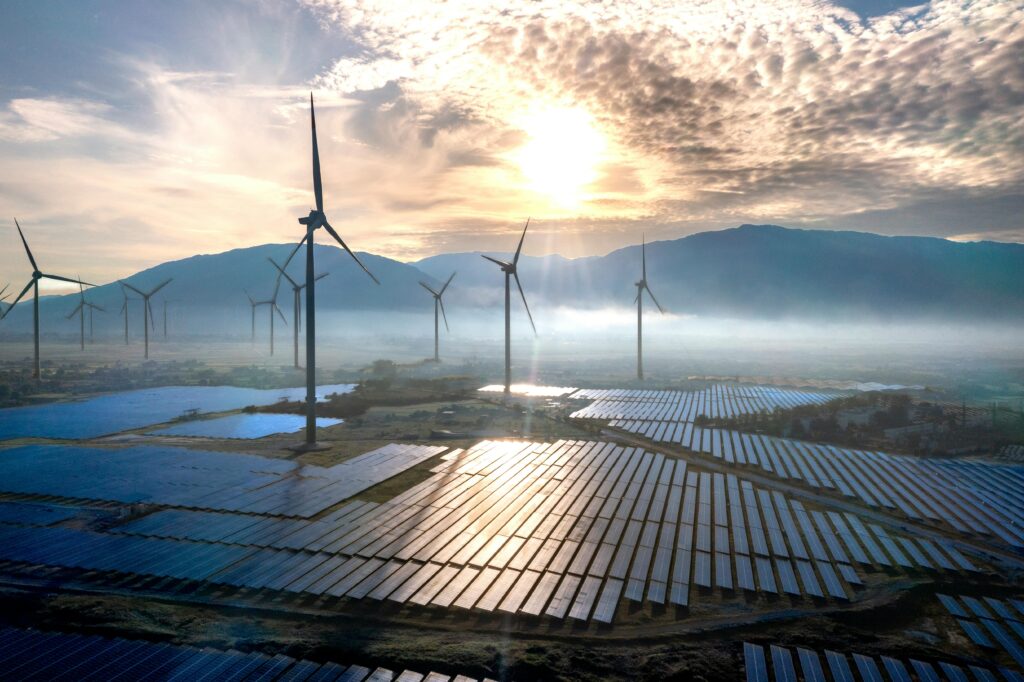
The initiative identifies grids as the binding constraint on both energy access and clean power deployment. Solar and wind projects can now be developed relatively quickly, but they have limited value without connections, transmission capacity and reliable distribution systems.
The launch announcement does not, however, include a new dedicated fund or a first list of projects. Its impact will therefore depend on whether coordination among development banks and UN agencies produces faster approvals, better-prepared investments and additional private capital.
This is particularly important for cross-border lines, where projects must reconcile national planning, tariffs, creditworthy offtakers and political risk. Previous regional interconnection ambitions have often advanced more slowly than their technical case would suggest.
The opportunity extends beyond cable and transformer supply. British expertise in system planning, regulation, project finance, digital network management and offshore grid engineering is all relevant to the accelerator’s work.
Geopolitically, countries that finance and standardise electricity infrastructure can build long-term commercial and diplomatic influence. China has already established a major position in developing market power systems; a coordinated multilateral pipeline could give governments more financing and technology choices.
The accelerator has diagnosed the key challenge; its success will be measured by a less glamorous metric: whether prepared projects reach financial close, construction and operation faster than they used to.