

- Ember Infrastructure has proposed paying 615p a share in cash for Aberdeen-based subsea specialist Ashtead Technology.
- The indicative offer values the company at approximately £498 million and follows three earlier approaches.
- The bid underlines private capital interest in the equipment and services needed across offshore oil, gas, wind and decommissioning.
Ashtead Technology has begun providing preliminary due-diligence information to US private equity investor Ember Infrastructure after receiving an unsolicited takeover proposal valuing the UK subsea equipment group at approximately £498 million.
Ember has offered 615p in cash for each Ashtead Technology share, a 12.8% premium to the company’s previous closing price of 545p.
The proposal is non-binding and there is no certainty that a formal offer will follow. Ashtead advised shareholders to take no action while its board and advisers assess the terms.
The latest approach follows three previous unsolicited proposals. The company said the first two had been “unequivocally rejected”, indicating that Ember has been attempting to establish an acceptable valuation over an extended period.
Under the UK Takeover Code, Ember must announce a firm intention to bid or withdraw by 17:00 on 21 October, unless the Takeover Panel approves an extension.
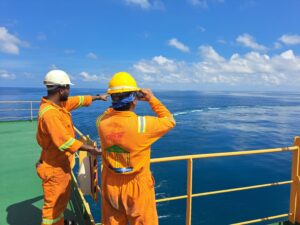
Headquartered near Aberdeen, Ashtead rents specialist subsea equipment and supplies engineering, survey, robotics, mechanical and asset integrity services. Its customers operate across offshore oil and gas production, decommissioning and renewable energy development.
That mixed exposure is central to the investment case. Offshore wind faces delays and policy volatility in several markets, but oil and gas operators continue to invest in existing infrastructure, tiebacks and decommissioning. Much of Ashtead’s equipment and technical expertise can serve multiple parts of that market.
Mixed exposure
Revenue increased 1.1% to £100.2 million in the six months to June, while adjusted earnings before interest, tax and amortisation fell 7.3% to £25.1 million. Operating profit declined 5.9% to £21.8 million, according to the company’s half-year results.
Management blamed disruption in the Middle East and weaker Asian renewables activity, partly offset by solid European performance. Chief executive Allan Pirie said geopolitical volatility reinforced the importance of “energy security, resilience and energy supply diversification”.
The company estimates that its addressable market will expand at a compound annual rate of about 6% to reach $3.4 billion in 2029. European offshore wind spending is projected to grow faster, although individual projects remain exposed to auction economics and financing costs.
Ember describes itself as a private equity investor in infrastructure businesses that improve resource efficiency and resilience. Ashtead would give it exposure to the offshore energy supply chain without the commodity price risk of owning oilfields or the merchant power risk of owning renewable projects.
That helps explain the attraction of specialist service providers. Offshore infrastructure is technically complex, expensive to maintain and increasingly monitored using robotics and digital systems. Customers often prefer to rent rapidly evolving equipment rather than own it, creating recurring demand for fleet operators with sufficient scale and engineering capability.
For Aberdeen, ownership matters less immediately than Ember’s eventual operating plan. Ashtead’s capabilities sit directly within the region’s proposed transition from hydrocarbon production towards offshore wind, subsea engineering and decommissioning.