
- Germany’s July ground-mounted solar auction attracted 3.17 GW of bids for 2.14 GW of available capacity.
- Successful bids averaged €47.90/MWh, down from €49.40/MWh in the previous round.
- The result provides a useful European cost benchmark, although Germany’s pay-as-bid premium cannot be compared directly with UK Contracts for Difference.
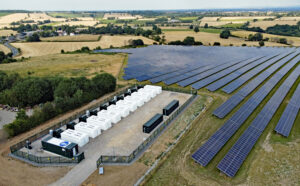
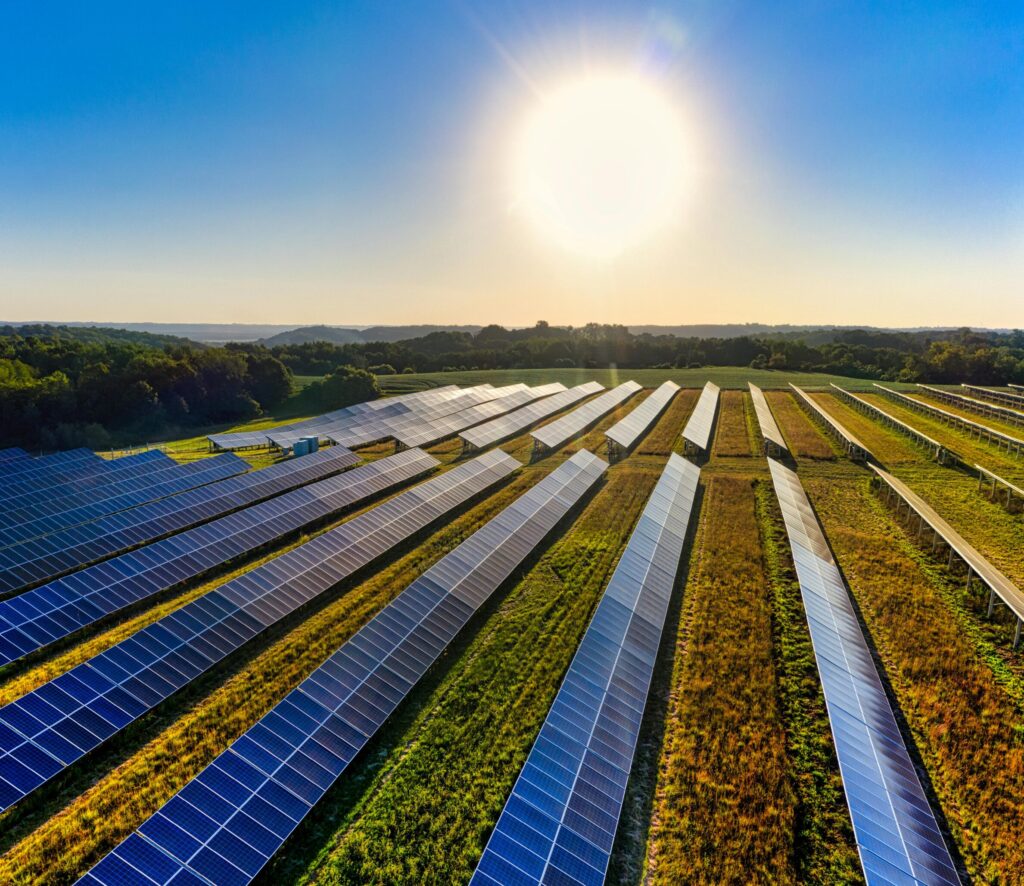
Germany has awarded support to approximately 2.1 GW of ground-mounted solar capacity at lower prices in its latest auction, demonstrating that competition among utility-scale developers remains strong despite grid constraints and more selective financing conditions.
The Federal Network Agency received 401 bids totalling 3,170 MW for the 2,135 MW auction that closed on 1 July. It selected 261 bids and disqualified 48 for failing to meet the auction requirements.
Successful prices ranged from 4.38 to 4.97 euro cents per kilowatt-hour. The volume-weighted average was 4.79 cents/kWh – equivalent to €47.90/MWh – compared with €49.40/MWh in the previous round.
“The auction was again oversubscribed,” Bundesnetzagentur president Klaus Müller said. “The prices… were slightly lower than in the previous auction.” Full results were published on Tuesday.
Bavaria secured the largest allocation, with 75 projects totalling 429 MW. It was followed by Baden-Württemberg, Rhineland-Palatinate, North Rhine-Westphalia and Lower Saxony.
Lower prices, thinner cushion
The result represents a roughly 3% fall in the average successful price. It follows a March auction in which developers submitted more than 4.6 GW of bids for 2.3 GW of capacity, producing an average price of 4.94 cents/kWh.
July’s round was less heavily oversubscribed – bids exceeded available capacity by about 48%, compared with more than 100% in March – but still delivered lower prices. That suggests module costs, equipment availability and competition for development pipelines continue to outweigh higher financing and grid-related costs for leading projects.
The number of disqualified bids is nevertheless notable. Almost one in eight submissions was excluded, illustrating that a deep nominal pipeline does not translate automatically into compliant or deliverable capacity.
Germany is targeting 215 GW of installed solar by 2030 as part of an electricity system intended to obtain 80% of its power from renewable sources. The auction’s scale must therefore be repeated frequently alongside rooftop deployment, storage and network reinforcement.
The €47.90/MWh average provides a useful indicator of continental utility-scale solar economics. It is materially below the £65.23/MWh awarded to British solar projects in Allocation Round Seven (AR7), which secured 4.9 GW of capacity. The UK result is listed in the government’s AR7 announcement.
The two numbers are not directly comparable. UK CfDs are index-linked, two-sided contracts with different delivery years, currency exposure, solar resources and planning and network costs. Germany’s auction uses pay-as-bid remuneration under the Renewable Energy Sources Act.
Even so, the direction is significant. Europe’s largest power market is continuing to procure gigawatt-scale solar below €50/MWh while Britain has also achieved a record allocation. Equipment cost is no longer the principal constraint on European solar deployment; land, grid access, permitting, storage and project execution increasingly are.
Low auction prices are valuable only if the projects reach operation. The next test is therefore delivery: whether developers have left enough margin in their bids to absorb connection delays, curtailment and financing volatility without returning or abandoning their awards.