

- Google will invest at least €13bn in Finnish data centre and supporting infrastructure during 2027 and 2028, its largest single investment in Europe.
- A 22-year power purchase agreement will underpin the extension of Fortum’s Loviisa nuclear plant and cover up to half of its output.
- The package combines firm nuclear generation, new wind contracts, a 94MW battery and grid-led site selection, providing a demanding benchmark for UK AI growth zones.
Google has paired a €13bn expansion of its Finnish AI infrastructure with one of Europe’s most substantial corporate nuclear power agreements, strengthening the case that data centre investment will follow countries able to offer clean power and credible grid integration.
The technology company plans new infrastructure and partnerships in Hamina, Kajaani, Muhos and Vaala during 2027 and 2028. Google described the programme as its largest single investment in Europe.
At the centre of the energy package is a 22-year power purchase agreement with Fortum. The contract will begin with a smaller volume in 2028 and cover 50% of the Loviisa nuclear plant’s capacity between 2030 and 2049.
Loviisa’s two 507MW reactors produce about 8TWh annually, equivalent to approximately 10% of Finland’s electricity. Without a lifetime-extension programme, the reactors could not operate beyond 2030.
Fortum expects to invest about €1bn in the plant between 2023 and 2050. Approximately €700 million of the required expenditure remains subject to investment decisions, according to the company’s stock exchange announcement.
The PPA will also support a new 10MW increase in Loviisa’s output, in addition to a previously planned 38MW uprate. Fortum expects the fully contracted agreement to add about 1.4 percentage points to its comparable return on net assets.
Google president Ruth Porat has summarised the commercial approach as “BYOP, bring your own power”.
More than nuclear procurement
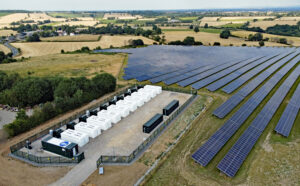
The package is notable because it combines baseload generation with additional renewables and flexibility. Google has signed Finnish onshore wind PPAs that support 629MW of new capacity and contracted a 94MW battery beside its planned Kajaani data centre. Fortum will optimise the battery, which is due to enter operation in late 2027.
Google has also worked with transmission operator Fingrid and Business Finland to locate new facilities in northern Finland, close to carbon-free generation and available network capacity. This reduces the need for reinforcement in the more congested south.
The company says heat recovered from its Hamina facility is designed to meet 80% of the local district heating network’s annual needs. New European facilities will also be designed for heat-recovery readiness.
Google estimates that its investment will support more than 37,000 jobs nationally during construction, including about 16,000 construction positions, and 7,000 jobs annually once the facilities are operating. The latter figure includes onsite roles, supply-chain employment and jobs induced in local services, rather than 7,000 direct data centre employees.
That distinction matters as governments compete to attract power-intensive AI infrastructure. Finland is offering Google a combination of existing nuclear generation, relatively uncongested northern grid capacity, cool weather and an investible pipeline of new supply. It is not merely granting accelerated access to the public network.
For the UK, the comparison is uncomfortable. British AI growth zones are being developed against a backdrop of high industrial power prices, a congested connection queue and limited firm low-carbon capacity. Projects that simply secure priority access could shift grid costs and supply risks to other consumers.
The Finnish model suggests a more defensible bargain: locate demand where it helps the system, contract enough clean generation to preserve or expand supply and provide flexibility alongside the load. As Google energy director Aris Karcanias put it, the objective is to “understand what the grid needs”.
Whether every part of the package proves additional remains to be seen. The nuclear PPA keeps existing capacity online rather than building an immediate new reactor, while several future projects remain covered only by a memorandum of understanding. Nevertheless, Finland has converted electricity system strength into digital investment. The UK must do the same if its AI ambitions are to become an energy system asset rather than another source of scarcity.