
- RWE has taken a final investment decision on a 400 MW / 1,100 MWh battery at Moerdijk, with commissioning scheduled for the second quarter of 2028.
- Its agreement with TenneT makes congestion relief a core operational function, rather than an incidental benefit of merchant storage.
- The project offers a useful UK precedent for combining offshore wind, storage and flexible demand behind coordinated grid arrangements.
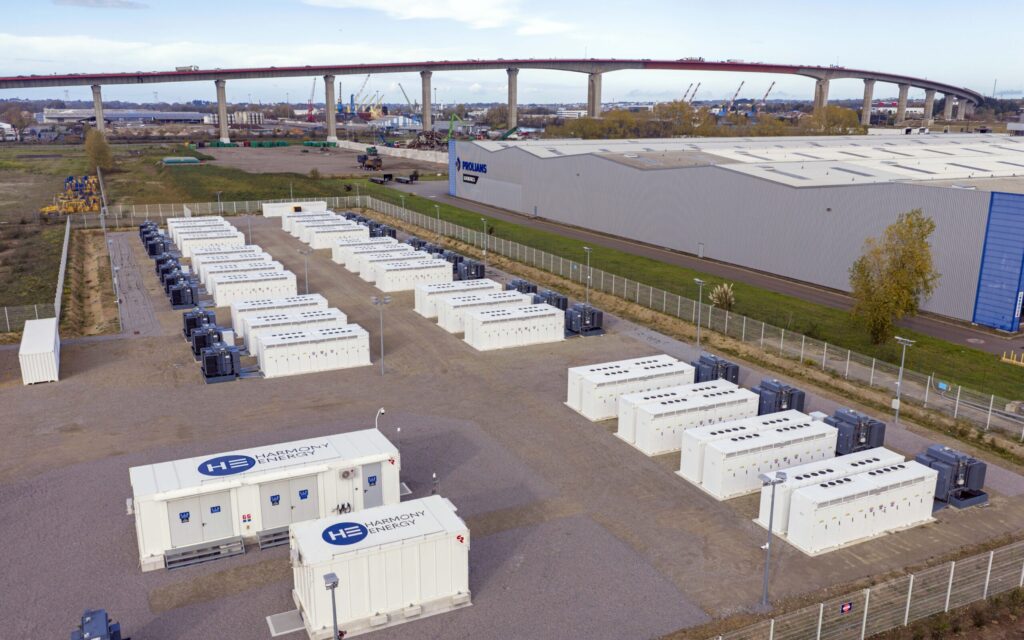
RWE will build one of the Netherlands’ largest battery storage facilities at its Moerdijk power station, using the project to relieve an overloaded regional electricity network and support the integration of its OranjeWind offshore wind farm.
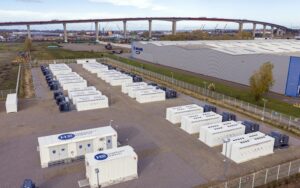
The 400 MW system will contain 1,100 MWh of storage across 208 lithium-ion battery containers, giving it a maximum-duration rating of about 2.75 hours. Construction is due to begin in the coming period, with commissioning targeted for the second quarter of 2028 according to RWE. The company did not disclose the capital cost or technology supplier.
At full output, RWE says the plant could cover the evening peak demand of approximately 500,000 homes for almost three hours. RWE Generation chief executive Nikolaus Valerius called storage “a crucial role in building a resilient energy system” with a growing renewable share.
The battery will connect through the existing substation at RWE’s Moerdijk site, close to TenneT’s 150kV Moerdijk-Noord station. Capacity-steering agreements will allow the transmission system operator to control its operation when necessary to reduce congestion in Noord-Brabant.
Beyond merchant storage
The contractual structure is a key feature of the project. European batteries have typically been financed against combinations of wholesale arbitrage, balancing services, capacity payments and tolling contracts. At Moerdijk, network location and dispatch obligations are integral to the investment case.
TenneT and regional network operator Enexis will assess how much capacity the battery can release for customers waiting to draw electricity from the grid. The result is expected to feed into a revised congestion management study in December.
The project will also be capable of providing rapid frequency and inertia-related services. RWE already operates a 7.5 MW / 11 MWh battery at Moerdijk that was designed to provide synthetic inertia, making the new development a substantial scaling-up of an established technical model.
Enexis reported six additional network bottlenecks in Noord-Brabant in its August capacity update, while the Dutch government has introduced flexible contracts and connection priorities for assets that can relieve congestion. The International Energy Agency has identified non-firm connections, co-location and utility-scale storage as increasingly important responses to constrained grids.
Integrated system
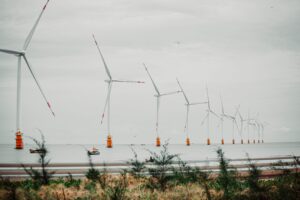
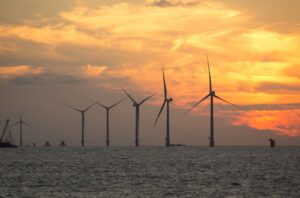
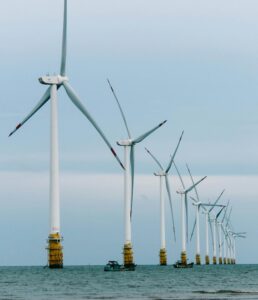
RWE also describes Moerdijk as part of the integration strategy for OranjeWind, the 795 MW offshore wind project it is developing with TotalEnergies. The wider portfolio includes electrolysers, electric boilers and smart charging, allowing renewable output to be shifted between storage and flexible demand.
That is more significant than simply placing a battery next to a power station. It points towards portfolio-level firming, in which offshore generation, industrial demand and storage are coordinated around network conditions. The battery can absorb excess electricity rapidly, discharge during peaks and alter its behaviour when regional transmission capacity is scarce.
For the UK, the closest comparison is RWE’s planned 350 MW / 700 MWh battery at Pembroke, a roughly £200 million project due to commission in the second half of 2028. Moerdijk is larger and longer duration, while adding an explicit congestion relief role.
The UK expects to need 23-27 GW of battery capacity by 2030, according to the Clean Power Action Plan. Yet connection reform alone will not ensure those batteries operate where and when the system needs them. The Dutch model shows how targeted network contracts can turn storage from another connection into an asset that actively creates system capacity.
The commercial test will be whether congestion payments and other revenues justify the battery’s dispatch restrictions. If they do, Moerdijk could become a replicable template: storage remunerated not only for energy and ancillary services, but for unlocking electrification that would otherwise remain stuck in a grid queue.