
- LCP Delta estimates that an optimised Contracts for Difference auction could procure as much as 19 GW of wind and solar.
- Its central scenario produces more than £11 billion of net consumer savings between 2027 and 2050.
- The figure is a modelled outcome, not an auction forecast, and depends heavily on strike prices, gas prices, deployment and system costs.
The UK could contract up to 19 GW of renewable generation in its eighth Contracts for Difference (CfD) allocation round (AR8) while reducing overall consumer costs, according to modelling by consultancy LCP Delta.
The consultancy estimates that additional wind and solar generation would lower wholesale electricity costs by approximately £51 billion between 2027 and 2050. That saving would be partially offset by £38 billion of CfD support and about £2 billion of extra balancing and capacity-adequacy costs, leaving a net benefit of more than £11 billion.
The analysis covers fixed-bottom and floating offshore wind, onshore wind and solar. Its central “consumer value” prices, expressed in 2024 money, are £68/MWh for solar, £86/MWh for onshore wind, £92/MWh for fixed-bottom offshore wind and £206/MWh for floating or other deep-water projects.
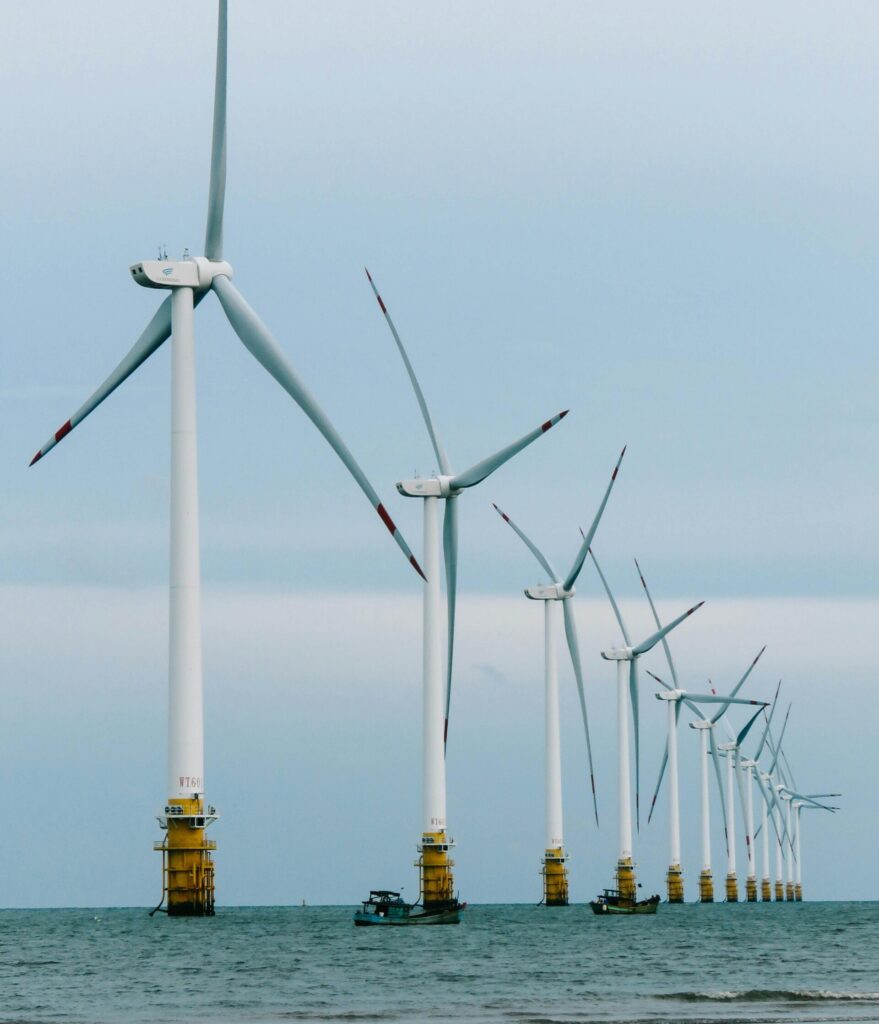
At £92/MWh, offshore wind could still represent value for money and allow the government to procure as much as 6 GW, the LCP Delta report found. Solar and onshore wind would need to clear at lower prices, with supply chain and development constraints potentially limiting the capacity available.
“Our analysis demonstrates that continuing to invest in low-cost renewables reduces customer bills and reduces our reliance on gas,” said LCP Delta head of UK market strategy Sam Hollister.
Test of whole-system value
AR8 is structurally different from earlier auctions. Rather than treating each technology pot as a largely self-contained competition, government will have greater ability to compare consumer value across pots and adjust initial budgets after seeing anonymised bids.
The round opened to applications on 20 July. Projects with only provisional “Gate 1” connection offers are excluded, while separate treatment has been introduced for other deep-water offshore wind. Solar and onshore wind also receive an additional delivery year, widening the eligible pipeline.
The revised mechanism should give ministers more scope to buy additional capacity when bids appear attractive. It also creates uncertainty for developers because success will depend not only on ranking within a technology category, but on the government’s assessment of value across the power system.
The £11 billion finding is best understood as an argument for procurement rather than a prediction of the auction result. LCP Delta acknowledges that the result is sensitive to assumptions about gas prices, future renewable deployment, wholesale market behaviour and the counterfactual generation mix.
CfD payments are also not equivalent to net consumer cost. When wholesale prices fall below a project’s strike price, consumers fund the difference; when prices exceed it, generators pay money back. Additional renewables can therefore increase visible CfD levies while lowering the much larger wholesale component of bills.
That distinction matters in the present energy price environment. The model indicates that contracting renewables at credible rather than historically low strike prices can still produce value by displacing gas generation and reducing exposure to international fuel shocks.
Execution remains the constraint. Procuring 19 GW does not guarantee that 19 GW will connect on time. Planning, equipment, ports, construction capacity and network availability will determine how much generation reaches the system before 2030. Congestion and curtailment could also erode the wholesale price benefit if grid expansion lags.
AR8 is likely to be the last round capable of delivering substantial additional offshore wind by the government’s 2030 clean-power deadline, and probably the penultimate opportunity for qualifying solar and onshore wind. Its importance therefore lies less in whether it produces a record headline capacity than in whether ministers use the new flexibility to contract projects that can actually be built.