

- India has approved a INR1.864tn programme to connect 135 GW of renewable generation and deploy 50 GWh of battery storage by 2032-33.
- Central government support will cover only part of the investment, leaving execution dependent on state utilities, competitive tenders and private capital.
- The programme confirms that transmission, storage and grid management are becoming as important to India’s transition as adding solar and wind capacity.
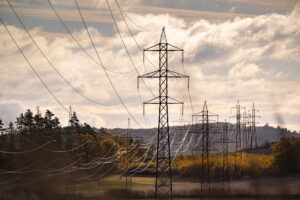
India’s cabinet has approved a INR1.864tn ($19.4bn) transmission and battery programme designed to prevent inadequate grid infrastructure from holding back one of the world’s fastest-growing renewable energy markets.
The third phase of the Green Energy Corridor will strengthen intra-state transmission systems capable of evacuating up to 135 GW of renewable electricity, according to the government’s official Cabinet announcement.
The programme includes INR1.364tn for transmission infrastructure and INR500bn for 50 GWh of battery energy storage. Completion is targeted for the 2032-33 financial year.
The batteries may be installed at renewable generation sites or at other strategically important locations. The government said they would help “address intermittency, congestion, peak-hour curtailment and meet non-solar hour demand”.
Central financial assistance will total INR540.82bn, or about 29% of the programme’s total outlay. The remainder will need to come through state-level investment and competitively procured projects.
Greenfield transmission assets will be tendered under a build-own-operate-maintain model, while upgrades to existing networks will use a regulated cost-plus approach. State transmission utilities will act as the principal implementing agencies.
Policy shift
The 50 GWh allocation is particularly significant. India had 2.93 GW and 8.66 GWh of operational battery systems larger than 1 MWh at the end of June, according to Ministry of Power data. The new programme’s storage volume is therefore almost six times the recently installed national stock.
That comparison also illustrates the execution challenge. India must procure, finance, connect and operate tens of gigawatt-hours of batteries across multiple state markets whose utility finances, tariffs and regulatory capacity vary considerably.
The investment follows an exceptionally rapid expansion of generation. India crossed 300 GW of installed non-fossil capacity in July, including 164.6 GW of solar and 58.1 GW of wind, government figures show. Its target is 500 GW by 2030, rising towards 900 GW by 2035 under the assumptions supporting the new corridor.
The result is a change in policy emphasis. India’s problem is no longer a shortage of proposed renewable projects; increasingly, it is whether state grids can move power from resource-rich locations, manage steep evening ramps and prevent otherwise economic solar and wind farms from being curtailed.
The addressable market extends beyond battery cells. Potential openings include high-voltage equipment, power electronics, protection systems, forecasting, storage optimisation, grid cybersecurity, engineering services and infrastructure finance.
Competition will nevertheless be formidable. Tariff-based tenders will place sustained pressure on costs, while India is using energy policy to develop domestic manufacturing and reduce reliance on imported technology. International suppliers will therefore need credible local partners, service capability and a clear contribution to Indian industrial development.
The government argues that central assistance will help “keep the power costs down”. Whether it succeeds will depend on delivery discipline as much as the headline allocation. Land acquisition, permitting, utility creditworthiness, equipment availability and coordination between generation and network timetables remain material risks.
In major emerging markets, the next phase of renewable growth will be won by companies capable of integrating power rather than merely generating it. India has placed a large number on that proposition; implementation will determine whether the network finally gets ahead of the capacity queue.