
- Wärtsilä will supply a 35 MW / 70 MWh battery project alongside energy management and maintenance services for Aruba’s utility.
- The contract addresses how batteries, renewables and existing generating plant operate together, with handover scheduled for 2028.
- The project offers lessons for UK island systems and constrained networks, although its economics and operational benefits remain to be demonstrated.
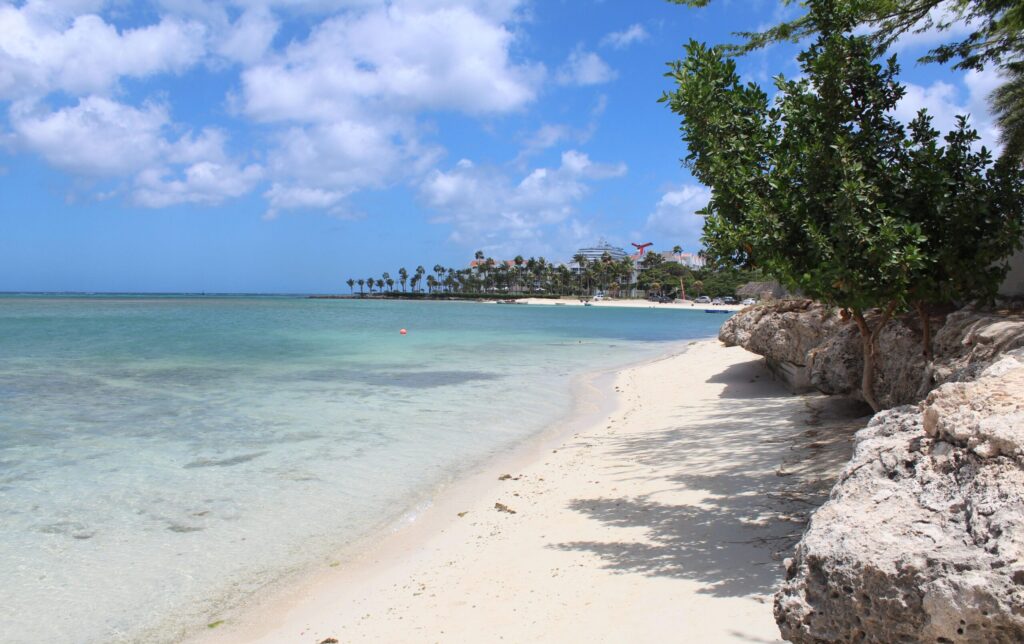
Wärtsilä has announced an agreement to supply battery storage and associated services to Aruba’s utility, WEB Aruba, supporting closer coordination of the Caribbean island’s renewable generation and existing power plants.
The project comprises a 35 MW / 70 MWh battery energy storage system supplied under an engineering, procurement and construction contract, together with energy management and maintenance services. Wärtsilä announced the agreement on Tuesday, saying the order was booked in the third quarter of 2026 and handover was scheduled for the second quarter of 2028.
The supplier described it as its largest energy storage order in the Caribbean, with local reporting showing that the BESS II project had already been publicly launched in September.
The package includes forecasting and control functions intended to optimise the interaction between the battery, wind and solar output and dispatchable generation.
“We currently generate power by utilising wind and solar energy along with our engine power plants,” said WEB Aruba chief executive Alfredo Koolman.
WEB Aruba’s published production figures list 30 MW of wind capacity at Vader Piet and 6.1 MW of solar capacity at Sunrise Solar Park, alongside 252.4 MW of firm generating capacity. Those are capacity figures, rather than measures of the share of electricity each source produces.
Island electricity system
Aruba provides a useful setting for examining storage because the utility must coordinate different sources within an island electricity system. The commercial objective is to make the combined assets serve demand reliably while improving their operating efficiency.
A battery can absorb electricity and discharge it later, but the value of that capability depends on when it is used. Forecasting demand and renewable output can help determine whether stored energy should be retained for a later peak or used to reduce the running requirements of other plant.
The service agreement acknowledges that these decisions need continuing attention. Software settings, forecasting models and operating priorities may need adjustment as demand changes or additional generating assets enter service.
A 70 MWh energy rating paired with 35 MW of power corresponds to two hours at rated output before allowing for losses and operating limits. It does not mean the battery can supply the whole island for two hours, nor does it establish a solution to several days of weak renewable generation.
For the UK, the closest relevance is to islands, industrial sites and networks where operating constraints increase the value of flexible capacity. The example encourages buyers to consider storage procurement alongside control systems, existing generation and the responsibilities of the operator.
That wider scope affects contract design. Equipment warranties alone cannot establish whether a project will deliver its intended savings. Availability commitments, maintenance arrangements and the method used to measure performance all influence the eventual commercial outcome.
Aruba’s development shows a utility buying an integrated operating capability alongside storage equipment. Its significance for other markets will rest on whether that approach produces measurable benefits over the life of the assets.