The UK’s ambition to deliver a near-zero carbon power system by 2030 is, on paper, a compelling proposition. It promises cleaner energy, greater independence from volatile global fuel markets, and a decisive step towards net zero.
But beneath the clarity of that ambition lies a more complicated reality: achieving clean power within this timeframe will require the entire energy system to operate at the very edge of what is practically deliverable.
This is not a question of technological possibility. The UK already has many of the tools required – world-leading offshore wind capacity, a growing solar base, and an increasingly sophisticated understanding of system flexibility. The challenge is one of execution. Delivering clean power by 2030 demands that multiple complex transitions happen not just quickly, but simultaneously – and with very little margin for delay.
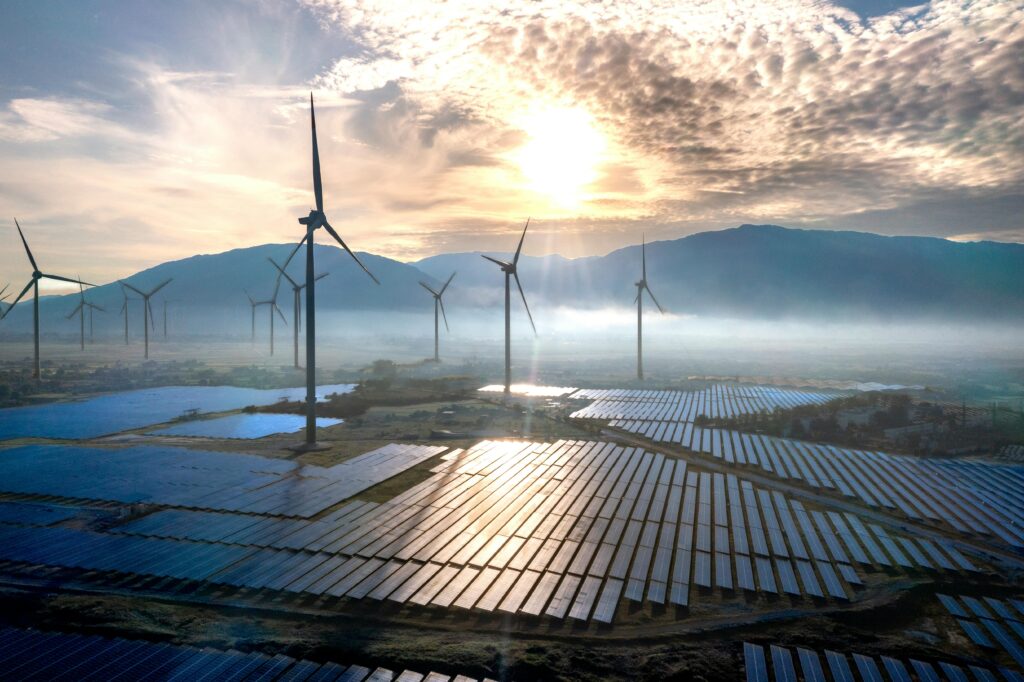
At the heart of the challenge is scale. The UK must rapidly expand renewable generation, while at the same time transforming the infrastructure that supports it. Offshore wind will continue to do much of the heavy lifting, complemented by solar and, to a lesser extent, emerging technologies.
But building capacity is only part of the equation. That power must be transported, balanced and integrated into a system that was not designed for such a decentralised and intermittent supply profile.
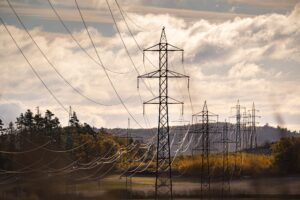
This is where the grid becomes the critical constraint. For years, the conversation around clean energy has focused on generation targets. Today, the bottleneck is increasingly infrastructure. Projects are being held up not because they cannot be built, but because they cannot secure timely connections to the network.
Reinforcing and expanding the transmission system – while reforming connection processes – is now one of the most urgent priorities. Without it, the UK risks building renewable capacity that it simply cannot use efficiently.
Compounding this challenge is the fact that electricity demand is not static. Electrification is accelerating across multiple sectors, from transport to heating to heavy industry. Electric vehicles, heat pumps and industrial decarbonisation will all push demand higher over the coming decade.
This means the system must not only replace fossil fuel generation, but also expand significantly to meet new consumption. In effect, the UK is attempting to rebuild and grow its power system at the same time.
Ambition vs. realism
Overlaying these structural challenges is a deeper tension between ambition and realism. Proponents of the 2030 target point to the UK’s track record. The phase-out of coal and the rapid expansion of offshore wind demonstrate that transformative change is possible when policy, investment and industry align. There is also a strong strategic case: a cleaner power system enhances energy security and can, over time, reduce costs for consumers.
Sceptics, however, question whether the timeline is too compressed. Key enabling technologies – such as large-scale energy storage, carbon capture and low-carbon hydrogen – are not yet deployed at the scale required.
Planning processes remain slow and contested. Supply chains are under pressure globally. And crucially, the system must remain reliable throughout the transition. Intermittent renewables cannot yet fully replace dispatchable generation, meaning gas will continue to play a role, at least in the medium term.
All of this pushes the limits of feasibility. 2030 ambitions envisage a scenario in which everything goes right: projects are delivered on time, planning approvals are accelerated, supply chains hold, financing remains available, and policy remains stable. In reality, large infrastructure programmes rarely unfold so smoothly. Delays, cost overruns and shifting political priorities are the norm rather than the exception.
Delivering clean power by 2030, then, is less about overcoming a single barrier and more about managing a system-wide coordination challenge. It requires unprecedented alignment between government, regulators, network operators, developers and investors. Policy must provide clarity and consistency. Markets must deliver capital at scale. And the physical system – from turbines to transmission lines – must be built at pace.
The financial dimension alone is significant. Tens of billions of pounds of annual investment will be required across generation, networks and flexibility solutions. This represents not just an energy transition, but a broader industrial mobilisation. The prize, however, is equally large: a more resilient, lower-carbon energy system that positions the UK at the forefront of the global transition.
Ultimately, the debate over clean power by 2030 is often framed too narrowly as a binary choice between success and failure. The more useful question is how much risk the UK is willing to accept in pursuit of speed. Moving quickly increases the likelihood of system stress and delivery challenges. Moving more slowly risks locking in higher emissions and missing economic opportunities.
The truth lies somewhere in between. The 2030 target is not unrealistic, but it is unforgiving. It assumes a level of coordination and execution that leaves little room for error. Success will depend not just on ambition, but on sequencing – ensuring that grid infrastructure, flexibility solutions and new generation come online in the right order, at the right time.
In that sense, the UK’s clean power goal is as much a test of governance as it is of engineering. The technologies exist. The capital is available. The direction of travel is clear. What remains uncertain is whether the system – political, financial and physical – can move quickly enough, and coherently enough, to deliver.
That is the real challenge. And it is one that will define not just the success of the 2030 target, but the credibility of the UK’s wider energy transition.