Ember estimates that existing hydro connections in seven EU countries could accommodate 25 GW of additional wind and solar.
The capacity would represent 18% of expected renewable additions in those countries between 2026 and 2030.
Only Spain and Portugal have dedicated rules for hybrid projects, leaving regulation rather than engineering as the main near-term barrier.
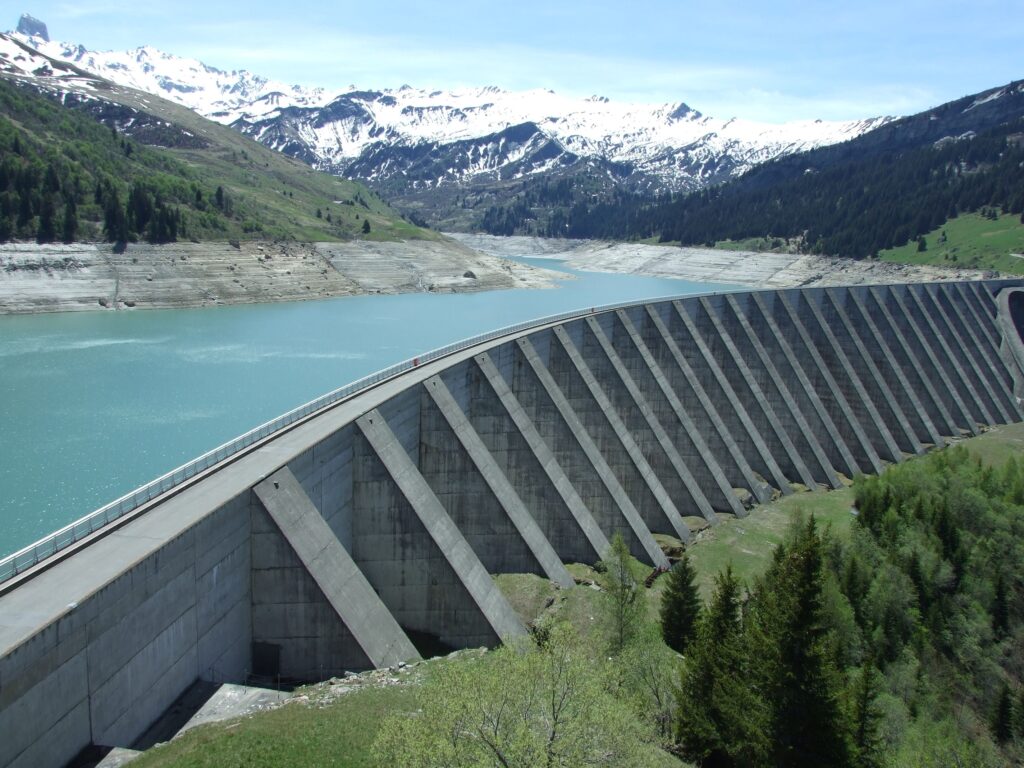
Existing hydropower plants in seven European countries could host 25 GW of new wind and solar behind their grid connections, according to think tank analysis, offering a way to accelerate renewable deployment while transmission projects remain stuck in permitting and construction.
The analysis by Ember covers Austria, Bulgaria, France, Italy, Portugal, Romania and Spain, which together operate 93 GW of the EU’s 131 GW hydro fleet. The think tank estimates that hybridisation could accommodate 18% of the 138 GW of wind and solar those countries expect to add between 2026 and 2030.
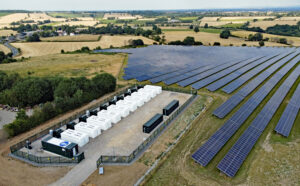
Hybrid projects place two or more generation or storage technologies behind the same connection point. The combined facility remains subject to its existing export limit, but complementary production profiles allow a larger amount of equipment to use infrastructure that would otherwise sit partly idle.
Hydropower is particularly suitable because many reservoir and pumped-storage plants produce most heavily during morning and evening peaks. Solar output is concentrated during the middle of the day, when the hydro plant may be exporting considerably less than its connection can carry.
Ember found that eligible reservoir and pumped-storage facilities currently have an average capacity factor of 19%. Adding solar could raise connection utilisation to 36%, while wind could lift it to 31%. Run-of-river plants have a higher existing capacity factor of 29%, rising to a potential 47% with solar or 42% with wind.
The 25 GW figure already incorporates some environmental restrictions. Ember excluded plants within protected areas and found that about 28% of large hydropower capacity across the seven countries was suitable, ranging from 6% in Bulgaria to 41% in Austria and Italy.
The potential also varies sharply by country. Hybridisation could accommodate capacity equivalent to 77% of Austria’s expected renewable additions but only 7% in Bulgaria. Romania could connect about 2 GW of its planned 10 GW pipeline through hydro sites, while Bulgaria could accommodate approximately 200 MW.
Hybrid scheming
Regulation is now the main obstacle. Spain and Portugal are the only countries in the study with dedicated hybrid project frameworks. Spain allows qualifying projects to bypass parts of the first-come, first-served connection process and reduces financial guarantees for hybrid connection requests by 50%. Both countries waive further environmental screening where development remains within an existing plant footprint.
Elsewhere, connection rights and permitting rules were generally written for a single technology. French projects have proceeded without a dedicated framework, while Bulgaria’s state utility is converting some hydro assets into battery-coupled facilities and examining floating solar at dams. Wider deployment remains more difficult without explicit rules governing shared connections, metering and capacity allocation.
Hybrid schemes still need generating equipment, internal electrical infrastructure, control systems and sometimes connection modifications. They do not eliminate curtailment risk or the need for wider transmission expansion. Their advantage is that they can remain within an existing external export limit.
For Britain, the specific hydro opportunity is smaller, but the principle applies directly to solar, wind and batteries. Connection queue reform has removed speculative projects, yet it cannot create physical network capacity. Shared connections and intelligently controlled hybrid assets can extract more output from each available megawatt while major lines are built.
Hybridisation is therefore best understood as a bridge rather than a substitute for grid investment. Its value lies in turning underused connections into near-term renewable capacity during the decade in which network delays pose the greatest threat to deployment targets.