

- OpenAI has signed a 20-year lease for approximately 8 GW of IT capacity at the PORTS-Pike campus.
- Nvidia’s $105bn commitment is a contingent residual-value guarantee covering the initial 4.25 GW, not an upfront payment for the entire project.
- The campus illustrates both a possible solution to grid-cost allocation and the risk of AI demand locking in enormous new gas capacity.
Nvidia has agreed to provide up to $105bn in financial guarantees for the first stage of a vast OpenAI data centre campus in Ohio, US, transferring a significant portion of the project’s long-term credit risk onto the world’s dominant AI chip supplier.
OpenAI will lease approximately 8 GW of IT capacity at the PORTS-Pike Technology Campus in Pike County for 20 years. SoftBank-backed SB Energy will build, own and operate the data centres, while Nvidia will be the exclusive provider of AI computing infrastructure.
The initial deployment covers 4.25 GW. Nvidia has an option to support a further 3.75 GW, but its present guarantee relates to the first tranche and is not an unconditional $105bn capital investment.
According to Nvidia’s regulatory filing, payments would be triggered if OpenAI became insolvent or failed to meet lease obligations. Nvidia would cover the shortfall between a specified minimum property value and the amount recovered by reletting or selling the relevant facilities. OpenAI has agreed to reimburse Nvidia for payments made under the guarantees.
Nvidia will separately invest $1.5bn in SB Energy. Capacity is expected to become available in phases from 2028, beginning with an 800 MW development.
“Land, power and shell have become vital in the age of AI,” Nvidia chief executive Jensen Huang said in the companies’ joint announcement.
Compute + finance + power
The guarantee provides the credit support SB Energy needs to raise project debt against a customer – OpenAI – with enormous growth expectations, but no conventional investment-grade credit profile.
It also deepens concerns about circular financing in the AI sector. Nvidia is investing in and guaranteeing infrastructure that will be filled with Nvidia processors and leased to one of its largest customers. The arrangement does not manufacture demand by itself, but it makes Nvidia both supplier and financial backstop.
The energy implications are equally significant. SB Energy and SoftBank plan at least 10 GW of new generation and $4.2bn of transmission investment through AEP Ohio. A US Department of Energy factsheet says at least 9.2 GW will be natural gas generation, supported by $33.3bn of Japanese funding.
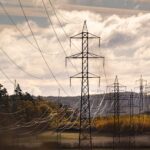
SB Energy has committed to fund the new transmission rather than passing the costs to ordinary ratepayers. The infrastructure includes 765kV lines and four substations, with excess generation and network capacity intended to be available to the wider grid.
OpenAI and SB Energy have also established an $80mn community fund. The project is expected to support 35,000 construction roles and 2,500 operating jobs, according to the project developers and independent reporting by Axios.
For UK policymakers, there are two contrasting lessons. Requiring large data centres to pay directly for generation and transmission could protect other consumers and accelerate viable connections. But treating AI growth as a justification for almost 10 GW of new gas creates a carbon and fuel price exposure lasting decades.
The deal therefore establishes a potentially replicable financing model while posing a harder question: whether AI infrastructure should be planned as flexible demand integrated with a low-carbon grid, or as a private utility system built primarily around fossil generation.