
- Britain has approximately 83 GW of batteries in its reformed connection queue, in addition to 7 GW already operating – around three times projected 2035 requirements.
- Ofgem is minded to approve financial security requirements starting at £3,000/MW and potentially rising to £25,000/MW.
- The measure could accelerate queue attrition, but may also favour well-capitalised developers and alter the economics of early-stage portfolios.
Ofgem has proposed requiring battery developers to put substantially more money behind their grid connection positions, in its most direct intervention yet to remove surplus projects from Britain’s electricity queue.
The regulator is consulting on approving the Oversubscribed Technologies Commitment Fee, or OTCF, introduced through code modification CMP470. It would impose a minimum financial liability and security requirement on projects belonging to technologies whose queued capacity materially exceeds government deployment targets.
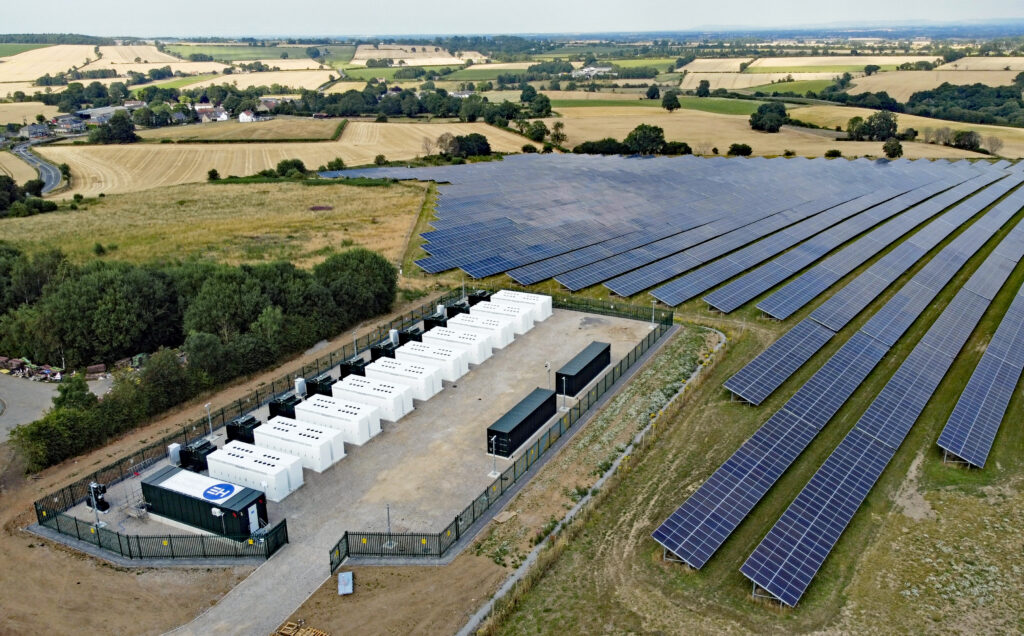
Battery storage is the immediate target. Approximately 83 GW has secured Gate 2 status under the reformed connections process, alongside 7 GW already operational. That compares with an estimated requirement of 23-27 GW in 2030 and 24-29 GW in 2035, according to Ofgem’s consultation.
“Britain has three times more battery capacity in the connections queue than the system is expected to need by 2035,” said Eleanor Warburton, Ofgem’s director for energy system design and development. “The queue must reflect real projects, not placeholders.”
Fee could reach £25,000/MW
The mechanism would activate when capacity for a technology exceeds its relevant target by more than 50%, and deactivate once oversubscription falls below 25%.
Security would start at £3,000/MW. If oversubscription persisted, it would increase to £5,000/MW after six months and subsequently rise in £5,000/MW increments at six-monthly reviews, up to £25,000/MW.
This would not necessarily constitute an immediate cash payment. Developers could provide letters of credit, guarantees or cash collateral through existing user commitment arrangements. Projects whose existing cancellation securities already exceeded the relevant floor would not have to provide additional security.
The requirement would generally remain until energisation. A project that connected would recover its security; one that withdrew could incur a cancellation charge, with the OTCF component returned to consumers through Transmission Network Use of System charges.
Ofgem estimates that 58% of queued battery capacity has not reached the point – normally three years before energisation – at which existing liabilities rise materially. Some 89% has security below £3,000/MW. The initial fee could therefore create approximately £230 million of additional security requirements across the affected queue.
Portfolio cull
The commercial effect will be to force developers to rank their projects earlier. A 500 MW scheme would require £1.5 million of security at the opening level and £12.5 million if the maximum were reached.
That is manageable for a construction-ready project backed by infrastructure capital. It is more consequential for developers holding multiple sites through planning, land and revenue development stages. Field Energy, which proposed CMP470, has acknowledged that it would be unlikely to provide additional financial backing for every project in its own portfolio.
Ofgem’s impact assessment estimates that persistent oversubscription could create around £460 million of network planning and development “externalities”, as network companies prepare for projects that never connect. But the regulator also recognises risks of excessive attrition and liquidity constraints. At £25,000/MW, the requirement could be equivalent to roughly a quarter of the capital cost of some short-duration storage projects.
The original proposal includes a targeted exemption for some co-located batteries that do not increase a site’s transmission capacity and require less than £250,000 of additional connection works. That should protect certain solar-and-storage and wind-and-storage configurations.
The greater significance is that a grid connection is no longer a cheap development option. Ofgem is moving towards a system in which access must be continually supported by evidence, milestones and capital. That should improve the queue’s credibility, but it will also increase the value of strong balance sheets – and could concentrate the storage development market before construction begins.
The consultation closes on 1 October. Ofgem’s position remains provisional, with a final decision expected later in 2026.