
- Protium’s 70 MW South Tees project and its South Wales development have completed HAR2 due diligence.
- Both have entered the Invitation to Offer stage, with negotiations preceding any contract award.
- Progress improves visibility for industrial customers and suppliers, although costs and dependable demand remain central to investment.
Protium’s hydrogen projects in Teesside and South Wales have entered commercial negotiations under the UK’s second hydrogen allocation round, advancing developments intended to supply industrial customers with lower-carbon fuel.
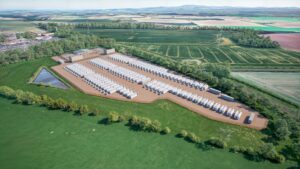
The company said last week that the Department for Energy Security and Net Zero had invited its 70 MW South Tees Net Zero project to the Invitation to Offer stage of Hydrogen Allocation Round 2 (HAR2), after successfully completing due diligence.
Its South Wales Net Zero project has reached the same stage. Neither development has yet been announced as holding a final support contract through the round.
Protium expects South Tees to produce up to 11,000 tonnes of green hydrogen annually once operational, supplying existing industrial customers and potentially new e-fuels processes.
“Teesside businesses want to decarbonise, but they need hydrogen that is affordable and reliable,” said Protium chief executive and founder Christopher Jackson.
From technical progress to financeability
HAR2 allocates revenue support through the Hydrogen Production Business Model. The government shortlisted 27 electrolytic hydrogen projects in April 2025, inviting them into further due diligence and cost assessment.
The process includes a specific cost challenge: government guidance asks developers to demonstrate clear, measurable plans for reducing production costs and to aim for lower average costs than those achieved in the first allocation round, taking project configuration into account.
The programme’s published guidance makes cost competitiveness a central consideration alongside project delivery. For suppliers, the invitation stage provides a stronger indication that projects are progressing towards detailed commercial arrangements. It remains too early to treat planned electrolyser capacity as an equipment order or assume that construction spending will follow on a fixed timetable.
The same caution applies to prospective customers. Industrial users considering a fuel switch need confidence in delivered hydrogen prices, supply availability and the cost of modifying their own equipment. A producer’s support contract can help underpin the supply side, while customers still need an acceptable business case for adopting the fuel.
That creates an interdependence between production and demand. Producers need credible customers to support investment, while customers may hesitate to commit before they have confidence that hydrogen will be delivered at a workable price.
The commercial structure must also accommodate electricity costs, which are fundamental to electrolytic hydrogen production. Decisions about operating hours, electricity purchasing and the relationship between production and customer demand can materially affect project economics.
South Tees’ industrial location offers the prospect of supplying several users, potentially helping a producer develop demand across different applications. However, proximity alone does not establish firm offtake or remove the need for customers to invest in their own conversion arrangements.