
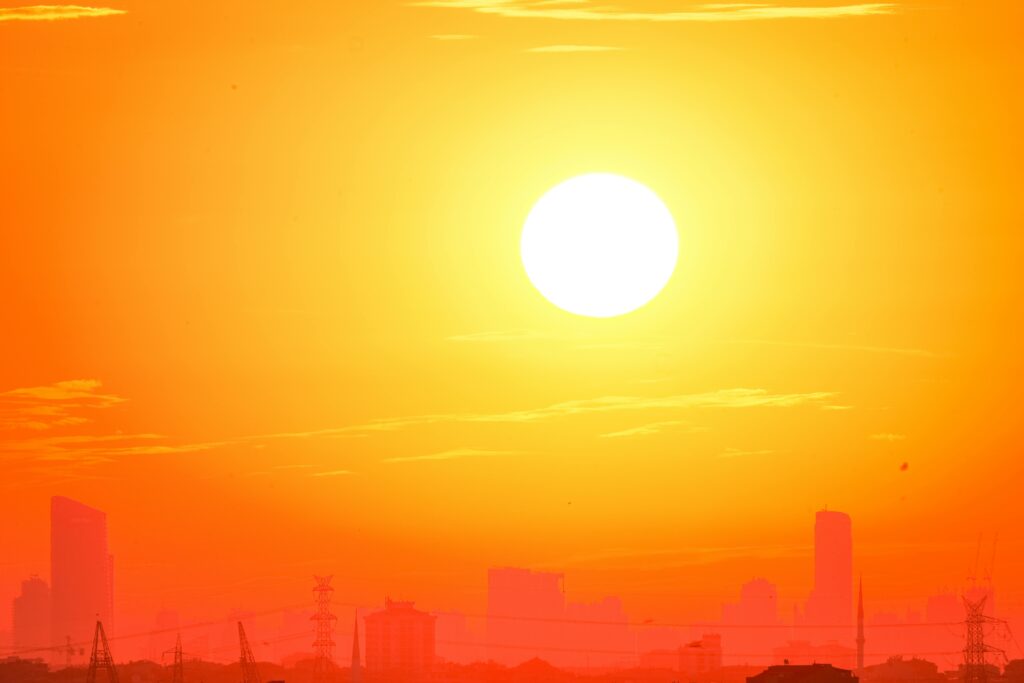
- England received just 6.5 mm of rain in July, while southern England recorded only 1.9 mm in its driest month since records began in 1836.
- Seven Environment Agency areas are officially in drought and restrictions affect around 23 million customers.
- Long-term water abstraction cuts are colliding with rising demand from housing, agriculture, data centres and energy infrastructure.
Record-breaking rainfall deficits have pushed half of England into drought, exposing a widening conflict between protecting rivers and securing enough water for households, agriculture and industrial development.
England received 6.5 mm of rain during July, only 10% of its long-term average and less than half the previous July record set in 1911. Southern England recorded just 1.9 mm, equivalent to 3% of average rainfall and the lowest monthly total in a series dating to 1836.
Nineteen counties received no more than 1 mm. High temperatures compounded the shortage by increasing demand and evaporation, while July became southern England’s warmest on record.
The Environment Agency has declared drought in East Anglia, London and Hertfordshire, the Thames Valley, Hampshire and the Isle of Wight, Devon and Cornwall, the West Midlands and Wessex. Seven water companies have imposed restrictions covering around 23 million customers, approximately 40% of England’s population.
“The hot and dry weather means we are currently using water faster than nature can replenish it,” said Helen Wakeham, the Environment Agency’s director of water. She described a second successive summer drought as an “exceptionally serious situation” with lasting consequences for wildlife and the economy.
Reservoir storage had fallen to 75.3% by late July, around 7.4% below the seasonal average. Almost half of monitored reservoirs were below normal levels and 78% of rivers were classified as below normal or lower.
The immediate effects include earlier crop harvesting, weaker cereal yields and reduced grass growth. The UK salad-growing season has ended earlier than usual and livestock farmers have started consuming winter forage reserves. The Environment Agency had 1,395 flow-related restrictions on water abstraction licences in force during the week to 30 July.
Consumption constraints
The restrictions expose a difficult structural trade-off. Water companies are expected to reduce abstraction (or water sourcing) from rivers, lakes and aquifers by about 2.7% by 2030 and 18% by 2050 to restore damaged ecosystems. Yet population growth, housing and industrial policy are adding to demand.
Southern Water is seeking emergency permission to take additional water from the River Test, a sensitive chalk stream, while Affinity Water has increased its reliance on transfers from other suppliers. Water companies argue that rigid abstraction limits can leave them with insufficient flexibility during exceptional droughts. Environmental groups counter that allowing higher extraction during low flows would further damage already stressed rivers.
The government points to nine new reservoirs planned by 2050, with potential combined supply of 670 million litres a day. That programme is substantial but falls well short of the approximately five billion litres a day of additional supply and demand reduction that England could require by mid-century.
Water is also becoming an energy and industrial-planning constraint. Hydrogen production consumes purified water, while thermal power stations and some carbon capture processes require cooling. Large data centres can create significant local demand, particularly where evaporative cooling is used. These projects are frequently concentrated in the same south-eastern regions facing housing pressure and water stress.
The drought does not mean such development must stop, but it strengthens the case for water availability to be assessed alongside electricity connections, transport and planning consent. Projects may need closed-loop cooling, reclaimed water or clear limits on consumption before they are treated as deliverable.
England’s problem is therefore larger than one exceptionally dry summer. New reservoirs will arrive slowly, while leakage reduction, metering, transfers and recycling must deliver earlier gains. Until those measures close the gap, water allocation will significantly influence where economic growth can occur.